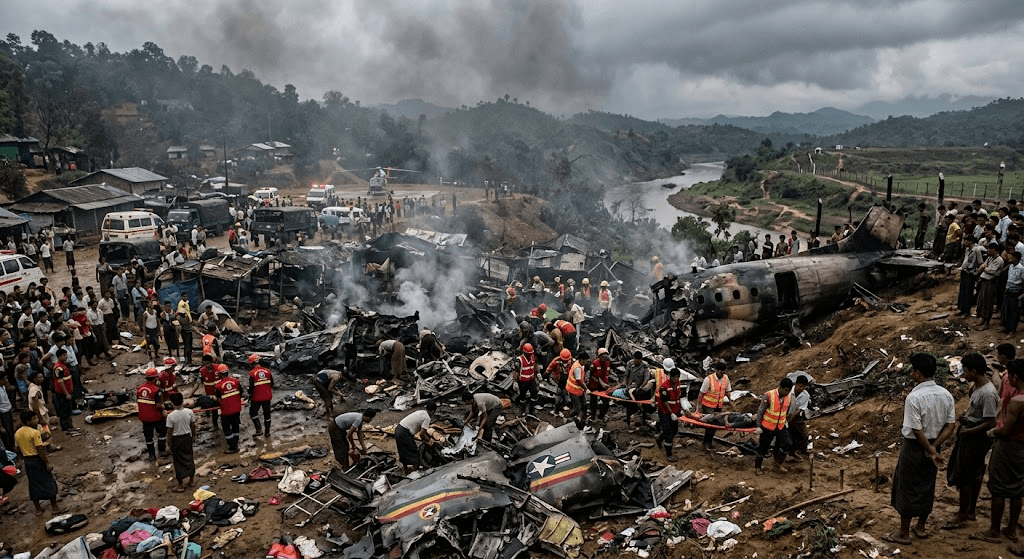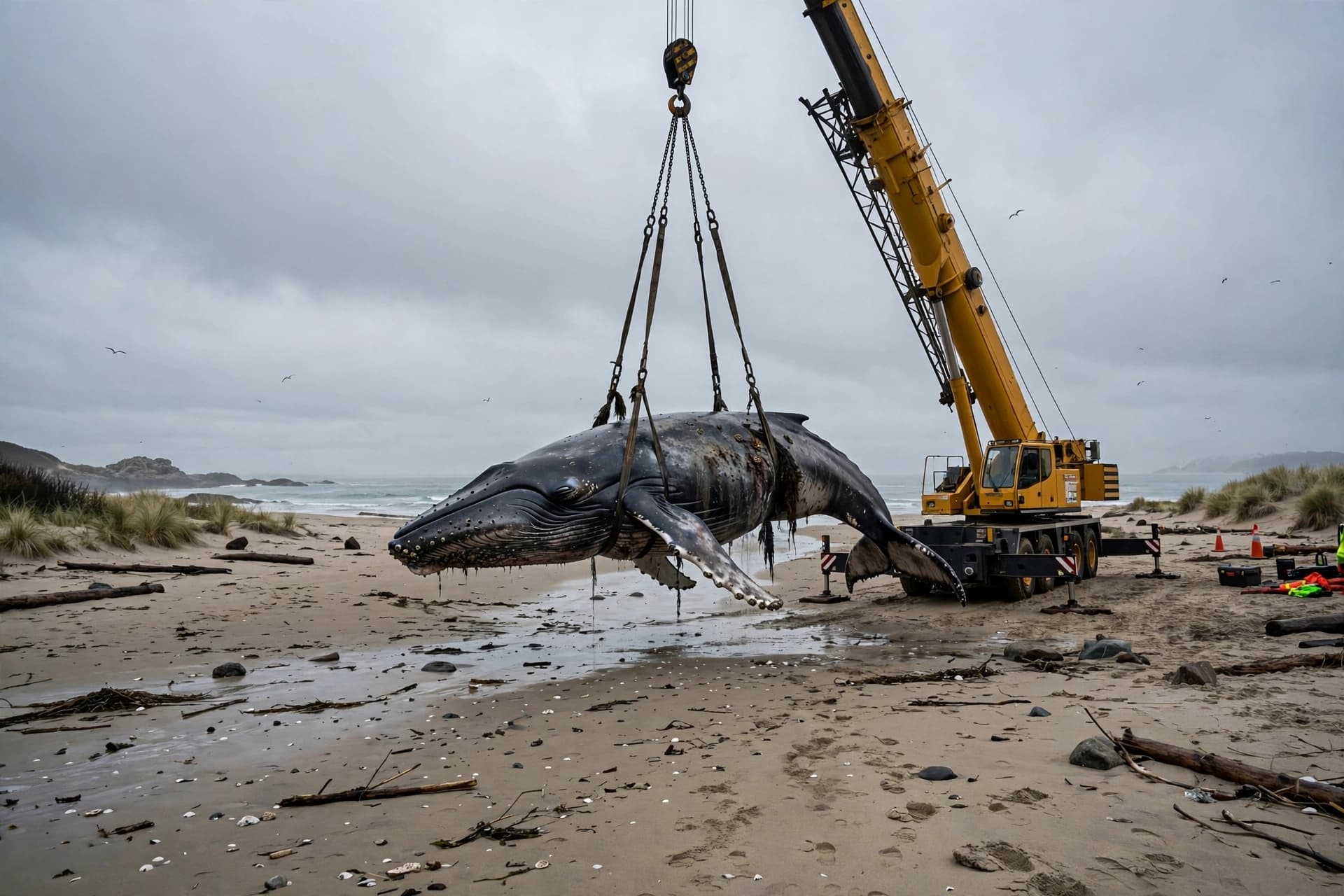
The ocean has a long memory. Long after the crane had lifted its burden from the sand, long after the truck had rumbled away toward a landfill in the city‘s northeast, the water off Perth’s City Beach still carried the scent of what had been there. A humpback whale, thirteen meters long, had washed ashore on a Monday morning and stayed for days, drawing crowds, drawing cameras, and drawing something far more ancient and far less curious—sharks.
The carcass was finally removed on Thursday, more than three days after it first appeared on the shoreline . A 72-tonne crane hoisted the decomposing mammal—now weighing around 18 tonnes after losing fluid—onto a truck bound for the Red Hill landfill site . The operation cost an estimated $100,000 and followed a failed attempt the previous day, when the excavator hired for the job proved too weak to shift the animal . Before removal, Aboriginal elders conducted a smoking ceremony, and scientists took samples and measurements from the dead female, thought to be between 15 and 90 years old .
But the whale‘s departure did not mark the end of the danger. The Department of Primary Industries and Regional Development (DPIRD) issued an updated shark warning encompassing the entire Perth Metropolitan area as the carcass was being transported . A tagged great white was detected five times in two hours by a receiving station near Scarborough Beach earlier that morning . The Westpac Surf Life Saving helicopter circled low over City Beach with its siren blaring, warning of a three-meter great white lurking just fifteen meters from shore .
The timing of this warning is difficult to overlook. Just three weeks earlier, a 63-year-old swimmer named Greg O’Neill was killed by a great white at Sorrento Beach, about fifteen kilometers north of City Beach . He was swimming fifteen meters from shore when the attack occurred—the third fatal shark incident in Western Australia this year . The carcass‘s arrival so soon after that tragedy has left authorities particularly cautious. “Sharks are likely to hang around that area for a while before we open the beach,” Town of Cambridge Mayor Gary Mack said .
Experts warn that the whale’s presence will linger in ways beyond the visible. Gemma Sharp, owner of Whale Watch Western Australia, told NewsWire that “hundreds of sharks” could be attracted to the area for weeks even after the carcass is removed . “Those sharks will be attracted to the beach for a long time,” she said. “You might remove the carcass, but the oil, the scent, will remain in that sand for a prolonged period of time” . Dr. Kate Sprogis, a marine biologist at the University of Western Australia, explained that decomposing blubber is “really attractive for sharks” .
City Beach and Floreat Beach remain closed, with the nearby Town of Cottesloe also shutting its beaches . Mayor Mack said reopening would not happen until regulatory agencies, Surf Life Saving WA, and the shark unit give the all-clear . He noted that the video footage of three-meter sharks “right in the surf break” serves as a reality check for beach users . DPIRD has urged anyone in the Perth Metropolitan area to use “additional caution” and adhere to any beach closures .
For now, the coastline waits. The whale is gone, but the ocean has not forgotten. The beaches will reopen when the authorities deem it safe, and the sharks will move on when the scent finally fades. Until then, the water off City Beach remains what it has always been—beautiful, and best respected from a distance.
AI Image Disclaimer: The visual content accompanying this report was created using artificial intelligence and does not depict actual events or individuals.
Sources: Australian Broadcasting Corporation, PerthNow, Daily Mail Australia, The Courier Mail, VRT
Published by Banx Network. This article is part of the Banx decentralized media programme, powered by the BXE token on the XRP Ledger.