
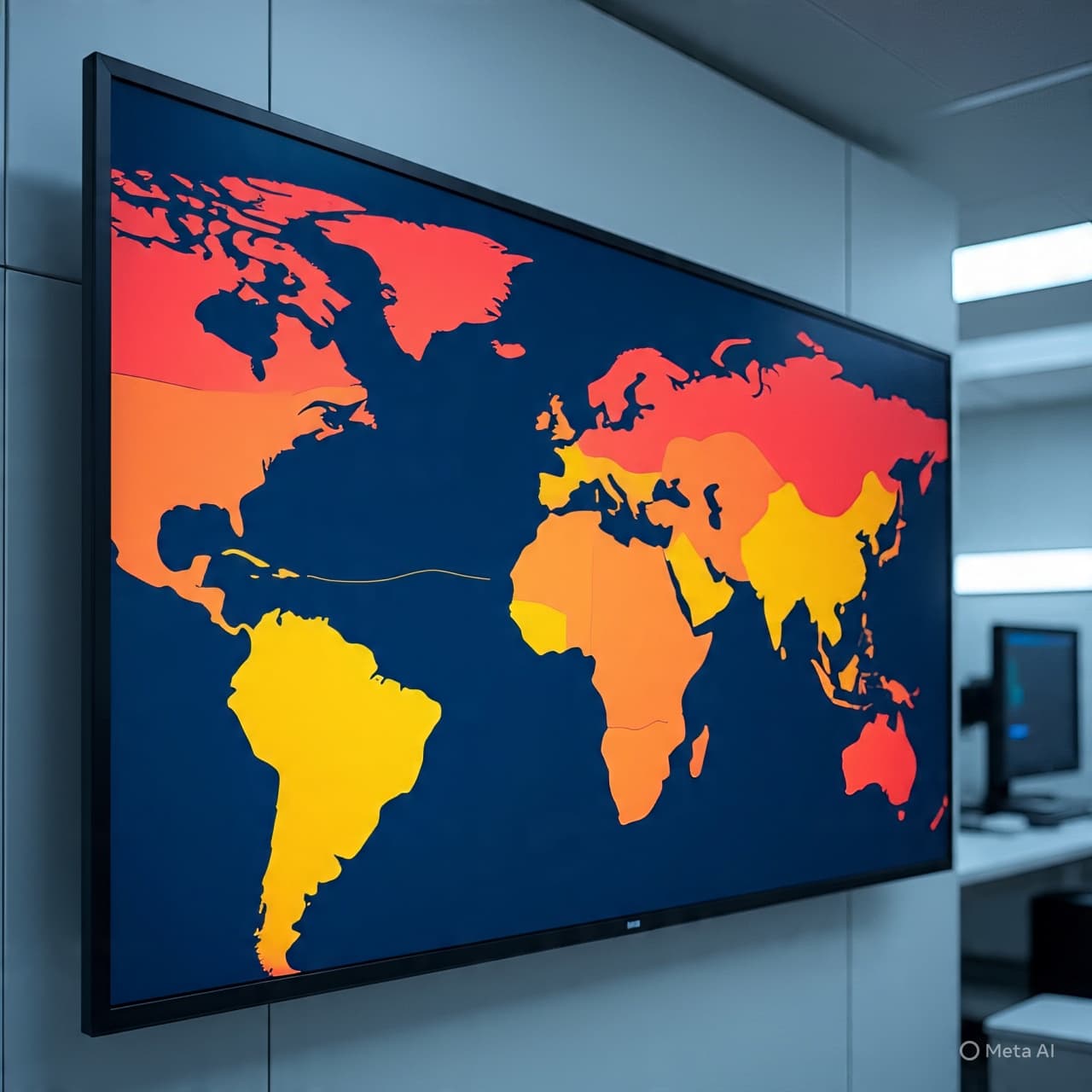
Key Highlights
- New climate data published in December 2025 raises questions about temperature measurement accuracy.
- 2025 is projected to be among the warmest years on record, with temperatures 1.48 °C above pre-industrial levels.
- Ongoing debates focus on the nuances of warming rates versus absolute temperature increases.
Recent analytical data released in mid-December 2025 has ignited fresh discussions within the climate science community regarding the accuracy of temperature measurements and the extent of global warming. While the consensus on the reality of climate change remains unchallenged, the specifics of how much the Earth has warmed and the methodologies used to measure this change are now under scrutiny.
Historically, the narrative surrounding climate change has been built on temperature records that indicate a steady increase over decades, primarily attributed to rising levels of greenhouse gases such as carbon dioxide. These records are foundational to international climate assessments, including those conducted by the Intergovernmental Panel on Climate Change (IPCC), and are critical to global initiatives like the Paris Agreement, which aims to limit warming to well below 2 °C above pre-industrial levels.
However, recent datasets, including updated analyses of global surface temperatures and data from Earth-observing systems, have prompted some researchers to reevaluate how warming is quantified. A significant point of contention arises when comparing newer observations with long-standing instrumental records. Specifically, the question is whether using a mid-19th century baseline for temperature measurements accurately reflects “pre-industrial” conditions or if earlier baselines could provide a more comprehensive understanding of total warming.
As the climate monitoring services indicate, 2025 is likely to rank as one of the second or third warmest years recorded, with global average temperatures approximately 1.48 °C above pre-industrial norms. This ongoing trend underscores the persistent heating of the planet, primarily driven by human emissions of greenhouse gases, despite natural climate variations such as El Niño and La Niña affecting year-to-year temperature fluctuations.
The current debates center around the differences between warming rates and absolute temperature increases. Are the recent short-term spikes in temperature indicative of an accelerating climate crisis, or do they fall within the expected ranges of natural variability superimposed on human-driven warming? Some analyses suggest that while the planet is undeniably warmer, claims of sudden “surges” in temperature may not be statistically distinguishable from the long-term warming trend when natural variability is considered. These discussions focus not on the existence of warming but rather on the best methods to chart its pace and predict its future trajectory.
Amidst these discussions, one fact remains indisputable: heat continues to accumulate within the climate system. Oceans are experiencing unprecedented warmth, atmospheric carbon dioxide levels are at record highs, and climate extremes—ranging from heatwaves to severe flooding—are becoming more frequent and intense in various regions. For scientists, refining measurement techniques and understanding the limitations of current data are crucial for improving forecasts and preparing for future climate scenarios.
In this evolving narrative, questioning the extent of Earth's warming is not an act of denial; rather, it represents a deeper examination of the tools and methodologies employed to understand climate change. As society confronts the ramifications of a warming planet, the precision of our understanding becomes increasingly vital.
Published by Banx Network. This article is part of the Banx decentralized media programme, powered by the BXE token on the XRP Ledger.



