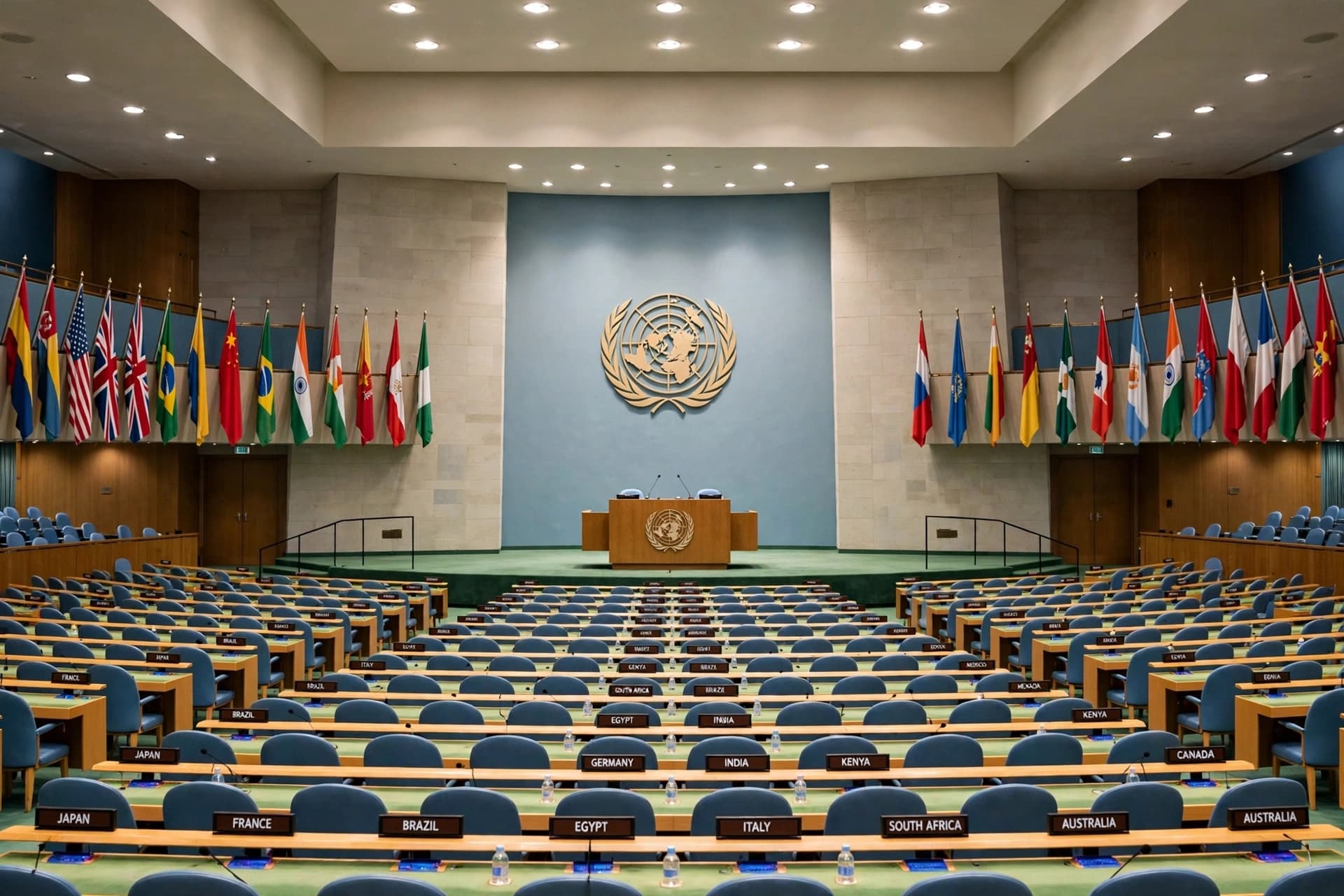
The United Nations General Assembly is a room built for measured words. Diplomats speak in calibrated phrases, their disagreements wrapped in procedure and protocol. But on Tuesday, that room became something else entirely—a place where the careful architecture of diplomacy gave way to something older and rawer. The decades-long quarrel between Washington and Havana stepped out from behind the podium and into the aisle.
The confrontation began as U.S. Ambassador to the U.N. Mike Waltz took the floor to argue against the annual resolution condemning America's economic embargo against Cuba. As Waltz detailed allegations of corruption against the socialist government, members of the Cuban delegation, including Foreign Minister Bruno Rodríguez Parrilla, began striking their tables and demanding a point of order . Then Rodríguez walked down the aisle toward the head of the General Assembly and shouted at Waltz: "You are a liar!" Waltz shot back: "You understand who you're dealing with? This is America. Back up" .
The moment captured a tension that has been building for months. In late January, President Donald Trump announced tariffs on any country that sells or provides oil to Cuba, a move that has effectively cut off fuel to the island and triggered widespread power outages affecting cooking, water supply, and communications . The Caribbean nation, already strained by years of economic difficulty, has been pushed toward what analysts describe as a breaking point.
Cuban officials have repeatedly argued that while Washington demands Cuba open itself to private investment, it simultaneously piles on sanctions that make such opening impossible . The shouting match on Tuesday was not an isolated outburst but the latest in a series of public spats. A week earlier, Waltz had clashed with his Cuban counterpart outside a U.S.-hosted panel featuring Cuban dissidents and former prisoners .
For thirty-four years, the General Assembly has voted overwhelmingly to condemn the embargo. Last year's tally was 165-7, with twelve abstentions—Argentina, Ukraine, and Hungary opposing for the first time . Such resolutions are not legally binding, but they serve as a mirror held up to world opinion. Canada has consistently voted in favor of the measure and has provided millions in humanitarian support to Cuba in recent months .
What the chamber witnessed on Tuesday was not a debate in any conventional sense. It was a collision between two narratives that have long since stopped listening to each other. Waltz's phrase—"This is America"—carried the weight of assertion rather than argument, a statement of power delivered as if power alone were sufficient. Rodríguez's accusation, equally blunt, carried the frustration of a nation watching its lights go out.
The vote on the resolution was scheduled for Wednesday. The shouting has ended, for now. The underlying disagreement—about sovereignty, about sanctions, about what one nation owes another—remains as unresolved as it was before the tables were struck.
The images accompanying this article are AI-generated and are not photographs of the events described.
Sources: CBC News, The Associated Press, BBC News, New York Post
Published by Banx Network. This article is part of the Banx decentralized media programme, powered by the BXE token on the XRP Ledger.