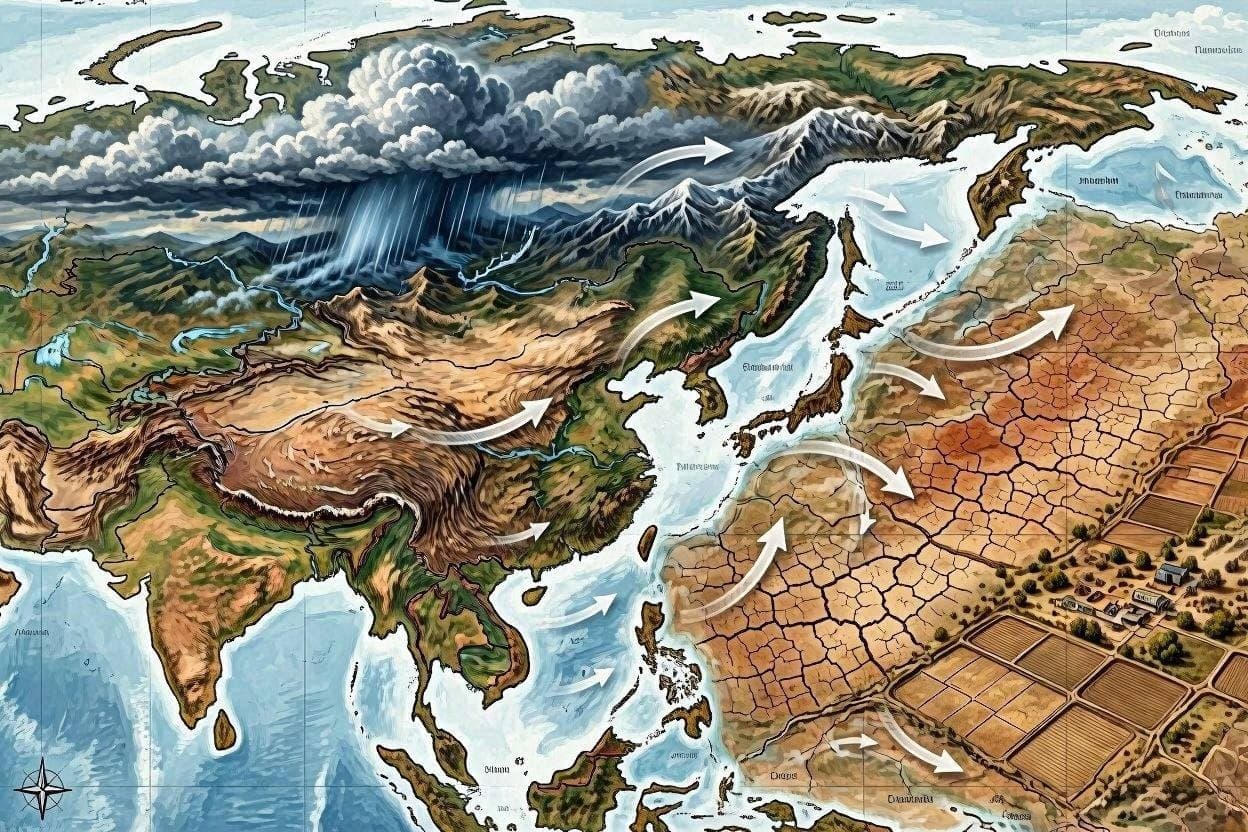
The Earth’s climate is a complex tapestry, where threads pulled in one corner create tension in another. Recent scientific findings have revealed a striking connection between the rainfall patterns of Central Asia and the drought conditions plaguing Southeast Asia. This teleconnection, driven by atmospheric waves, illustrates how regional weather events are not isolated incidents but part of a global system. Understanding these links is crucial for predicting future climate challenges and adapting to a changing world.
Body: Researchers have identified a specific atmospheric mechanism that transports moisture and energy across the continent. When Central Asia experiences unusually heavy rainfall, it triggers a chain reaction in the jet stream, altering pressure systems thousands of miles away. This shift suppresses monsoon activity in Southeast Asia, leading to reduced precipitation and prolonged dry spells. The phenomenon highlights the delicate balance of atmospheric dynamics and how sensitive they are to regional variations.
The impact on Southeast Asia is profound, affecting agriculture, water resources, and local economies. Countries that rely heavily on monsoon rains for rice cultivation and other crops face significant risks when these patterns are disrupted. Farmers, who have depended on predictable seasonal cycles for generations, now find themselves navigating increasing uncertainty. This vulnerability underscores the need for resilient agricultural practices and better water management strategies.
Climate models suggest that this linkage may intensify as global temperatures rise. Warmer air holds more moisture, potentially leading to more extreme rainfall events in some regions and deeper droughts in others. The study provides valuable data for refining these models, allowing scientists to make more accurate predictions about future climate scenarios. It serves as a warning that local changes can have far-reaching consequences.
For policymakers, the findings emphasize the importance of international cooperation in climate adaptation. Since weather systems do not respect national borders, solutions must be collaborative. Sharing data, technology, and resources can help communities in both regions prepare for and mitigate the effects of these climatic shifts. It is a reminder that environmental security is a shared responsibility.
The research also sheds light on the broader implications for global food security. Disruptions in major agricultural zones can affect supply chains worldwide, leading to price volatility and economic instability. By understanding the root causes of these disruptions, stakeholders can develop strategies to buffer against shocks, ensuring that food remains accessible and affordable.
Community resilience is another key factor. Local initiatives that promote sustainable land use, reforestation, and water conservation can help mitigate the impacts of drought. Empowering communities with knowledge and tools enables them to adapt to changing conditions, reducing their vulnerability to climate variability. It is a bottom-up approach that complements top-down policy measures.
Closing: The link between Central Asian rains and Southeast Asian droughts is a clear example of the interconnectedness of our planet’s climate system. As we face the challenges of a warming world, understanding these connections becomes essential. By working together and leveraging scientific insights, we can build a more resilient future for all.
AI Image Disclaimer: Images in this article are AI-generated representations of atmospheric patterns and agricultural landscapes, intended to illustrate the environmental concepts discussed.
Sources: Nature Geoscience BBC News The Guardian World Meteorological Organization
Published by Banx Network. This article is part of the Banx decentralized media programme, powered by the BXE token on the XRP Ledger.