The coastline of KwaZulu-Natal is a place where the Indian Ocean speaks in a voice of relentless thunder, a landscape defined by the constant, grinding dialogue between the salt spray and the shifting sand. There is a specific kind of memory held in these shores, one marked by the scars of past floods and the slow, inevitable erosion of the dunes. We often view the sea as a boundless, unchanging force, yet at the edges where our cities meet the water, that boundary is increasingly fragile, a line drawn in the shifting silt of a warming world.
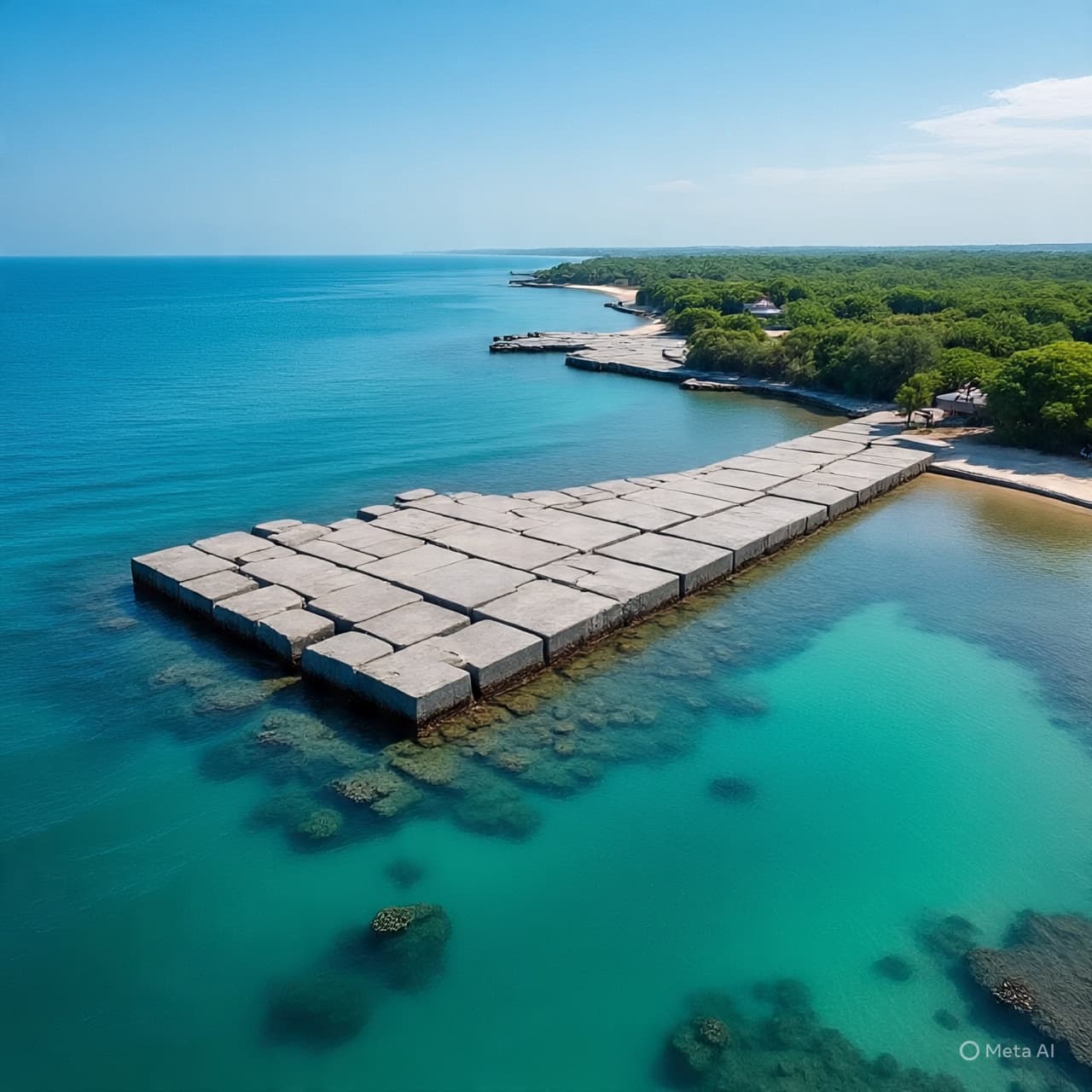
To address this encroaching vulnerability, a new kind of architecture is being introduced—not the rigid, defensive sea walls of the past, but "living" barriers designed to breathe with the tide. In the coastal reaches near Durban, engineers have begun deploying modular, bio-receptive concrete blocks that act as artificial reefs. These structures are not intended to defeat the waves, but to diffuse their energy, inviting the ocean to slow its pace before it reaches the fragile infrastructure of the land.
There is a profound stillness in the way these blocks settle into the seabed. Over time, the grey, geometric surfaces are claimed by the sea, becoming a canvas for barnacles, mussels, and kelp. It is a transition from the industrial to the biological, where a human intervention is slowly absorbed into the natural rhythm of the reef. The concrete becomes a sanctuary, a hard skeleton upon which a new, living skin can grow and thrive.
Research conducted by the Council for Scientific and Industrial Research (CSIR) suggests that these permeable barriers are far more effective than solid stone at mitigating the impact of storm surges. By allowing some water to pass through while trapping sediment, the blocks encourage the natural accumulation of sand. It is a science of cooperation, a way of working with the ocean’s own patterns to rebuild what has been lost.
In the laboratories of Stellenbosch, researchers monitor the "settlement rates" of marine life on various concrete compositions. They are looking for the perfect alchemy of minerals that will encourage the fastest growth of coral and kelp. It is a meticulous study of the microscopic, recognizing that the strength of a coastal defense depends as much on the life it supports as the material it is made of.
This movement toward nature-based solutions represents a shift in the South African engineering psyche. It acknowledges that the era of trying to dominate the elements is giving way to an era of stewardship. The "living" sea wall is a recognition of our interdependence with the marine world, a belief that the best way to protect our homes is to protect the ecosystems that surround them.
The impact of these projects is felt in the return of biodiversity to areas that were once barren and scoured by current. The artificial reefs provide a nursery for small fish and a hunting ground for larger predators, re-knitting the fabric of the coastal food web. It is a narrative of restoration, where the act of protection becomes an act of creation.
As the sun sets over the Indian Ocean, casting long, golden shadows across the new barriers, the water continues its rhythmic work. The waves break softly against the modular stones, their fury spent in the gaps and crevices. It is a vision of a future where the city and the sea exist in a state of quiet, mutual respect, a sanctuary built of both science and salt.
The Council for Scientific and Industrial Research (CSIR) has announced the expansion of its "Living Shorelines" pilot program following successful trials in the Port of Durban. The initiative uses 3D-printed, pH-neutral concrete modules to reduce coastal erosion while promoting the growth of native marine species. Preliminary data indicates a 40% reduction in wave energy impact in treated areas compared to traditional sea walls.
Published by Banx Network. This article is part of the Banx decentralized media programme, powered by the BXE token on the XRP Ledger.