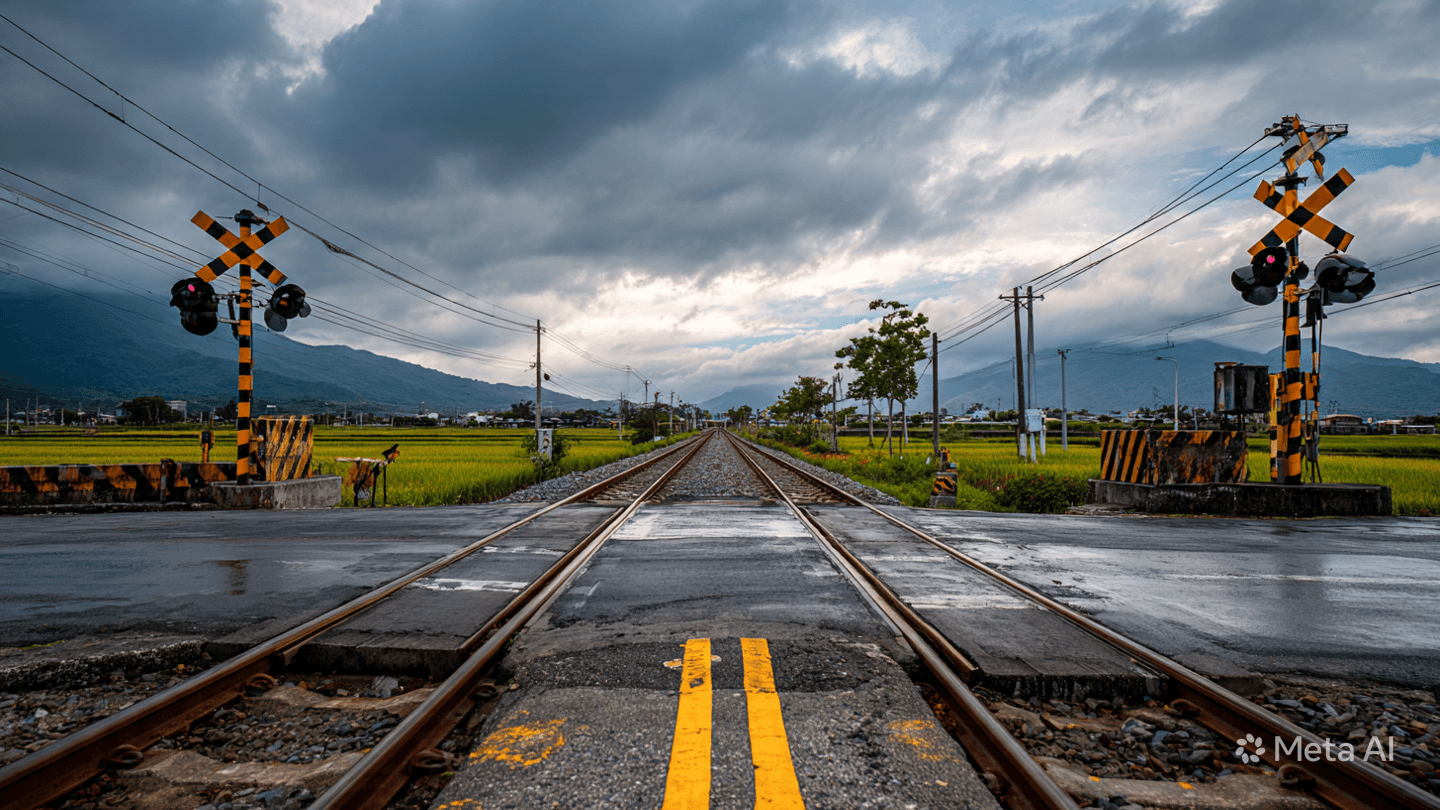
The intersection of a train track and a public roadway is a threshold where the massive, momentum-driven power of the locomotive meets the daily, intimate pace of the individual. It is a space defined by warnings, signals, and the shared understanding that the train must always pass. Yet, when this choreography of metal and time is disrupted, the resulting collision is a jarring, irreversible event that echoes far beyond the site of impact. The recent tragedy at a Taichung crossing, where a collision claimed a life and derailed a carriage, is a somber meditation on the fatal intersection of human error and technological force.
The incident unfolded in the heart of the afternoon, a moment when the normalcy of the commute was shattered by the sound of metal on metal. The train, a vessel of collective movement, was suddenly forced to a violent stop, its path interrupted by a vehicle that had ventured where it should not have been. For those on board and for the observers at the scene, the transition from the fluid motion of transit to the static, chaotic reality of an accident was swift and haunting. It is a moment that exposes the narrow margin of safety inherent in our transportation systems.
The aftermath of the derailment left the local community in a state of suspended shock. Emergency responders worked amidst the twisted wreckage, their efforts a grim contrast to the orderly, predictable schedule of the railway. The loss of a life serves as a stark reminder of the weight carried by each carriage and the responsibility borne by every operator and motorist who navigates these shared spaces. It is a tragedy that prompts a quiet, reflective pause, asking us to reconsider the sanctity of the warnings we pass every day.
In the ensuing investigation, the focus turns to the signaling systems and the behavioral patterns that led to the crossing violation. There is a deep, analytical inquiry into the mechanical state of the crossing and the human factors that contributed to the breach. Yet, beyond the data, there remains the human element—the tragedy of a life cut short and the trauma inflicted upon the passengers and the train crew. It is an exploration of how we maintain the integrity of our transit network in a society where the pace of life often outstrips the pace of caution.
The discourse surrounding railway safety in Taiwan is evolving, moving toward the integration of advanced barrier technologies and stricter enforcement of crossing protocols. The incident in Taichung acts as a catalyst for this progress, forcing a conversation about whether the existing infrastructure is sufficient for the demands of modern traffic. There is a shared, reflective desire to ensure that such a tragedy is not repeated, driving a concerted effort to improve the visibility and responsiveness of our rail-crossing safety measures.
As the wreckage is cleared and the tracks are restored to their regular operation, the rhythm of the train returns to the countryside of Taichung. However, the memory of the collision persists, a cautionary note in the history of the line. It serves as a reminder that the reliability of our transport is not guaranteed; it is a collaborative effort between those who operate the machines and those who cross their paths. We move forward with a renewed emphasis on the sanctity of the signal and the gravity of the train’s passage.
Ultimately, the collision is a meditation on the fragility of our daily movements. We entrust our lives to the efficiency of the rail, and in turn, we must commit to the vigilance required to keep the tracks clear. By fostering a culture of mutual respect and absolute compliance with safety protocols, the city can continue to enjoy the benefits of its transit network while protecting the individuals who navigate it. It is a commitment to a safer passage, one that respects both the power of the engine and the value of the life that crosses its path.
The Taiwan Railways Administration has launched an investigation into the crossing signaling equipment, while local police examine the circumstances leading to the motorist's entry onto the tracks. The derailed carriage has been successfully recovered, and maintenance crews are currently repairing the damaged section of the line. All train services in the affected corridor have been adjusted, and safety briefings are being refreshed for all railway operations staff in the region.
Published by Banx Network. This article is part of the Banx decentralized media programme, powered by the BXE token on the XRP Ledger.