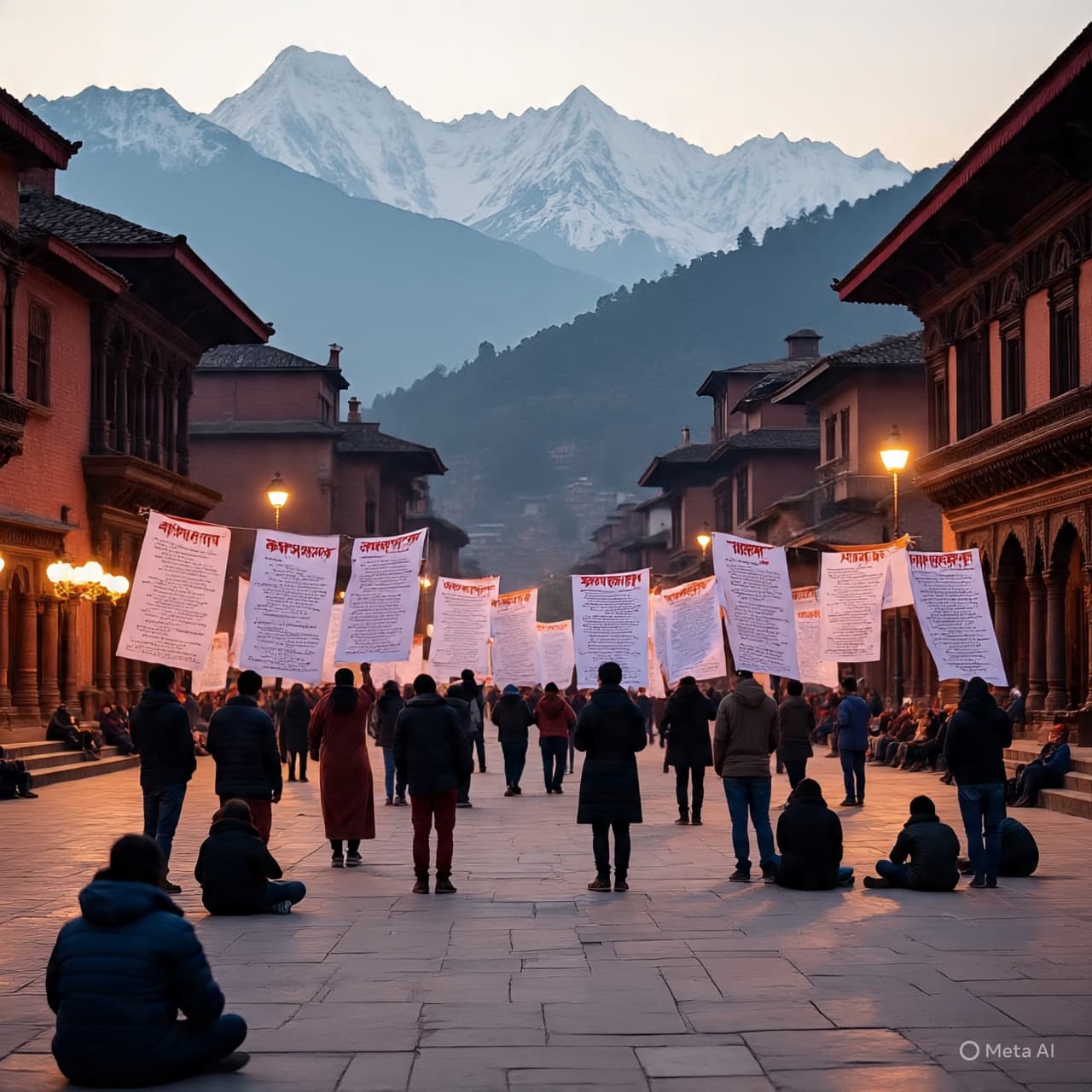
There is a particular stillness that settles over Kathmandu in the earliest hours, when the terracotta rooftops shimmer under pale light and the city seems to breathe with a quiet, reflective rhythm of its own. In those moments, before the bustle resumes and the streets stir with daily life, one can almost feel the weight of the city’s many stories — from ancient temple bells echoing through narrow alleys to the modern hum of motorbikes weaving through market crowds. And now, in this fragile dawn of a new political chapter, another story has threaded itself through the city’s temperament: that of a young leader whose path was shaped as much by rhythm and verse as by ballots and political force.
Balendra “Balen” Shah, once known to many for his rap verses and sunglasses glinting under Kathmandu’s sun, has crossed a threshold few could have scripted with greater narrative arc. From the energetic cadence of his early music to the deliberative steps of municipal leadership, Shah’s journey carried him from the margins of artistic expression to the formal corridors of power. His tenure as mayor of Nepal’s capital was marked by visible efforts to change the city’s face — efforts in waste and traffic management that won admiration from some quarters and criticism from others — even as his presence on social platforms made him something of a favorite among younger generations. ([turn0search27])
This year, as Nepal’s political climate shifted with an urgency felt in neighborhoods far beyond Kathmandu’s heart, Shah’s ascendancy took on a broader meaning. In the wake of 2025’s Gen Z‑led protests — a youth‑driven wave that resonated deeply across the nation and brought longstanding frustrations with corruption and stagnation into the open — the electorate sought new voices and fresh approaches. Out of that tide, Shah’s three‑year‑old party, the Rastriya Swatantra Party, claimed a landslide victory in the March 5 general election, propelling him to the office of prime minister at the age of 35, one of the youngest to hold that position in Nepal’s history. The youthful charge that once pulsed in his lyrics now found its echo in a broader, collective urge for renewal. ([turn0news18])
In the cheerful chaos of election nights and celebratory cheers, there was also the quieter, sobering task of governance waiting ahead. Nepal has known political flux; since 1990 it has seen more than thirty governments rise and fall, each grappling with the enduring challenges of economic inequality, social cohesion, and institutional trust. Shah entered this landscape carrying the hopes of many, especially younger citizens who saw in his rise a reflection of their own aspirations — not merely a change in leadership but something resembling an invitation to participate more deeply in the nation’s unfolding narrative. ([turn0news18])
Yet even transformative moments are seldom free from complexity. Just days after Shah took the oath of office — clad in traditional attire, the blessings of priests and lamas swirling in the air — Nepal’s political past made its way into the present with the arrest of former prime minister K.P. Sharma Oli, held in connection with violent clashes during the previous year’s protests. For a generation that had witnessed political fervor and state response firsthand, this move underscored ongoing questions about accountability and the weight of leadership. ([turn0news17])
So it is in these quiet mornings and in the deliberate decisions of statecraft that Nepal now stands, balanced between the cadence of its ancient rhythms and the shifting beats of a new political era. The streets where chants once rose in unison now carry the steady footfalls of everyday life — markets opening, children weaving through crowds, vendors calling out their wares. Beneath it all, the city’s pulse persists, reminding every passerby that change, like dawn itself, unfolds in its own measured light.
AI Image Disclaimer Visuals are AI‑generated and serve as conceptual representations.
Sources Reuters Associated Press Al Jazeera The Guardian Reuters (additional)
Published by Banx Network. This article is part of the Banx decentralized media programme, powered by the BXE token on the XRP Ledger.