The wilderness still has a way of surprising us, even in an age of satellite maps and camera traps. That truth resurfaced when a traveler, pausing during a routine nature walk, captured what scientists now believe to be a living specimen of a species long presumed extinct. The animal—nicknamed the “white ghost” for its pale coat and almost spectral appearance—had not been documented for decades. When the tourist’s photo began circulating among researchers, disbelief quickly gave way to cautious excitement.
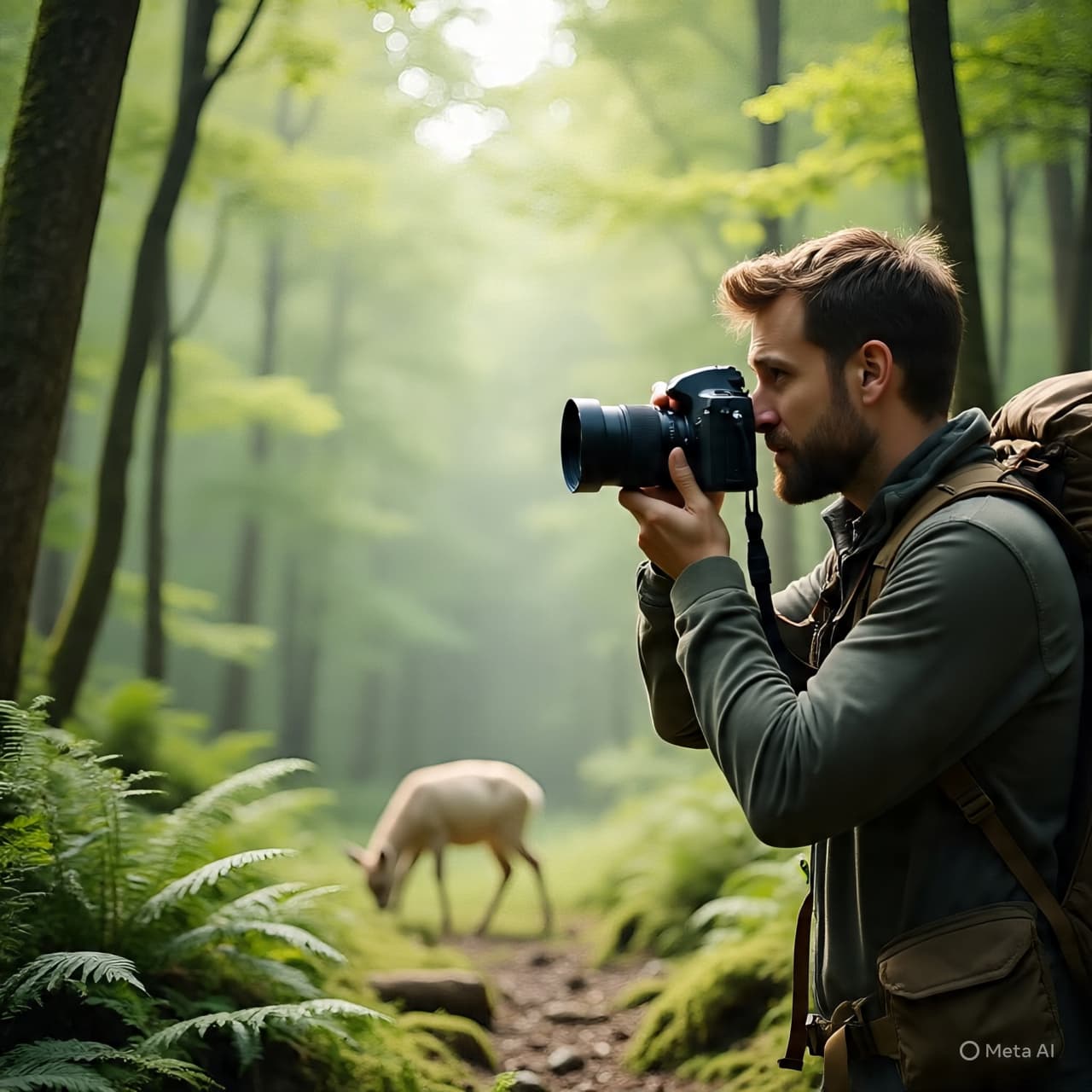
The encounter appears to have been entirely accidental. According to early accounts, the traveler noticed a faint movement near a tree line and raised the camera out of simple curiosity. The resulting image showed a creature with distinctive markings that had previously existed only in old field notes and fading museum sketches. Its milky coloration, once dismissed as an exaggeration born of memory, matched those historic descriptions almost exactly.
Experts reviewing the photo emphasized the significance of even a single confirmed sighting. Many species categorized as extinct fall into that status not because they are definitively gone, but because no reliable record of them emerges over time. A single documented reappearance forces scientists to reconsider old assumptions—about habitat resilience, survival patterns, and the adaptability often hidden in dwindling populations.
While the exact location of the encounter is being withheld to prevent disturbance, biologists are already mobilizing. Field teams are preparing surveys designed to verify whether a small, remnant population may have persisted unnoticed. The complexities of modern ecosystems make such survival possible; dense terrain, low numbers, and unpredictable movement patterns can allow rare animals to escape detection for years.
The photo’s broader impact extends beyond biology. For many, the moment feels symbolic—a reminder that the natural world remains larger and more intricate than human certainty allows. Even amid habitat loss and climate pressures, pockets of resilience continue to surface, sometimes in the form of a single quiet image captured by someone who expected nothing extraordinary.
Researchers caution against premature conclusions. One photograph cannot determine the health or future of the species, nor does it guarantee that more individuals remain. But it does provide a starting point, a spark that shifts the narrative from extinction to possibility. As scientists work to confirm the sighting through structured surveys, hope has taken the place once held by resignation.
In the end, the tourist’s astonishment mirrors that of the scientific community. A creature thought to have vanished has stepped—however briefly—back into the present. And with that single moment, the story of the “white ghost” is no longer a tale of loss, but of return.
Published by Banx Network. This article is part of the Banx decentralized media programme, powered by the BXE token on the XRP Ledger.