
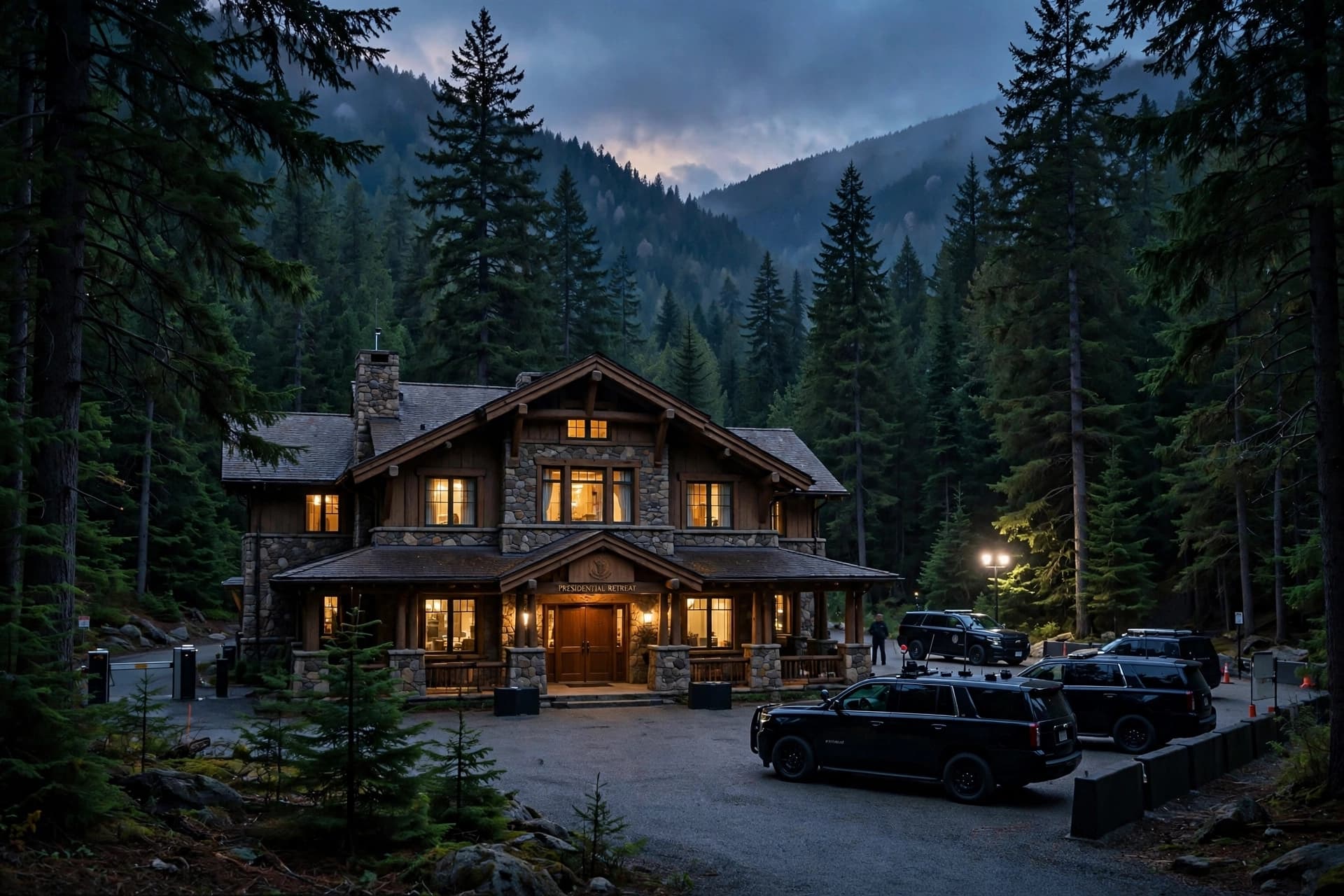
There is a particular gravity to meetings held at Camp David—a presidential retreat whose very name carries the weight of decisions made in seclusion, away from the cameras and the press, where the stakes are measured in consequences that will unfold long after the participants have left. On Friday, according to reports citing three U.S. officials, President Donald Trump’s senior national security team gathered at the compound for an unannounced meeting to discuss next steps in the Iran war and the Saudi-Houthi conflict in Yemen. The meeting was chaired by Vice President JD Vance, and among those present were Secretary of State Marco Rubio, Secretary of Defense Pete Hegseth, White House envoy Steve Witkoff, CIA Director John Ratcliffe, and Chairman of the Joint Chiefs of Staff General Dan Caine.
Axios, which first reported the meeting, described it as “highly unusual” because the Trump administration did not announce it. The last time a similar gathering took place at Camp David was in June 2025, just days before Israel went to war against Iran—a conflict that became known as the “12-day war,” during which the United States and Israel struck nuclear sites across Iran. That timing gives the current meeting a particular significance. One of the officials who spoke to Axios said that “things were decided or at least deeply discussed” regarding the crisis in the Middle East.
The context in which the meeting occurred is one of prolonged conflict and stalled diplomacy. The United States has been at war with Iran since February, more than six months ago, and the conflict has settled into a grinding, attritional phase. Trump has faced rising fuel prices and declining public approval as the war drags on, and with midterm elections approaching next month, the political pressure to resolve the conflict—or to escalate it decisively—has intensified. Trump has repeatedly threatened to resume major combat operations against Iran after the election, and on Wednesday he told reporters that Iran must either sign an agreement or cease to exist. Iran, for its part, reportedly proposed a “seven-day plan” to restore negotiations, including the reopening of the Strait of Hormuz, but Trump rejected it. A revised proposal mediated by Qatar has also stalled.
The Saudi-Houthi conflict in Yemen adds another layer to the discussions. The Houthis, who are aligned with Iran, have continued their attacks on Saudi territory, including a claimed strike on an Aramco facility in Riyadh on Saturday. The United States has been supporting Saudi Arabia in that conflict, and the meeting at Camp David likely addressed how the two theaters of conflict—Iran and Yemen—intersect and whether a shift in one might affect the other.
The Camp David meeting was not announced, and no readout was provided. The officials who spoke to Axios did not specify what, if anything, was decided. But the venue itself, and the precedent of the June 2025 meeting, suggest that the administration is preparing for a significant decision—one that could reshape the trajectory of a war that has already lasted more than half a year and cost billions of dollars. The next moves, whatever they are, will become visible in the weeks to come. For now, the retreat at Camp David has done what it was designed to do: allow the people who make decisions to make them without being watched.
AI Image Disclaimer: The visual elements in this article were created using AI generation tools and are intended for illustrative purposes only.
Sources: Axios, KBS, Yonhap News, Middle East Eye, CGTN Türk, Daily Times
Published by Banx Network. This article is part of the Banx decentralized media programme, powered by the BXE token on the XRP Ledger.

.jpg&w=3840&q=75 "Prison Chief in Christa Pike Case Oversaw Five “Botched” Executions, Lawyers Say")