In the high-stakes drama of space exploration, roles can shift unexpectedly. What begins as a mission of assistance can quickly become a scenario requiring its own salvation. This paradox has played out in recent months with Boeing’s Starliner spacecraft, originally intended to demonstrate reliable crew transport, now facing delays and technical challenges that have necessitated a change in plans. The situation highlights the complexities of spaceflight, where even the most rigorous testing cannot predict every variable, and adaptability becomes the most valuable tool.
The Starliner program was designed to provide NASA with a second option for transporting astronauts to the International Space Station, reducing reliance on a single provider. However, during its first crewed test flight in June 2024, technical issues with thrusters and helium leaks raised concerns about the spacecraft’s reliability. After extensive analysis, NASA decided that returning the astronauts aboard Starliner posed too much risk, leading to the decision to bring the capsule back to Earth uncrewed.
This decision meant that the astronauts, Butch Wilmore and Suni Williams, would remain on the ISS longer than planned. To bring them home, NASA turned to SpaceX, its commercial partner, which successfully docked its Crew Dragon spacecraft to the station. The Crew-9 mission, originally scheduled for a later date, was adjusted to accommodate the stranded astronauts, effectively turning a routine rotation into a rescue operation.
The shift in strategy underscores the importance of redundancy in space missions. Having multiple providers ensures that if one system fails, another can step in. SpaceX’s ability to adapt its schedule and launch profile demonstrated the resilience of the commercial crew program. It also highlighted the collaborative nature of modern space exploration, where competition and cooperation coexist for the greater good of scientific progress.
Boeing, meanwhile, faces the task of diagnosing and fixing the issues that plagued Starliner. The uncrewed return of the capsule provides valuable data for engineers, allowing them to study the spacecraft’s performance in real-world conditions. The next Starliner mission, scheduled for 2026, will be uncrewed, focusing on testing repairs and improvements before attempting another crewed flight.
The incident has sparked discussions about the pace of innovation versus the need for thorough testing. While rapid development can accelerate progress, it also increases the risk of unforeseen problems. NASA’s cautious approach, prioritizing astronaut safety over schedule, reflects a commitment to responsible exploration. It serves as a reminder that in space, there is no room for error, and every decision must be weighed carefully.
Public interest in the saga has been high, with many following the updates closely. The story of the "rescue of the rescuer" captures the imagination, illustrating the human element in technological endeavors. It reminds us that behind every mission are people working tirelessly to solve problems and ensure success, often under intense pressure.
The Starliner episode is a testament to the challenges and triumphs of space exploration. While the path has been uneven, the successful adaptation by NASA and its partners ensures that the mission’s ultimate goals remain within reach. As Boeing works to restore confidence in Starliner, the focus remains on safety, reliability, and the continued expansion of human presence in space.
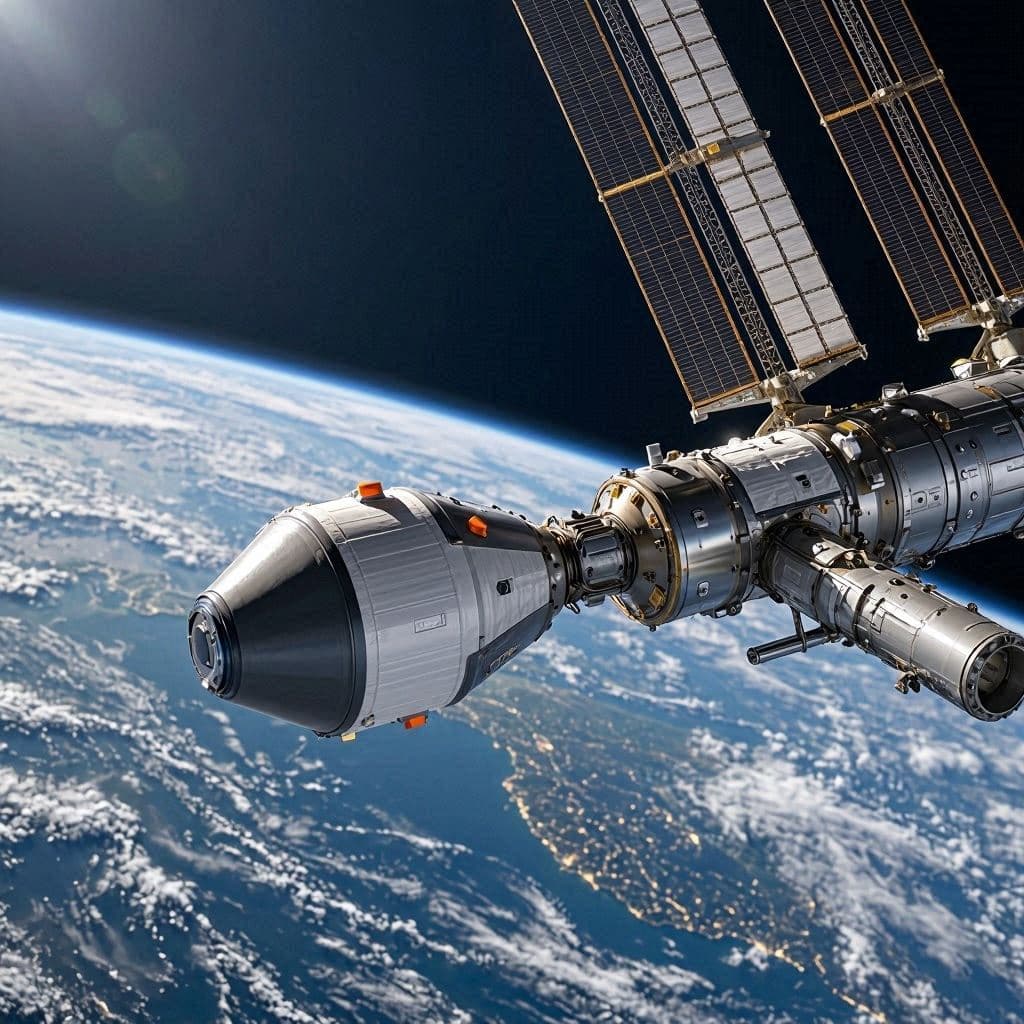
AI Image Disclaimer: The images associated with this article are AI-generated illustrations designed to represent the themes of space missions and technical problem-solving.
Sources: NASA, Engineering.org.cn, CFPRadio, Wikipedia
Published by Banx Network. This article is part of the Banx decentralized media programme, powered by the BXE token on the XRP Ledger.