
Key Highlights
- Time on Mars runs faster than on Earth due to weaker gravity.
- Clocks on Mars gain about 477 microseconds per Earth day.
- Accurate timekeeping is crucial for spacecraft navigation and future missions.
Einstein’s groundbreaking theory of relativity has long suggested that time is not a fixed entity but rather a variable influenced by gravity and motion. Recent calculations by physicists at the National Institute of Standards and Technology (NIST) have confirmed that time on Mars ticks faster than on Earth, a finding that could have significant implications for future space exploration and navigation.
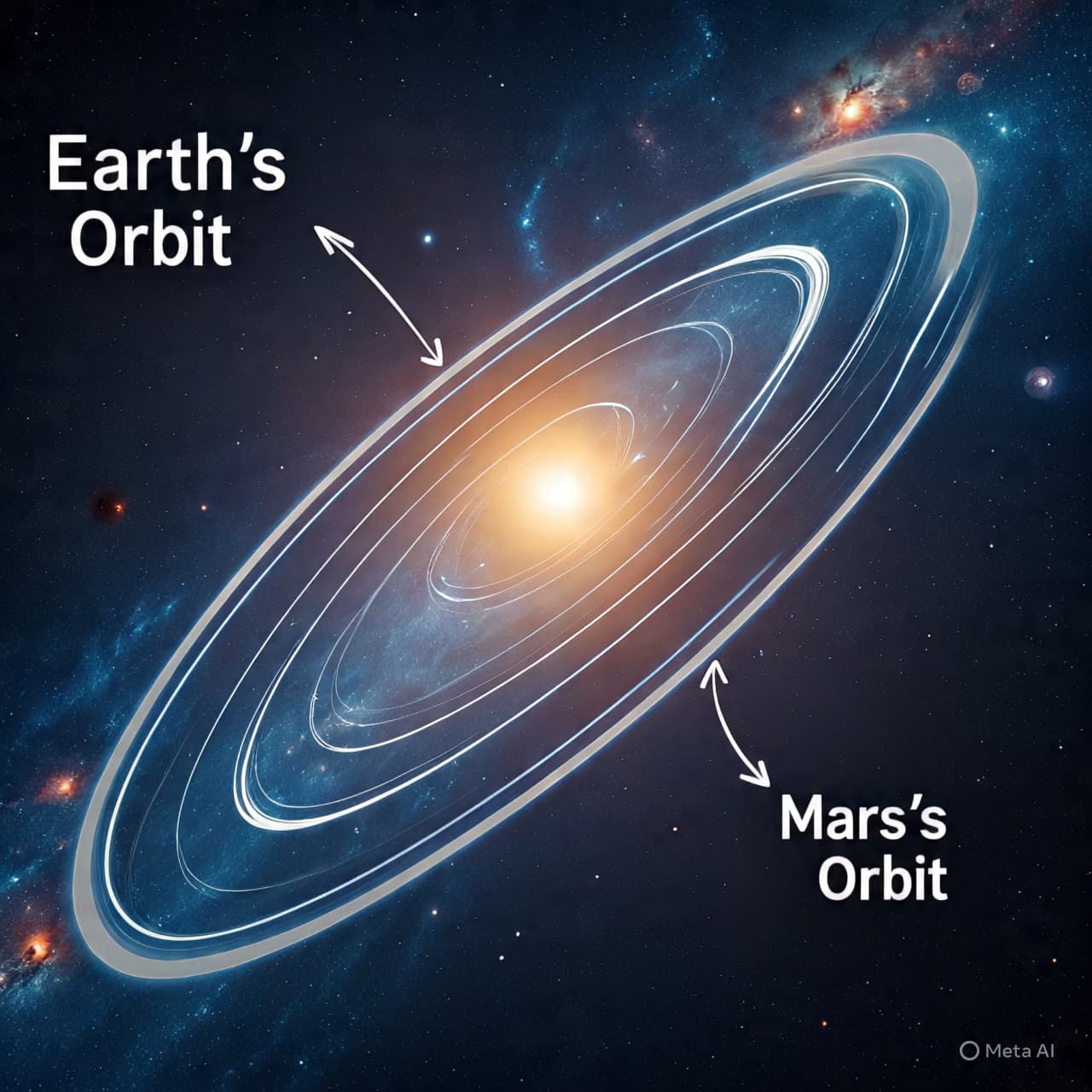
The principle behind this phenomenon lies in the gravitational differences between the two planets. Mars, with only one-third of Earth's mass and a gentler gravitational pull, allows clocks on its surface to tick at a faster rate compared to those on Earth. Specifically, NIST researchers found that a clock on Mars would gain approximately 477 microseconds per Earth day. This discrepancy, while seemingly minor, can accumulate over time, varying by over 200 microseconds throughout a Martian year due to the planet's elliptical orbit.
In practical terms, these microsecond differences are critical for spacecraft navigation and communication systems. Accurate timekeeping is essential for the operation of rovers and satellites, which rely on synchronized clocks to maintain positional accuracy. On Earth, GPS systems already account for the effects of relativity to avoid navigation errors. Ignoring the time dilation experienced on Mars could lead to significant challenges in coordinating operations across vast distances in space.
As space agencies and private companies gear up for crewed missions to Mars and beyond, reconciling the differences in timekeeping between planets will be crucial. Engineers will need to develop systems capable of translating and synchronizing time across the solar system, taking into account not only the delays caused by light travel but also the effects of spacetime curvature. This task will become increasingly complex as humanity expands its presence in space.
The implications of these findings extend beyond academic interest; they underscore the importance of precision timing in modern technology. From financial markets to telecommunications, the world relies on accurate timekeeping. As we look to the future of interplanetary exploration, the challenge of maintaining coherent time across different celestial bodies will be a fundamental aspect of mission planning and execution.
In conclusion, the recent confirmation that time runs faster on Mars serves as a testament to Einstein’s enduring legacy and the intricate relationship between time and gravity. As humanity prepares to venture deeper into the cosmos, understanding and managing time will be a vital piece of the interplanetary puzzle, ensuring that our explorations are as precise and successful as possible.
Published by Banx Network. This article is part of the Banx decentralized media programme, powered by the BXE token on the XRP Ledger.



