There is a particular kind of patience required of a hurricane, and a particular kind of fear it inspires in those who watch it approach. Hurricane Simon did not rush. It crawled along Mexico's Pacific coast, a slow-moving giant with winds that had once reached 155 miles per hour, now weakening but still dangerous, still carrying rain that fell and fell and fell . By Sunday, it had been downgraded to Category 3, but its slow pace meant that the water had nowhere to go but into homes, streets, and the spaces where people lived .
Simon's center was located about 175 kilometers west-northwest of Manzanillo on Sunday evening, with maximum sustained winds of 205 kilometers per hour . It was moving northwest at just 7 kilometers per hour, a pace that allowed the storm to linger over coastal communities, saturating the ground and overwhelming drainage systems . The U.S. National Hurricane Center warned that total rainfall could reach 760 millimeters in parts of Michoacan, Colima, and Jalisco—a volume that raised the risk of life-threatening flooding and mudslides, particularly in mountainous areas .
The human response was immediate and widespread. Mexican authorities placed 28 municipalities across Jalisco and Colima under the highest cyclone alert level, with another 93 under high alert . Puerto Vallarta International Airport temporarily closed. Non-essential activities were suspended, and emergency shelters opened in threatened coastal communities . President Claudia Sheinbaum urged residents of coastal areas in Jalisco, Colima, Nayarit, and Michoacan to remain indoors as the storm approached .
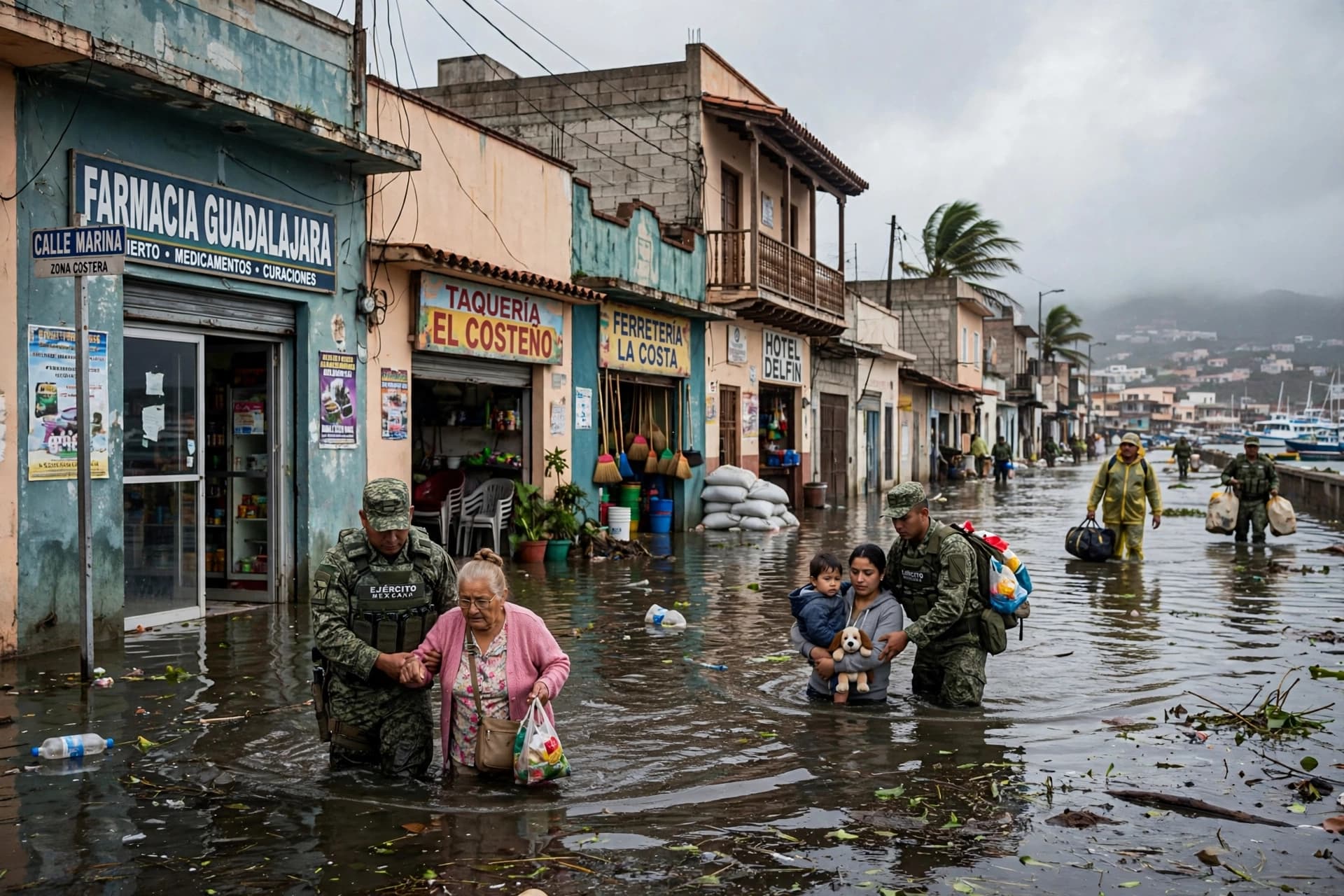
In Manzanillo, residents waded through flooded streets on Sunday morning as soldiers helped families remove water from their homes . The port city, Mexico's largest on the Pacific coast, had been in the storm's path since Saturday, when residents appeared largely calm despite the approaching danger. Some businesses boarded up storefronts. Civil protection personnel closed beaches and urged people to stay away from the shore .
The storm's arrival came just days after Hurricane Polo struck Mexico's Baja California Peninsula as a Category 2 hurricane, knocking down trees and power poles and flooding streets . The back-to-back storms have stretched emergency resources and tested the resilience of communities still recovering from the first blow.
Simon was expected to move farther offshore on Monday before turning back toward Mexico's coast on Wednesday, according to the National Hurricane Center . But the forecast offered little comfort to those already dealing with the aftermath—the flooded homes, the disrupted lives, the slow work of cleaning up what the water left behind. The hurricane's crawl along the coast had done its damage, not with the sudden violence of a direct strike, but with the persistence of rain that would not stop.
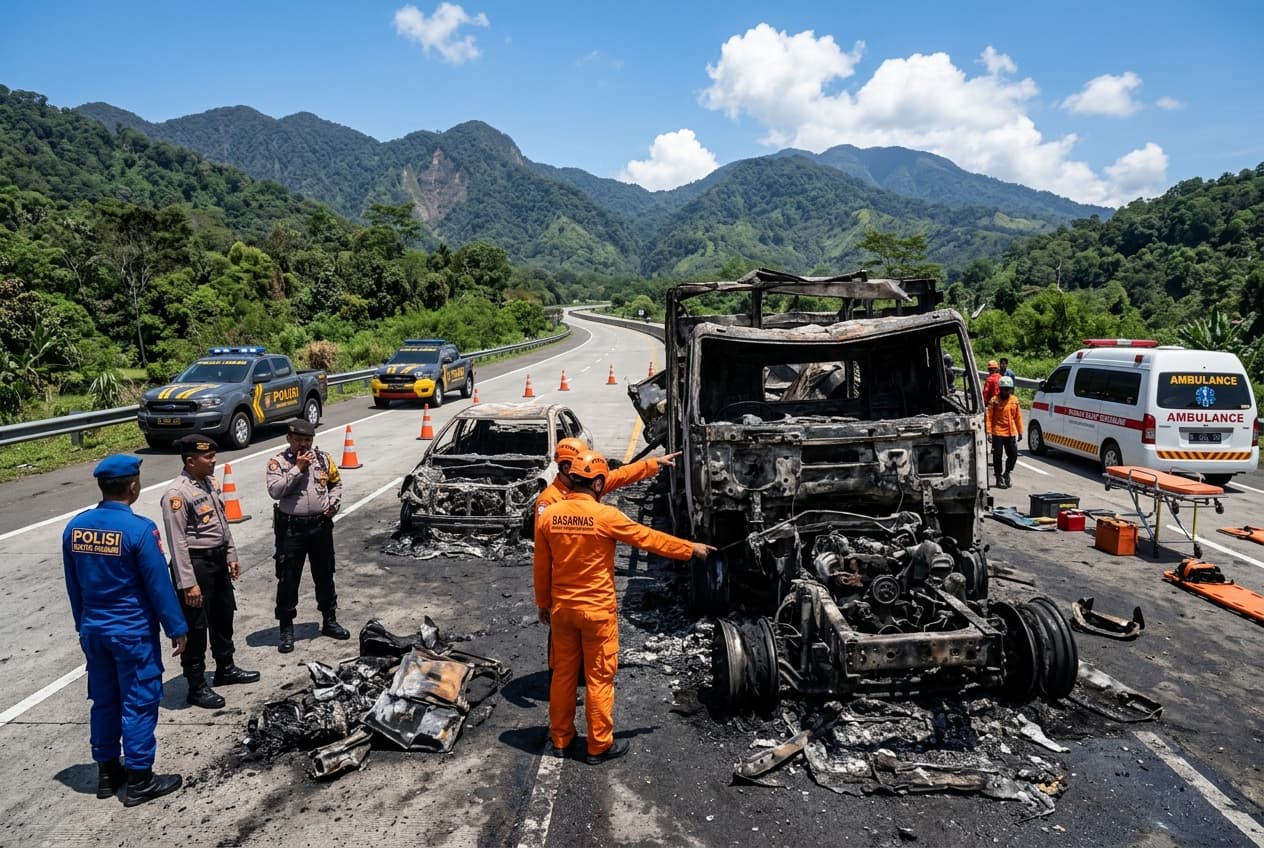
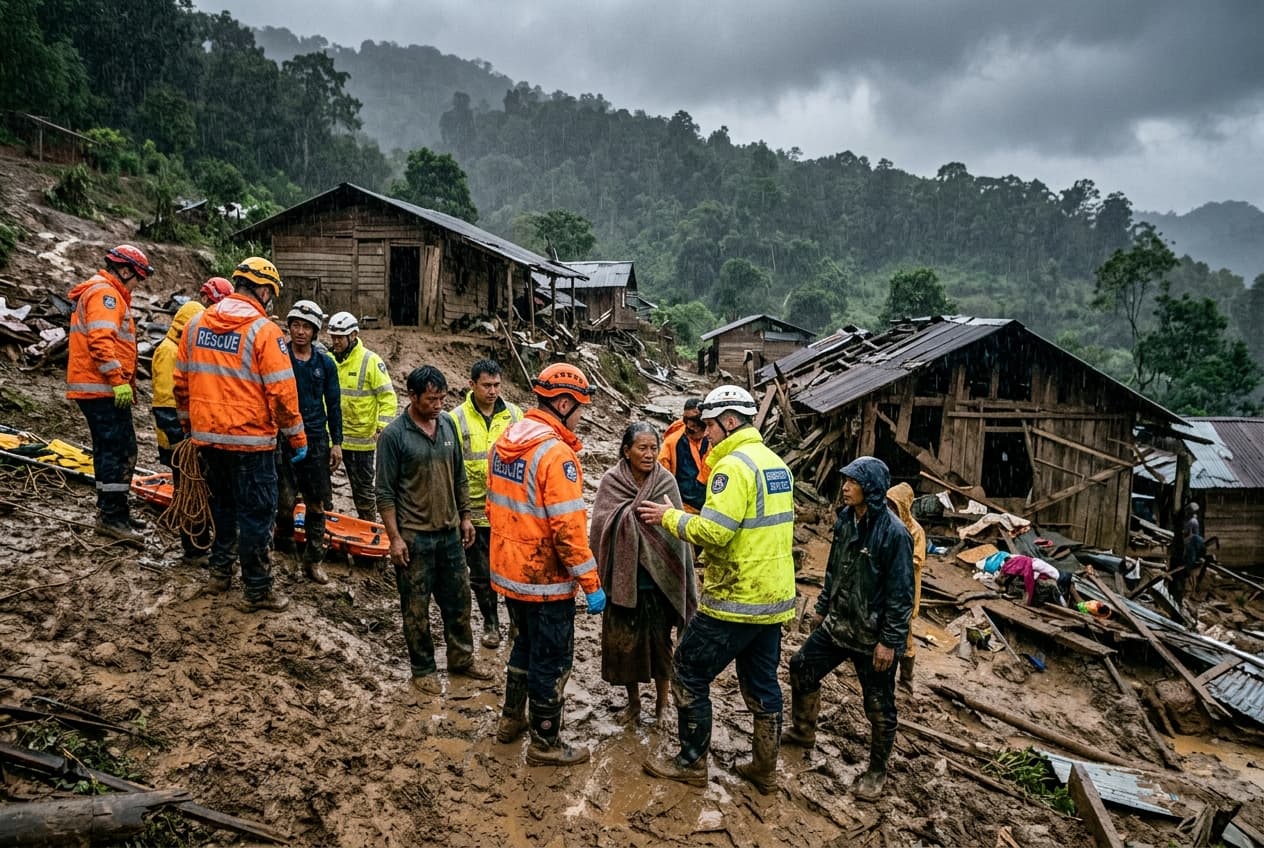
AI Image Disclaimer: The imagery in this article is AI-generated and serves an illustrative purpose only.
Sources:
· CGTN · The Canadian Press · Georgia Public Broadcasting · BSS · CBC
Published by Banx Network. This article is part of the Banx decentralized media programme, powered by the BXE token on the XRP Ledger.