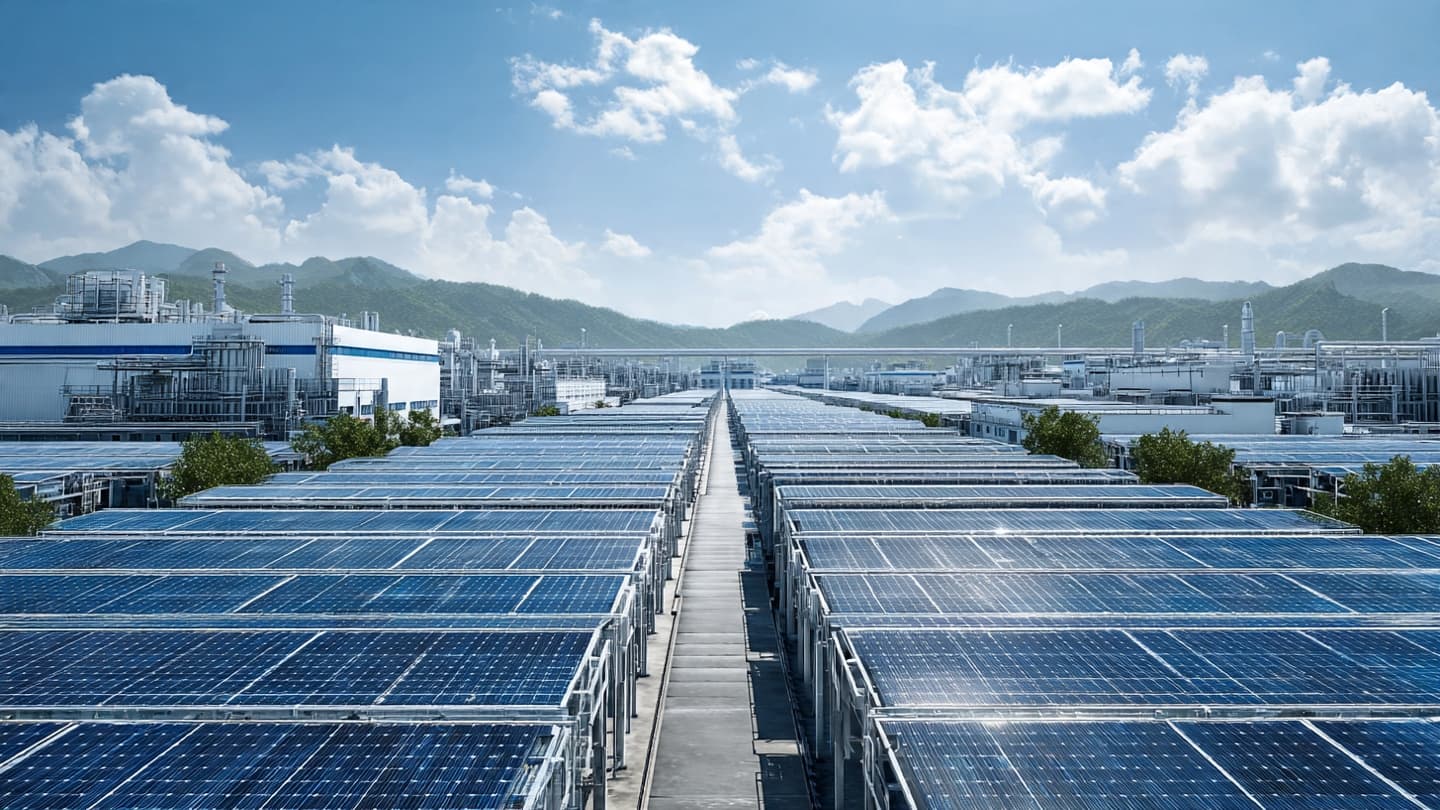
The competition shaping the twenty-first century may not be fought only through military strength or financial markets. Increasingly, it is unfolding through batteries, solar panels, electrical grids, and the technologies powering a cleaner future. In that quiet but transformative race, many analysts now believe China is moving ahead faster than the United States expected.
Across global markets, China has dramatically expanded its presence in renewable energy manufacturing. Solar panels, electric vehicle batteries, wind turbine components, and critical mineral processing facilities are now heavily concentrated within Chinese industrial networks. What began years ago as long-term strategic investment is now reshaping the balance of technological influence worldwide.
In America, the development has triggered growing concern among economists, environmental strategists, and industry leaders. Renewable energy is no longer viewed simply as an environmental issue. It is increasingly tied to national competitiveness, industrial independence, and future economic leadership.
Experts point to several reasons behind China’s rapid acceleration. Massive government-backed investment, streamlined industrial policy, extensive supply chain control, and large-scale manufacturing capacity have allowed Chinese companies to reduce production costs dramatically. As a result, many renewable technologies are now cheaper and more widely available than previously predicted.
Meanwhile, the United States continues facing internal challenges during its energy transition. Infrastructure modernization, political disagreements, supply chain dependence, and labor concerns have complicated efforts to scale renewable systems quickly. While American innovation remains strong in research and technology development, analysts argue that manufacturing capacity itself has become a crucial battleground.
The issue carries major global implications because clean energy demand is expected to rise sharply over the coming decades. Countries seeking to reduce emissions and modernize infrastructure will require enormous quantities of batteries, renewable equipment, and energy storage systems. Nations controlling those supply chains may gain substantial economic and geopolitical leverage.
Environmental advocates caution that global climate goals ultimately depend on rapid renewable expansion regardless of which country leads the market. Yet others warn that overdependence on a single manufacturing power could create future vulnerabilities similar to past dependence on fossil fuel exporters.
Inside financial markets, investors increasingly view renewable energy industries as one of the defining economic sectors of the century. Governments around the world are offering subsidies, incentives, and industrial partnerships aimed at strengthening domestic clean energy production. Competition once centered around oil fields now extends into lithium mines, semiconductor technology, and battery factories.
For ordinary citizens, the geopolitical struggle may appear distant. Yet its effects are already becoming visible through electric vehicle pricing, energy infrastructure projects, utility costs, and employment trends. Entire industrial regions could be reshaped by whichever countries dominate the next generation of energy systems.
American policymakers continue emphasizing efforts to expand domestic renewable manufacturing and reduce foreign dependence. New investments in battery plants, semiconductor facilities, and clean energy projects have accelerated in recent years. Still, analysts note that catching up requires not only innovation, but sustained long-term coordination between government, industry, and infrastructure development.
As the world moves deeper into the renewable era, the race between China and the United States reflects something larger than economics alone. It reveals how energy transitions have always shaped global power itself. The fuels of the future are changing, but the competition surrounding them remains as intense as ever.
AI Image Disclaimer Graphics are AI-generated and intended for representation, not reality.
Sources Check The Guardian Reuters Bloomberg CNBC Financial Times
Published by Banx Network. This article is part of the Banx decentralized media programme, powered by the BXE token on the XRP Ledger.