

Key Highlights
- Increased Investment:Governments and tech companies are ramping up investments in AI infrastructure.
- National Strategies:Countries are unveiling plans to enhance domestic AI capabilities.
- Energy Considerations:The energy demands of AI systems are prompting a shift towards renewable sources.
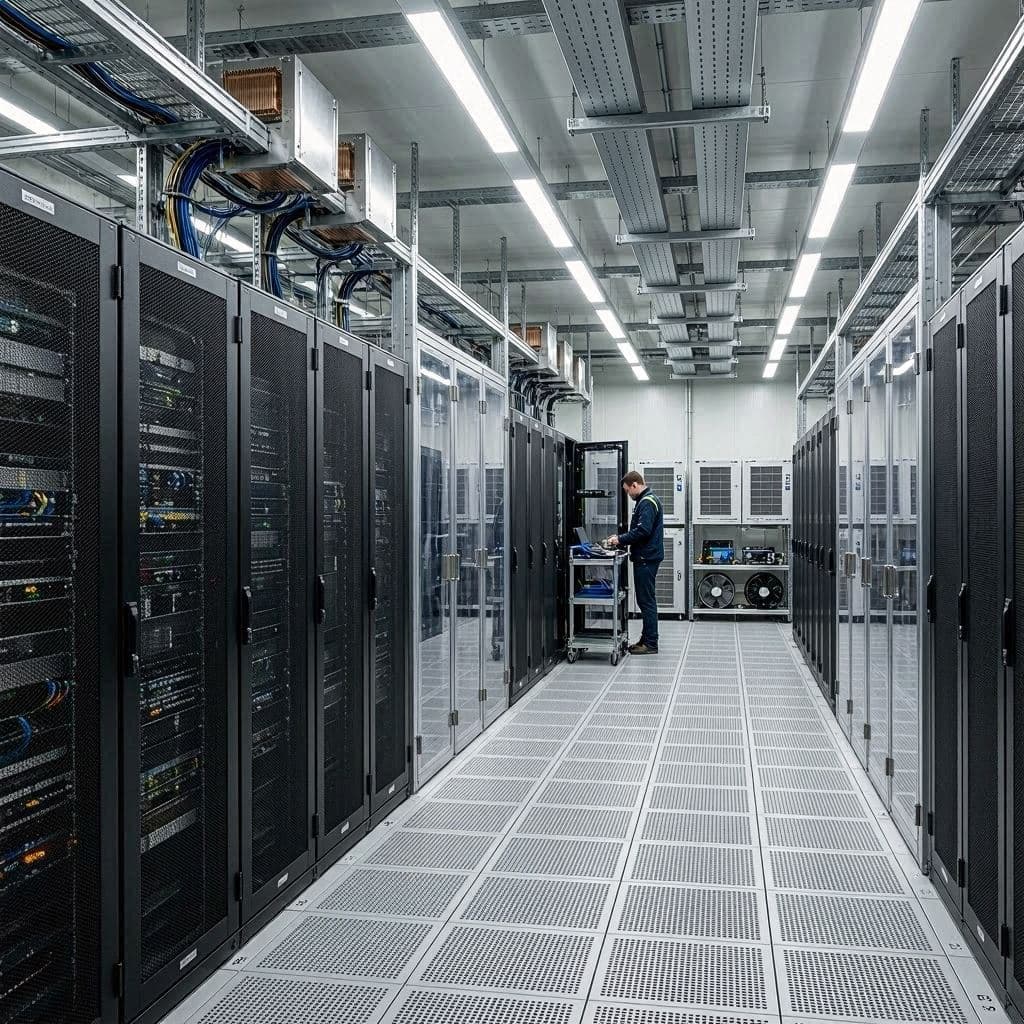
The realm of artificial intelligence (AI) is often perceived through screens and algorithms, creating an illusion of intangibility. However, beneath this digital facade lies a complex physical infrastructure comprising servers, power systems, and data centers that are crucial for AI's functionality. As the demand for AI services surges, the race to build and enhance this infrastructure is intensifying, with significant implications for global competitiveness.
In recent months, governments and major technology firms have significantly increased their investments in AI infrastructure. This includes the construction of advanced semiconductor facilities, expansion of cloud computing capabilities, and the establishment of large-scale data centers. These projects are not merely responses to current demands but are strategic moves aimed at positioning nations and companies at the forefront of AI innovation.
Countries around the world are announcing national strategies to bolster their domestic AI capabilities. These strategies often encompass investments in research institutions, high-performance computing resources, and workforce development programs. For instance, nations are recognizing that a robust AI ecosystem requires not only technological advancements but also a skilled workforce capable of driving innovation.
Simultaneously, technology companies are pouring billions into expanding their cloud infrastructure. Data centers equipped with cutting-edge processors are becoming central assets in the global AI landscape. These facilities are essential for handling the increasingly complex computational workloads that AI applications demand, thereby ensuring that companies remain competitive in a rapidly evolving market.
Energy consumption has emerged as a critical factor in the development of AI infrastructure. Large-scale AI systems require substantial electricity, leading both governments and industry leaders to explore renewable energy sources and more efficient computing technologies. This shift is not only about sustainability but also about ensuring that the infrastructure can support the growing energy demands of AI without compromising environmental goals.
Analysts suggest that access to advanced computing resources will increasingly shape geopolitical and economic dynamics. Countries that can cultivate strong AI ecosystems may gain significant advantages in innovation, productivity, and strategic industries. This shift underscores the importance of infrastructure in the broader context of national security and economic strategy.
As nations invest in the foundational elements of artificial intelligence, the global competition is evolving. It is no longer confined to software development; it now encompasses the physical infrastructure that underpins the digital age. Policymakers are also engaged in discussions about regulatory frameworks to ensure that this rapid technological expansion occurs responsibly and securely, balancing innovation with ethical considerations.
In conclusion, the race for AI supremacy is as much about building the necessary infrastructure as it is about developing software. As investments in AI infrastructure continue to grow, the implications for global competition, energy consumption, and regulatory frameworks will be profound, shaping the future of technology and its role in society.
Published by Banx Network. This article is part of the Banx decentralized media programme, powered by the BXE token on the XRP Ledger.




