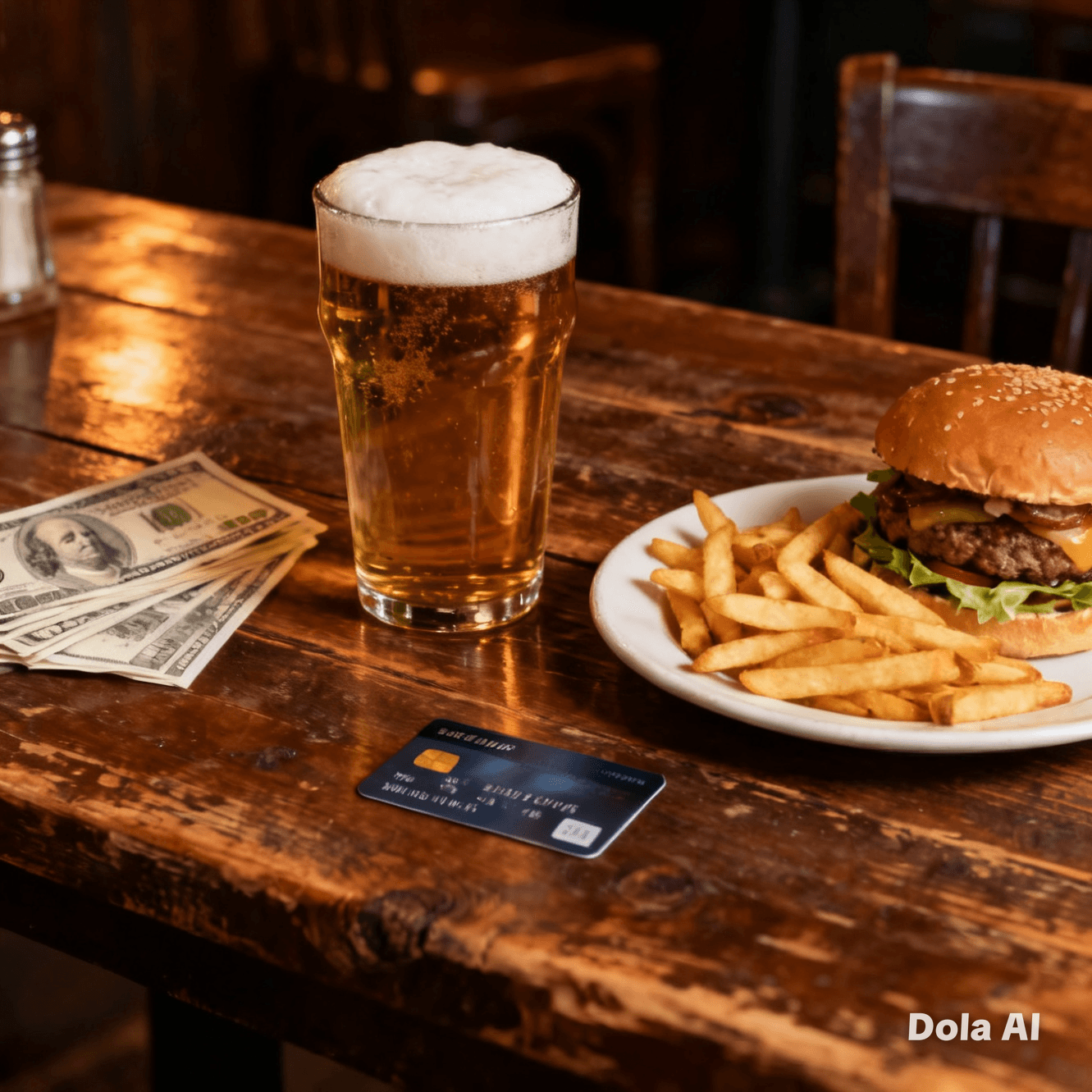
There is a softly spoken language in places where community gathers — the clink of glasses, the murmur of familiar greetings, the warm routine of shared moments that make a local pub more than a business, but a kind of extended drawing-room for its neighbors. In such spaces, the simple act of settling a bill is part of the ebb and flow of convivial life, a moment that joins the practical and the personal. Yet behind that familiar exchange, the subtle pulse of economy hums, carrying with it pressures that can reach far beyond the dining room or bar counter.
At the heart of a quiet village near Ledbury in Herefordshire, one landlord has sought to meet those pressures with an idea rooted in both tradition and necessity. At The Trumpet Inn, where regulars have long gathered for pints and conversation, the rising cost of doing business — especially the fees charged by banks for card payments — has become a gentle but persistent weight. In response, landlord Alan Davies introduced a 5 percent discount for customers who pay in cash, inviting patrons to consider coins and notes once again in an age dominated by cards and contactless taps.
For many, cash feels like a relic of yesterday — something tucked into wallets or forgotten in drawers — yet here it has reappeared in daily life with new purpose. What may have been a nostalgic notion for some has taken on practical meaning for others, as the modest discount offers a way for the pub to navigate fees that can chip away at already slim margins. In a small business world where every penny counts, such an approach can feel like a quiet negotiation with the currents of change.
Since the discount was introduced, the share of customers paying in cash has risen markedly, suggesting that what begins as a practical incentive can ripple gently through habits of payment and community interaction. Locals have observed that the conversation at the bar now sometimes circles not only around the weather or the match results, but around the economics of choice — a reminder that daily decisions, even about how we pay, can echo larger stories about costs and connection.
Across the hospitality sector, such pressures are not unique to one pub’s ledger. Rising business rates, wages, and utility costs, combined with higher charges on card transactions, have led many venues to rethink how they manage their finances while remaining convivial places for patrons. For some, this has meant reconsidering the role that cash can play in everyday transactions, not as a retreat from modern convenience, but as an additional tool in a broader strategy of resilience.
It is a choice that resonates differently with different customers. To some, paying cash harks back to an older rhythm of life, one that feels tactile and immediate in an increasingly digital world. To others, it represents a practical way to help a favored local business thrive in challenging times. The discount is modest — five pence on a pound — but its symbolism has been larger, inviting reflection on how small personal choices can contribute to the sustainability of cherished institutions.
Critics might point out that cash handling brings its own set of considerations, from security to the practicalities of banking, yet in this community, the experiment has been met with good-natured engagement rather than skepticism. Conversations at tables and along the bar reflect not just awareness of cost pressures, but a shared desire to support a place that feels like more than bricks and mortar.
In the wider context, trade bodies and hospitality groups continue advocating for measures that address the mounting costs faced by pubs and eateries, from legislative reliefs to enhanced support mechanisms. Landlords like Mr. Davies, for their part, are exploring creative yet grounded ways to navigate the economic landscape while preserving the essence of what makes their venues places of fellowship and warmth.
As the evening light falls across the village green and regulars gather once more for a drink and a chat, the moment of paying — whether by card or cash — becomes part of a larger rhythm. In that rhythm, a simple discount for cash serves as a reminder of community, adaptation, and the gentle interplay between tradition and change.
In a bid to help offset rising card transaction fees that affect small hospitality venues, The Trumpet Inn in Herefordshire is offering a 5 percent discount to patrons who pay in cash. The initiative has resulted in a marked increase in cash payments, and reflects broader cost pressures facing the UK pub sector. Landlord Alan Davies introduced the scheme as part of efforts to manage fees and maintain value for customers. Hospitality trade groups continue to discuss wider support measures for small businesses contending with increased costs.
AI Image Disclaimer Visuals are AI-generated illustrations intended solely for representational purposes and are not real photographs.
Sources : The Telegraph Yahoo News UK Mirror Weekly News Minimalist GB News
Published by Banx Network. This article is part of the Banx decentralized media programme, powered by the BXE token on the XRP Ledger.