In the vast silence of space, even the smallest fragments can carry stories older than imagination. A grain of dust drifting through the cosmic dark may appear insignificant, yet within its quiet structure it may hold a memory of beginnings—of a time when the Sun was young and the solar system itself was still learning how to take shape.
Scientists often turn to asteroids as keepers of these early memories. Unlike planets, whose surfaces have been reshaped by billions of years of geological activity, many asteroids remain relatively unchanged. They are fragments of the early solar system—cosmic time capsules that preserve the chemical and physical conditions from the era when planets were still forming.
Now, tiny grains collected from the asteroid Ryugu are offering a new piece of that ancient puzzle. These particles, returned to Earth by Japan’s Hayabusa2 mission, appear to contain faint magnetic signatures that date back to the earliest chapters of the solar system’s history.
Within these microscopic fragments, researchers detected stable magnetic patterns embedded in minerals formed long ago. These magnetic signals are not random. Instead, they appear locked into the structure of the grains themselves, suggesting they were recorded as the minerals formed—when the surrounding environment still carried a magnetic field. According to the research, many of the particles preserved these signals, and some even contain multiple magnetic directions within a single fragment, hinting at a complex magnetic environment during their formation.
What makes this discovery compelling is the timing it suggests. Scientists estimate that the magnetic record preserved in these grains could date to roughly three to seven million years after the solar system first formed. In cosmic terms, that is a remarkably early moment—when the disk of gas and dust surrounding the newborn Sun was still swirling with material that would eventually become planets, moons, and asteroids.
The magnetic traces likely formed as minerals known as magnetite crystallized within the asteroid’s parent body. Water moving through the rock may have helped these minerals grow, and as they formed, they captured the magnetic field present in their environment. Once locked into the mineral structure, those magnetic directions remained preserved across billions of years.
Interestingly, the magnetic field recorded in these grains appears to have been relatively weak. Estimates suggest it may have been around 15 microteslas, considerably weaker than Earth’s modern magnetic field, which averages about 50 microteslas. Yet even such a gentle magnetic presence may have played a meaningful role in shaping the early solar system.
Magnetic forces can influence how gas and dust move through a protoplanetary disk. In the young solar system, these subtle forces may have helped guide material toward certain regions, encouraging particles to gather and grow. Over time, such accumulation could lead to the formation of larger bodies—from small asteroids to the massive cores of giant planets.
In that sense, the magnetic signals preserved in Ryugu’s dust may represent more than a geological curiosity. They may be faint echoes of the forces that quietly organized the early solar system, guiding scattered particles into the structures that would eventually become worlds.
The findings also help resolve earlier debates among researchers. Previous studies examined only a handful of particles, leading to uncertainty about whether the magnetic signals were genuine or the result of later contamination. By analyzing a larger collection of samples, scientists now have stronger evidence that these magnetic signatures truly originated in the early solar system rather than being introduced later during handling or exposure on Earth.
Still, the story is far from complete. Each grain offers only a tiny glimpse of a much larger picture. Future research, including additional asteroid samples and improved measurement techniques, may help scientists refine their understanding of the magnetic environment that existed around the young Sun.
For now, these fragments from Ryugu remind us that the solar system’s earliest history is not entirely lost. Sometimes, its memory survives in the smallest of places—inside a speck of dust that has drifted through space for billions of years, quietly carrying the imprint of a cosmic dawn.
And as scientists continue to read these delicate magnetic signatures, they may be uncovering one of the subtle forces that helped transform a cloud of dust into the planetary family we call home.
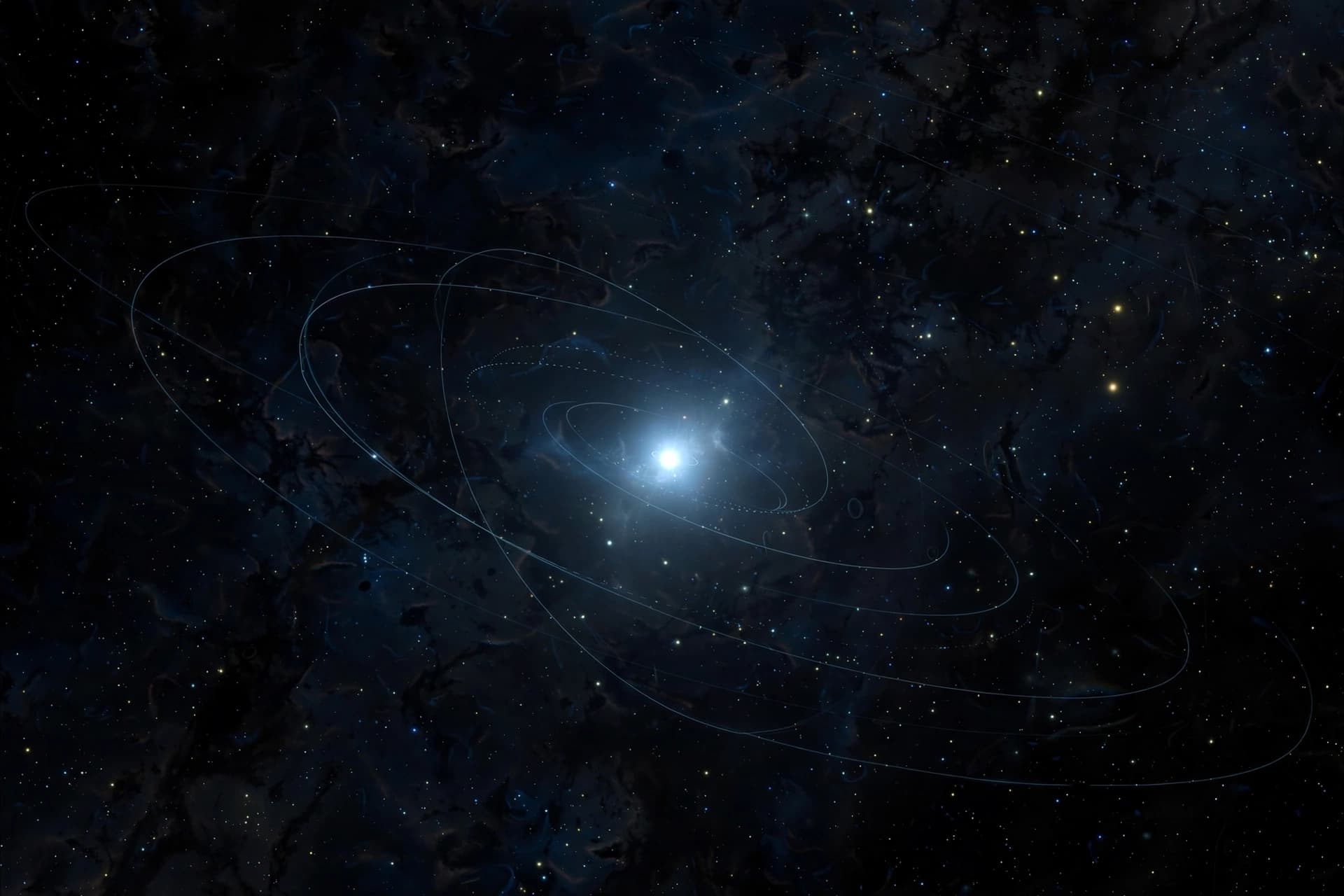
AI Image Disclaimer Images in this article are AI-generated illustrations, meant for concept only.
Source Check Credible coverage for “Asteroid dust reveals magnetic forces from the early solar system” exists. Mainstream and reputable science outlets include:
Earth.com Phys.org ScienceDaily MIT News AOL Science
Published by Banx Network. This article is part of the Banx decentralized media programme, powered by the BXE token on the XRP Ledger.