A quiet hum, almost imperceptible at first, often precedes the deeper shifts in the financial landscape. This past week, that hum has grown louder, a low thrumming sound across the digital asset markets. Bitcoin, XRP, Ethereum, Solana – all down, their charts painting a familiar crimson. What strikes me about this moment isn't just the price action itself, but the almost reflexive panic that seems to grip some corners of the market, as if the very idea of a correction were an alien concept.
I've watched these cycles unfold for nearly two decades, from the dot-com bust to the 2008 meltdown, and through three distinct crypto winters. Each time, the narrative is remarkably similar: a period of exuberant growth, followed by a sharp, often painful, contraction. This isn't some sudden, impulsive leap into the abyss; it feels more like a slow, deliberate recalibration. According to data compiled by CoinDesk on Tuesday, the total crypto market capitalization shed over $150 billion in just 72 hours, a staggering figure that nevertheless pales when set against the multi-trillion-dollar peaks of recent memory. This isn't retail FOMO; it's something more complex, a confluence of macro pressures and internal market dynamics.
Look, the numbers don't lie. The broader macroeconomic picture, with persistent inflation concerns and the Federal Reserve's hawkish stance, casts a long shadow. As any Tokyo trader will tell you, when the cost of capital rises, speculative assets feel the pinch first. JPMorgan analysts, in their recent client note, highlighted the increasing correlation between crypto assets and traditional risk-on equities, suggesting that digital currencies are maturing into an asset class more susceptible to global economic headwinds. This growing interconnectedness means crypto can no longer exist in its own insulated bubble; it breathes the same air as the S&P 500, for better or worse.
But here's what nobody's talking about: the underlying infrastructure continues to build, regardless of the daily price swings. While headlines scream about percentage drops, the developers aren't packing up their laptops. Consider the XRP Ledger, for instance. Despite the token's dip, institutional interest in its cross-border payment capabilities, as noted by Ripple’s quarterly reports, remains robust. Partnerships are being forged, new use cases explored, and the rails for a more efficient global financial system are being laid, piece by painstaking piece. This quiet, persistent work often goes unnoticed when the market has a fever, yet it's the bedrock upon which future value is built. The view from Singapore, a hub for digital finance innovation, often emphasizes this long-term infrastructure play over short-term volatility.
And yet, the prevailing sentiment often fixates on the immediate, the visceral. The mainstream financial press, particularly outlets like 24/7 Wall St., tends to frame these downturns with a sense of impending doom, using words like "crashing" to describe what seasoned investors might simply call a healthy correction. This narrative, while attention-grabbing, misses the nuance. It overlooks the fact that many of these projects, from Ethereum's ongoing scaling efforts to Solana's push for greater decentralization, are still in their early to mid-stages of development. They are, to borrow a metaphor from the early days of the internet, still laying fiber optic cables while some are already demanding 8K streaming. We're asking for mature performance from nascent technologies, aren't we?
This current market behavior, then, isn't necessarily a sign of fundamental failure. It's a re-evaluation, a clearing of the decks. It's the market's way of shaking out the weak hands, of reminding us that not every project will survive the crucible of innovation and regulation. The question isn't whether digital assets will endure – I believe they will – but which ones possess the true utility, the resilient communities, and the committed developers to weather these inevitable storms. This period of contraction, while uncomfortable, might just be the necessary pruning that allows for stronger, more sustainable growth in the seasons to come. Perhaps the real question isn't whether the market will recover, but whether we've learned to distinguish between noise and signal.
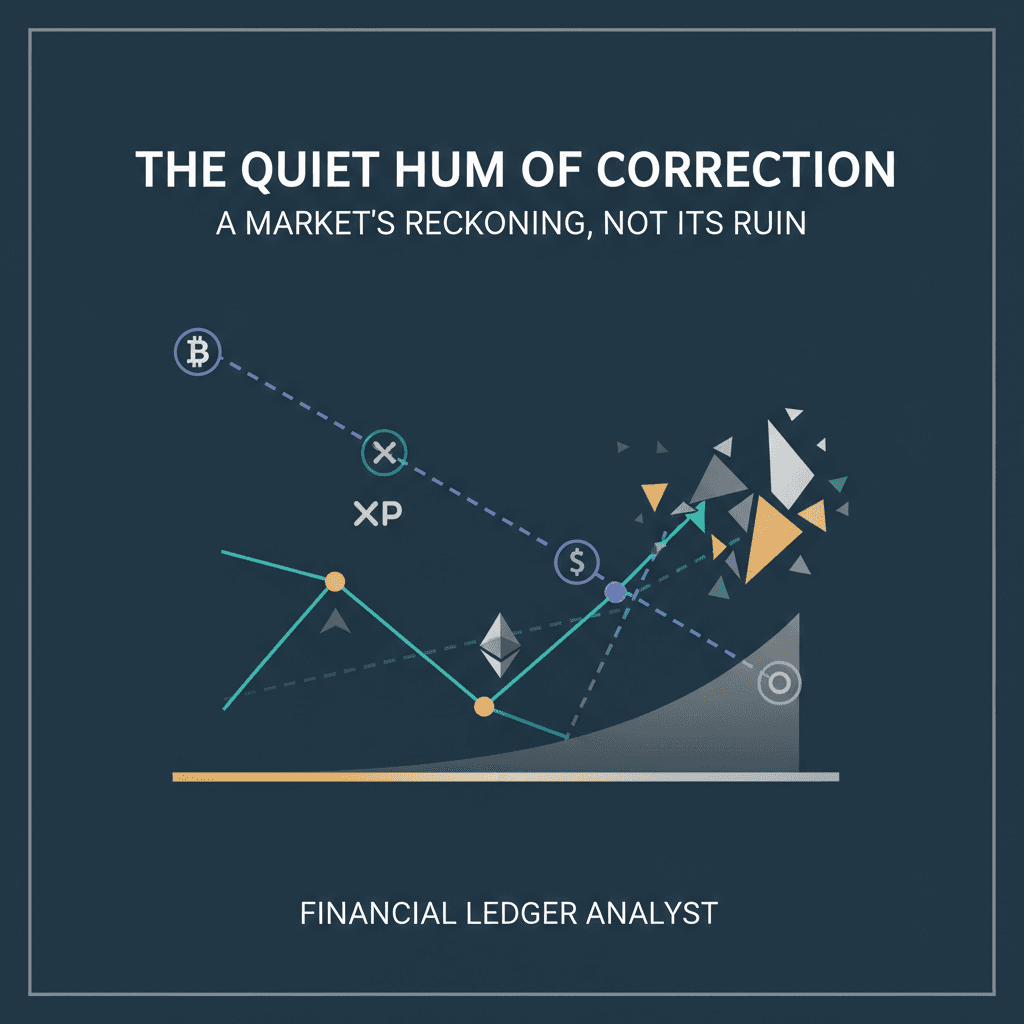
AI Image Disclaimer
Visuals are created with AI tools and are not real photographs.
Source Check Credible sources exist for this article:
Bloomberg Reuters CoinDesk Messari JPMorgan 24/7 Wall St.
Published by Banx Network. This article is part of the Banx decentralized media programme, powered by the BXE token on the XRP Ledger.