In the subterranean depths beneath the Swiss-French border, where the hum of machinery replaces the sounds of nature, scientists are engaged in a quest for the invisible. Dark matter, the mysterious substance that makes up roughly eighty-five percent of the universe’s mass, has long eluded direct detection. Now, a new detector developed by researchers from the University of California is joining the hunt at CERN, bringing fresh hope and innovative technology to one of physics’ most enduring puzzles.
The device, known as the Super Cryogenic Dark Matter Search (SuperCDMS), represents a significant leap forward in sensitivity. Unlike previous iterations, this detector utilizes silicon and germanium crystals cooled to near absolute zero to detect the faintest whispers of interaction between dark matter particles and ordinary matter. The extreme cold reduces thermal noise, allowing the sensors to pick up signals that would otherwise be lost in the background static of the universe.
At CERN, the European Organization for Nuclear Research, the detector is being tested in an environment rich with particle activity. While CERN is best known for the Large Hadron Collider, it also hosts a variety of experiments aimed at understanding the fundamental building blocks of reality. The presence of the UC detector underscores the collaborative nature of modern science, where institutions across the globe contribute pieces to a vast intellectual puzzle.
Dark matter does not emit, absorb, or reflect light, making it impossible to observe with traditional telescopes. Its existence is inferred from its gravitational effects on visible matter, such as the rotation of galaxies and the bending of light. However, knowing it is there is different from understanding what it is made of. Theories suggest it could be composed of Weakly Interacting Massive Particles (WIMPs) or other exotic particles, but conclusive evidence remains elusive.
The UC team’s approach focuses on low-mass dark matter candidates, a range that has been difficult to probe with earlier technologies. By tuning their instruments to these specific energies, they hope to either discover new particles or rule out certain theoretical models. Each null result is also valuable, narrowing the search space and guiding future experimental designs. Science often advances as much by knowing what is not there as by finding what is.
The implications of a successful detection would be profound, reshaping our understanding of cosmology and particle physics. It would confirm that the standard model of physics is incomplete and open the door to new theories of the universe. For now, however, the focus remains on the meticulous process of data collection and analysis. Patience and precision are the virtues required in this high-stakes game of cosmic hide-and-seek.
As the UC detector begins its work at CERN, it carries the hopes of a scientific community eager to illuminate the dark corners of the cosmos. Whether it finds definitive proof or simply refines the questions we ask, the effort contributes to humanity’s enduring desire to understand the fundamental nature of reality. The search continues, driven by curiosity and the belief that even the invisible can be revealed.
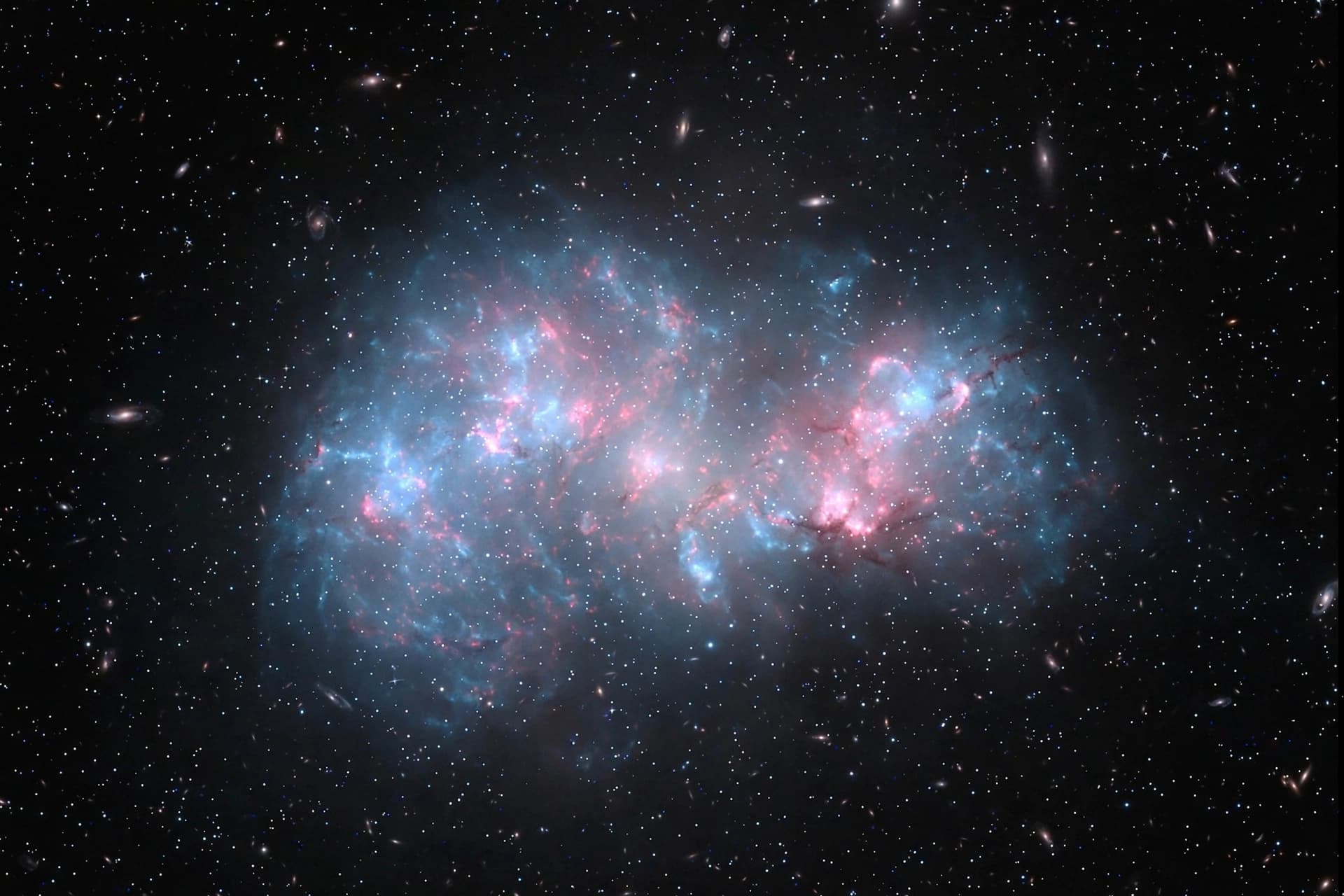
AI Image Disclaimer: The visual representations accompanying this article are AI-generated interpretations designed to illustrate the scientific and technological context of the experiment.
Sources: University of California CERN Science Daily
Published by Banx Network. This article is part of the Banx decentralized media programme, powered by the BXE token on the XRP Ledger.