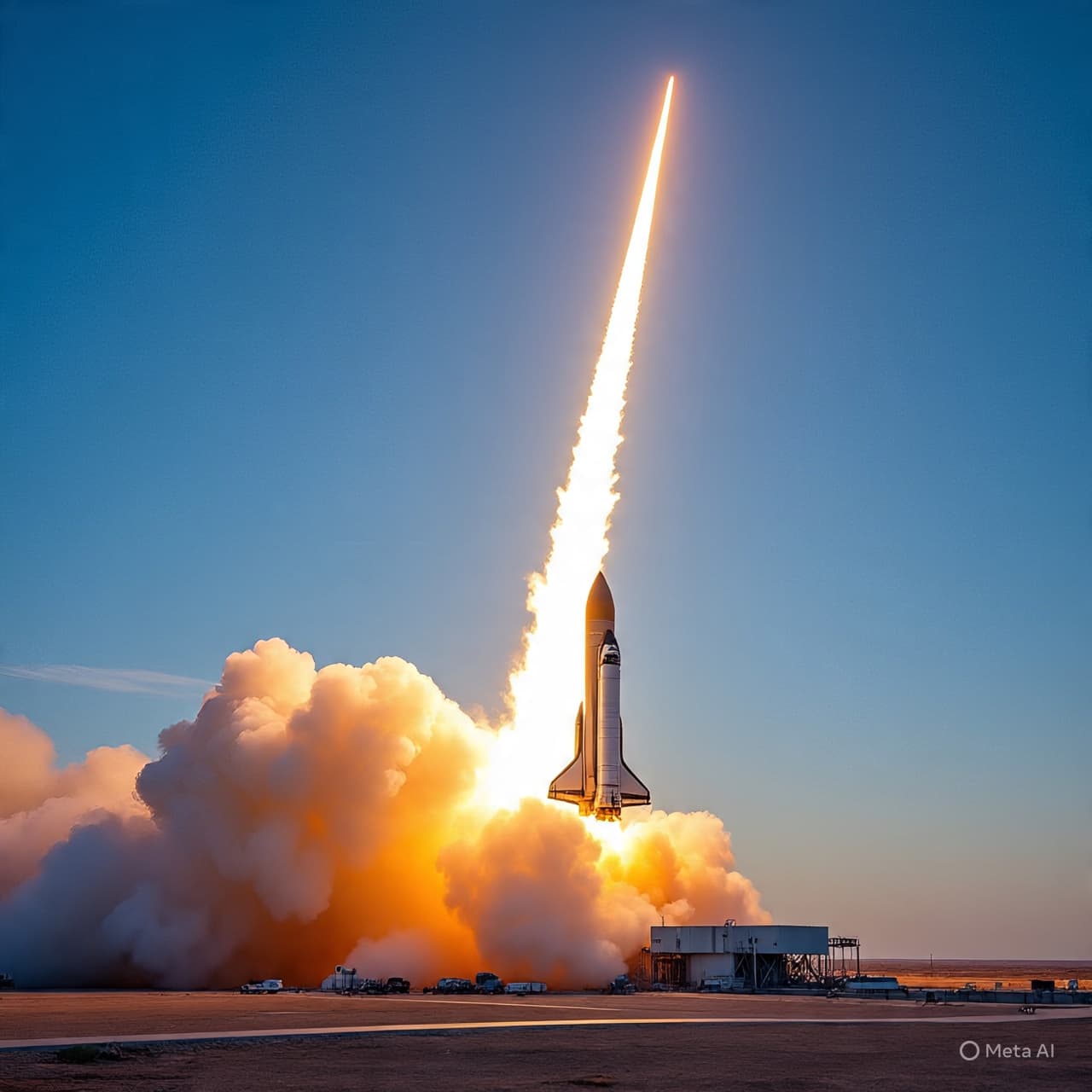
Every launch begins the same way: a column of fire, a trembling horizon, and a machine rising slowly from the ground toward the open sky. For a few minutes, the spectacle captures attention across the world—a powerful reminder of humanity’s growing presence in space. Rockets carry satellites, scientific instruments, and the promise of exploration beyond Earth’s boundaries.
Yet long after the roar of the engines fades, traces of those launches remain. Not in the form of visible smoke drifting across the sky, but in subtle chemical changes unfolding high above the planet.
Recent scientific studies suggest that the rapidly growing number of rocket launches may be altering the chemistry of Earth’s upper atmosphere. The effects are still being studied, but researchers say the emissions from rockets—particularly those using solid fuels or kerosene—introduce particles and gases that behave differently from most forms of pollution released at ground level.
When rockets climb through the atmosphere, they release exhaust directly into the stratosphere and mesosphere, regions far above typical aircraft flight paths. In these high layers of air, particles can linger longer because natural weather systems do not circulate or wash them away as quickly.
One of the primary concerns involves soot, alumina particles, and reactive gases produced by rocket engines. Some studies suggest these materials could interact with ozone chemistry or absorb sunlight, subtly influencing atmospheric temperatures. Even small quantities may matter because the stratosphere is normally a relatively clean and delicate environment.
Researchers studying atmospheric chemistry have noted that solid-fuel rockets can release aluminum oxide particles, which may contribute to chemical reactions affecting ozone. Liquid-fueled rockets, including those burning kerosene, produce black carbon particles that can absorb solar radiation. Because these emissions occur at high altitudes, they may persist for longer periods than pollutants released near the ground.
Another factor is the increasing frequency of launches. In past decades, rocket launches were rare events, numbering only a few dozen each year. Today, as satellite networks expand and private space companies accelerate launch schedules, the number of missions has climbed dramatically. Some forecasts suggest that annual launches could reach several thousand in the coming decades if satellite constellations and space infrastructure continue to grow.
Scientists emphasize that the current atmospheric impact remains relatively small compared with other sources of pollution. However, the trajectory of the industry has raised questions about how these emissions might accumulate over time if launch rates continue to rise.
Particularly sensitive is the stratospheric ozone layer, which protects life on Earth by filtering harmful ultraviolet radiation from the Sun. Some rocket exhaust compounds may participate in chemical reactions that either destroy ozone molecules or influence the processes that regulate them. While existing studies do not suggest immediate large-scale damage, researchers say continued monitoring is essential as launch activity expands.
Another emerging concern involves reentering spacecraft and satellites. As satellites burn up during reentry, they release metallic particles—such as aluminum—into the upper atmosphere. These particles may contribute to the formation of new chemical compounds or alter atmospheric circulation patterns in subtle ways.
The challenge facing scientists and policymakers is not to halt space exploration, but to better understand its environmental footprint. Several strategies are already being discussed. Engineers are exploring cleaner rocket propellants, including methane and liquid hydrogen, which may produce fewer soot particles than traditional fuels. Other proposals include improved rocket designs that reduce exhaust emissions or new regulations to track the cumulative effects of launches.
There is also growing interest in integrating atmospheric science more closely with the rapidly evolving space industry. By modeling emissions, monitoring atmospheric changes, and encouraging transparency in rocket fuel composition, researchers hope to build a clearer picture of how launches interact with the planet’s protective layers.
For now, the conversation remains measured and exploratory. Spaceflight continues to deliver remarkable benefits—from global communication to climate monitoring satellites that help scientists understand Earth itself. At the same time, each launch reminds researchers that the boundary between Earth and space is not empty but part of a complex atmospheric system.
As humanity’s journeys into orbit become more frequent, scientists say the task ahead is simple in principle but challenging in practice: to ensure that the path toward the stars remains mindful of the sky we pass through along the way.
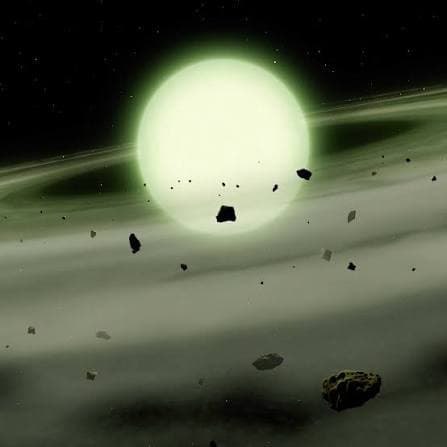
AI Image Disclaimer Illustrations were produced with AI and serve as conceptual depictions.
Source Check Credible reporting and scientific discussion about rocket launches affecting the chemistry of Earth’s atmosphere exist in these outlets:
Nature Scientific American Space.com The Guardian Phys.org
Published by Banx Network. This article is part of the Banx decentralized media programme, powered by the BXE token on the XRP Ledger.