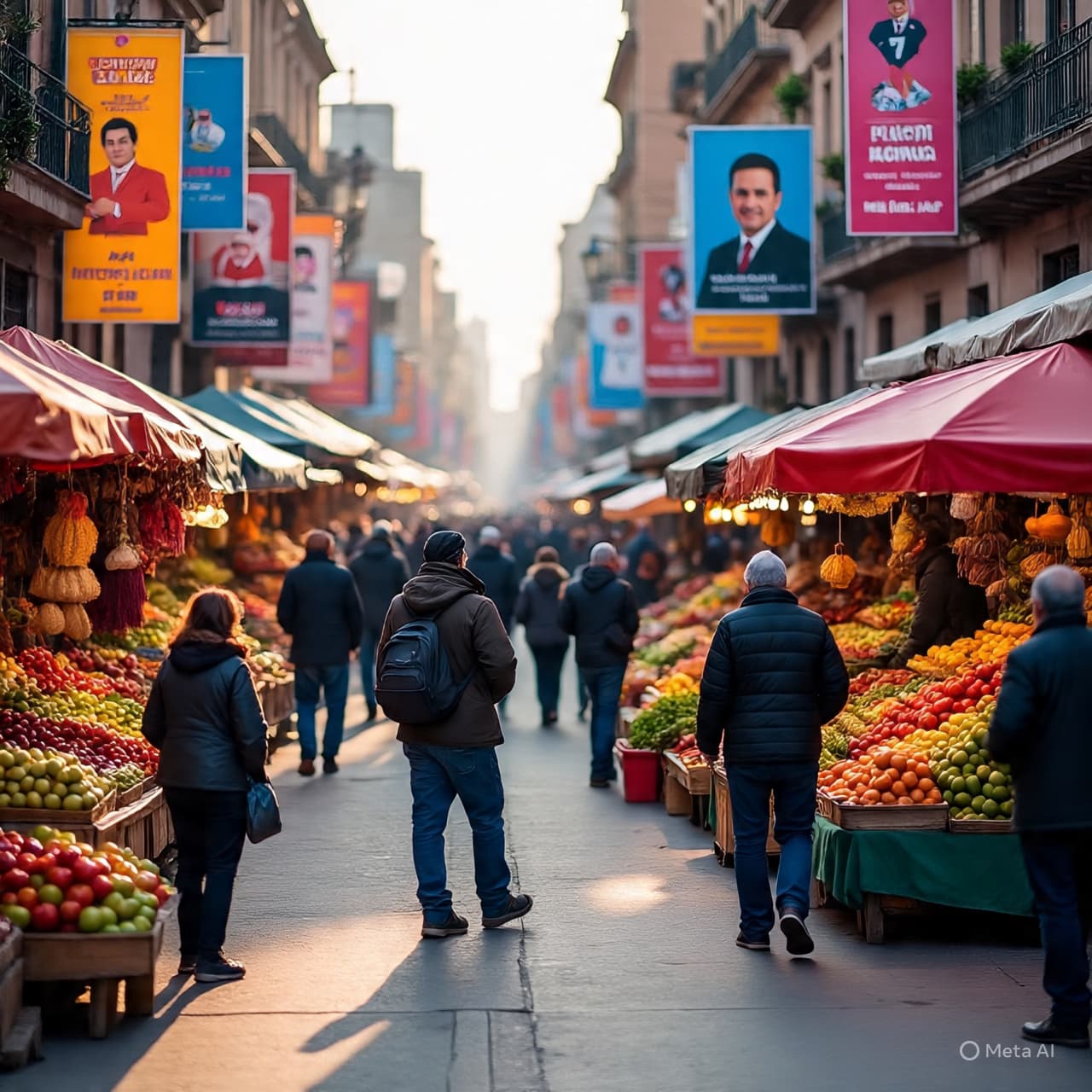
In the bustling streets of Latin American cities, life pulses with familiar rhythms—the chatter of street vendors, the hum of buses, the distant echo of political slogans on billboards. Yet recently, a new tremor has begun to ripple through the continent: the influence of Donald Trump. Not merely a former U.S. president, he has become, for many, a force that redraws political fault lines, a seismic presence felt in capitals from Bogotá to Brasília. His actions and words, though originating thousands of miles away, send aftershocks that disturb alliances, economies, and public discourse alike.
Trump’s reimagined Monroe Doctrine seems both historical and immediate, a reminder that the Americas have long been a stage for strategic ambitions. Governments watch carefully, weighing every statement, every sanction, every diplomatic maneuver. Cuba finds itself under renewed scrutiny, Venezuela’s exiles scan the horizon for signals of change, and regional leaders navigate the delicate dance of compliance, resistance, and negotiation. Each new policy, each rhetorical flourish, is like a tremor whose reverberations touch the lives of ordinary citizens.
Amid these geopolitical shifts, the human dimension is profound. Families worry about migration, workers wonder how trade disruptions will affect their livelihoods, and local communities assess how far sovereignty can bend before it breaks. Even small policy decisions can cascade into everyday realities, turning distant political actions into immediate social consequences. In a sense, the earthquake is both metaphorical and literal—a disruption whose intensity is measured not just in headlines but in human experience.
Yet resilience surfaces amid uncertainty. Civil society adapts, regional media recalibrates narratives, and diplomatic channels quietly work to maintain balance. Nations experiment with subtle strategies to protect both sovereignty and stability, showing that while tremors may unsettle, they also reveal the capacity for endurance. Trump’s influence is a catalyst, illuminating existing fault lines and testing the flexibility of political systems.
Ultimately, the tremor continues. Analysts chart its progress in political indices and polling data, but the true impact unfolds in neighborhoods, workplaces, and homes. Latin Americans navigate these shifts with a combination of caution and pragmatism, proving that while seismic political forces may shake the continent, the everyday rhythms of life persist.
AI Image Disclaimer Visuals are created with AI tools and are not real photographs, meant for conceptual representation only.
Sources Vocal.Media — “Trump Is the Political Earthquake Shaking Latin America” Al Jazeera — China and regional geopolitics under Trump’s Western Hemisphere strategy ABC News / Reuters — Trump’s Monroe-style doctrine and hemispheric influence Reuters — Cuba’s response to U.S. energy and diplomatic pressure AP News — Venezuelan diaspora and regional reactions
Published by Banx Network. This article is part of the Banx decentralized media programme, powered by the BXE token on the XRP Ledger.