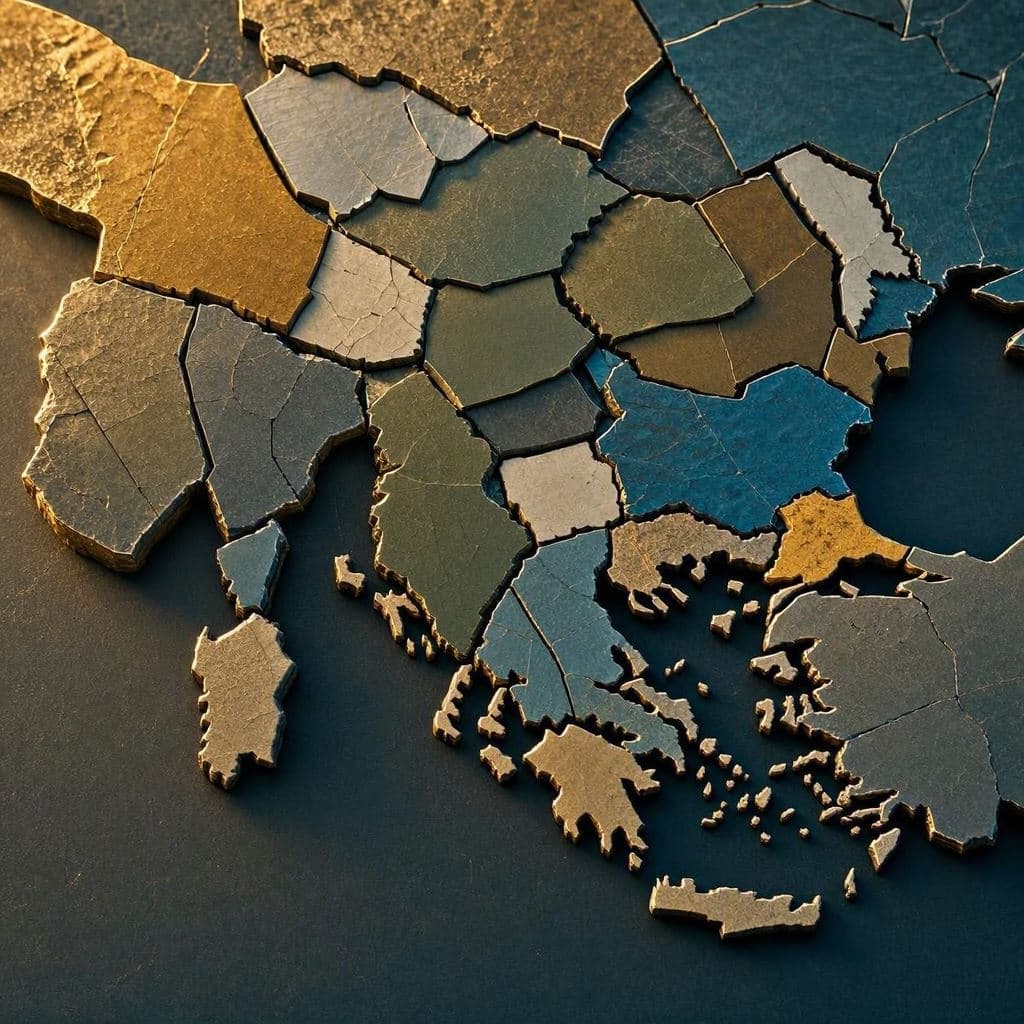
Memory is a contested landscape, where history is often rewritten by the victors, the mourners, or the ideologues. In Serbia, the recent funeral of Ratko Mladić, the former Bosnian Serb military commander convicted of genocide, has sparked intense debate and deep sorrow across the Balkans. While international courts have labeled him a war criminal responsible for some of the darkest chapters of the Yugoslav wars, his reception in parts of Serbia was one of reverence. This dichotomy reveals the enduring wounds of conflict and the complex ways in which nations process guilt, identity, and legacy. It is a moment that forces us to confront the persistence of division.
Mladić died in prison after serving a life sentence for his role in the Srebrenica massacre and the siege of Sarajevo. His return to Serbia for burial was met with large crowds, nationalist rhetoric, and displays of honor that shocked many outside the country. For his supporters, he is viewed not as a criminal but as a defender of the Serb people, a military leader who acted in the interest of his nation during a brutal civil war. This perspective stands in stark contrast to the findings of the International Criminal Tribunal for the former Yugoslavia (ICTY).
The funeral served as a rallying point for nationalist sentiments that have never fully dissipated since the wars of the 1990s. Political figures and religious leaders attended, lending institutional weight to the commemoration. This endorsement signals a continued refusal to accept the judicial verdicts of the international community. It suggests that for many, national loyalty outweighs universal legal standards, creating a parallel narrative of heroism that persists despite evidence of atrocity.
For the victims of the Bosnian War, particularly the survivors of Srebrenica, the event was a profound retraumatization. Seeing Mladić honored as a hero feels like a denial of their suffering and a dismissal of the justice they sought for decades. The pain is fresh, as if the wounds of the past have been reopened by the pomp and ceremony of the present. It underscores the difficulty of achieving true reconciliation when one side’s villain is the other side’s martyr.
Regional reactions have been largely condemnatory, with leaders from Bosnia and Herzegovina, Croatia, and other neighbors expressing outrage. They view the funeral as a provocation and a setback for regional stability. The event threatens to reignite old tensions, reminding the Balkans that the peace achieved in Dayton is fragile. It highlights the need for continued diplomatic engagement and efforts to foster a shared understanding of history.
The international community has responded with concern, emphasizing the importance of acknowledging war crimes to prevent future violence. Statements from European Union officials and human rights organizations stress that glorifying convicted war criminals undermines the rule of law and democratic values. They call for Serbia to align more closely with European norms of accountability and truth-telling. However, the domestic political reality in Serbia often resists such external pressures.
This event also reflects internal divisions within Serbia itself. While many celebrated Mladić, others protested the funeral, advocating for a different path forward. These voices, though quieter, represent a segment of society that seeks reconciliation and honesty about the past. Their presence offers a glimmer of hope that the narrative is not monolithic, and that change is possible, even if slow and difficult.
As the dust settles on the funeral, the questions remain. How can societies heal when they cannot agree on the basic facts of their history? The legacy of Mladić will continue to be debated, serving as a litmus test for Serbia’s direction. Will it move toward integration and accountability, or remain anchored in nationalist mythologies? The answer will shape the future of the entire region.
The hero’s funeral for Ratko Mladić in Serbia highlights the deep divisions that persist in the Balkans. It challenges the prospects for reconciliation and regional stability. Let this event prompt renewed efforts toward truth and healing.
AI Image Disclaimer: The visuals accompanying this piece are AI-generated interpretations intended for illustrative purposes only.
Sources: BBC News Reuters The Guardian
Published by Banx Network. This article is part of the Banx decentralized media programme, powered by the BXE token on the XRP Ledger.