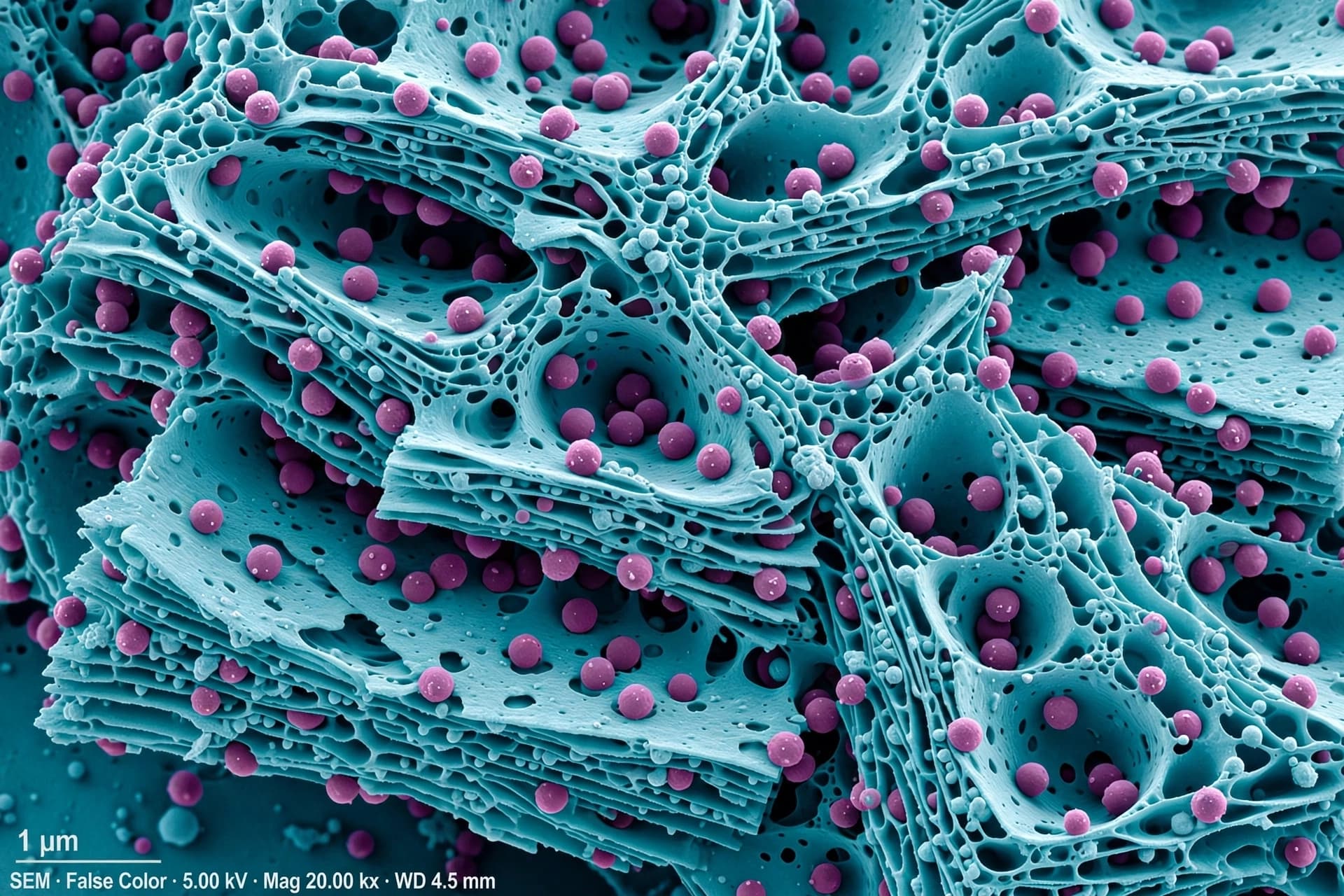
Time leaves its signature in quiet places. It settles not only in silvering hair or fine lines on the skin, but in the delicate architecture of cells — in tissues that carry possibility itself. Among them, the ovaries hold a particularly intricate clock, one that does not always move in step with the calendar. To speak of ovarian aging is to step into a conversation about biology’s private timeline, where chronological age and reproductive potential do not always mirror one another.
For decades, fertility has often been framed in terms of years lived. Yet science increasingly distinguishes between chronological age and biological age. Biological age reflects the condition of tissues and cells — how they function, repair, and respond — rather than the number of birthdays marked. In the ovaries, this distinction becomes especially meaningful. Some individuals may experience a decline in ovarian reserve earlier than expected, while others retain reproductive potential beyond typical statistical averages.
Ovarian aging is shaped by both the quantity and quality of eggs. Women are born with a finite number of oocytes, and this reserve gradually declines over time. As the pool diminishes, the likelihood of chromosomal abnormalities increases, influencing fertility outcomes and miscarriage risk. However, the pace of this process varies widely, guided by genetics, lifestyle factors, environmental exposures, and underlying health conditions.
In recent years, researchers have turned to epigenetic markers as a way to better understand these variations. Epigenetics refers to chemical modifications that influence how genes are expressed without altering the underlying DNA sequence. One of the most studied epigenetic signals involves patterns of DNA methylation, which can act as a kind of biological timestamp. Scientists have developed “epigenetic clocks” that estimate biological age based on these patterns. When applied to reproductive tissues, such clocks may offer insights into ovarian aging beyond traditional hormone tests.
Current clinical tools for assessing ovarian reserve — such as anti-Müllerian hormone (AMH) levels and antral follicle count via ultrasound — provide valuable but incomplete information. They estimate the remaining quantity of eggs but do not directly measure egg quality or broader cellular aging. Epigenetic research aims to complement these assessments, potentially identifying individuals whose ovarian biological age diverges from their chronological age.
The implications are significant. A more precise understanding of ovarian aging could refine fertility counseling, guide decisions around egg freezing, and inform reproductive planning. It may also shed light on conditions such as premature ovarian insufficiency, where ovarian function declines earlier than expected. However, experts caution that epigenetic markers remain an area of active research. While promising, they are not yet standard tools in routine fertility practice.
Beyond fertility, ovarian aging intersects with broader health outcomes. The timing of menopause, for instance, has been associated with cardiovascular health, bone density, and metabolic changes. Understanding the biological processes behind ovarian aging may therefore contribute to a more comprehensive view of women’s health across the lifespan.
Still, the science unfolds carefully. Researchers continue to examine how environmental stressors, diet, smoking, and chronic illness influence epigenetic patterns. The ovary does not age in isolation; it responds to the body’s overall biological environment. In this sense, ovarian aging becomes not merely a reproductive issue, but a reflection of systemic aging.
For now, the emerging picture is one of nuance rather than alarm. Biological age and fertility are complex, influenced by interwoven genetic and environmental threads. While epigenetic markers offer a compelling window into cellular timekeeping, they remain part of an evolving field.
Clinicians continue to rely on established hormone tests and imaging while research advances in parallel. Studies published in leading scientific and medical journals suggest that future fertility care may integrate epigenetic insights, but broader validation is still underway. As understanding deepens, ovarian aging may come to be seen not simply as a countdown, but as a biological narrative — one written gradually, cell by cell, over time.
AI Image Disclaimer Graphics are AI-generated and intended for representation, not reality.
Source Check (Credible Media Scan): Nature The Lancet The New England Journal of Medicine Science STAT News
Published by Banx Network. This article is part of the Banx decentralized media programme, powered by the BXE token on the XRP Ledger.