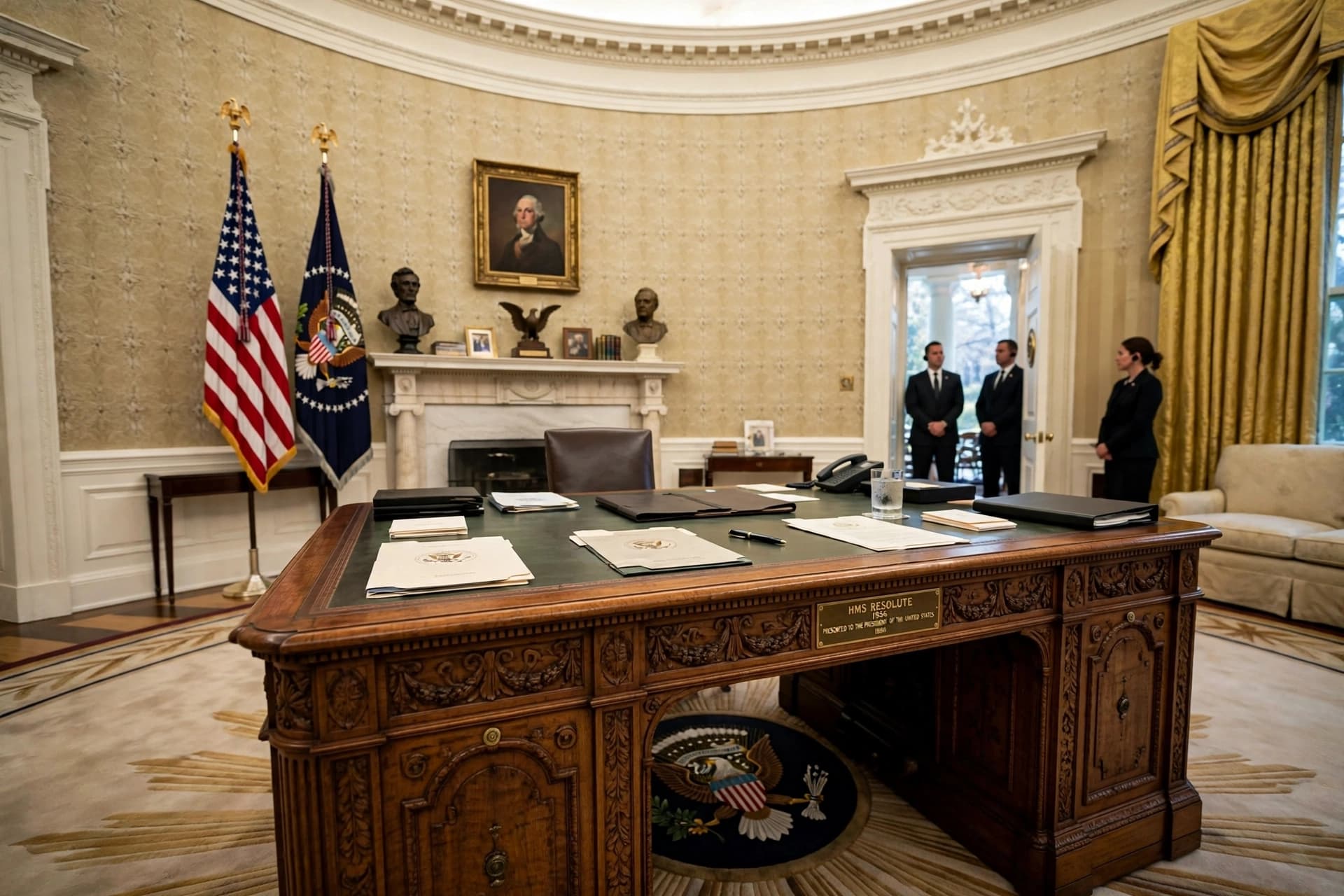
The Oval Office is more than a room in the White House. Over generations, its desk, windows, and familiar circular arrangement have become part of the visual language of American political history. That history entered an unusual conversation this week after President Donald Trump said Secret Service officials had suggested replacing the current office altogether.
Trump made the claim during a 75-minute interview with TIME published October 1. He said a Secret Service official had proposed taking down the Oval Office and constructing a new one, a suggestion Trump said he rejected because he considered the room historically distinctive.
The Washington Post reported that four former Secret Service officials said previous administrations had also been encouraged to take steps to strengthen security around the Oval Office. According to those former officials, past presidents declined such measures in part because implementing them would require relocating presidential operations.
The current Secret Service did not immediately respond to the Post's questions about Trump's account, while a White House spokesman also declined to provide additional comment. That leaves an important distinction in the story: Trump's description of what he was told is publicly documented, while the precise recommendation and its reasoning have not been independently confirmed by the current agency.
The Oval Office itself has a long history of change. The current room was created during Franklin D. Roosevelt's presidency and has been modified and redecorated by successive administrations. Trump has made substantial changes to its appearance during his current term, including adding gold-colored decorative elements.
Trump has also been overseeing broader changes to the White House complex. TIME reported on the new helipad and ballroom project, while the East Wing has been demolished as part of the ballroom construction. Other changes have included work around the Rose Garden. These projects have generated separate legal and preservation disputes, making questions about the treatment of historic White House spaces particularly visible.
During the interview, Trump said he was exploring whether the Oval Office could receive a federal landmark designation. The White House is already a National Historic Landmark, although the Washington Post reported that Congress has exempted the White House from portions of the National Historic Preservation Act, giving presidents considerable latitude over changes to the building.
For now, there is no indication that the Oval Office is actually scheduled for demolition. What has been established is that Trump says he rejected such a proposal and that former Secret Service officials have confirmed a broader history of security discussions concerning the presidential workspace. The agency itself has not publicly confirmed the specific proposal described by Trump.
The episode illustrates how security, history, and presidential control can intersect inside one of America's most recognizable rooms. Whether the Oval Office remains physically unchanged or continues to evolve under future administrations, the debate reflects a recurring question surrounding the White House: how should a working seat of government adapt to modern demands while retaining the places and symbols that connect it to the past?
AI Image Disclaimer: This illustration is AI-generated and does not depict an actual Secret Service meeting or proposed reconstruction.
Sources: TIME; The Washington Post; Associated Press
Published by Banx Network. This article is part of the Banx decentralized media programme, powered by the BXE token on the XRP Ledger.


.jpg&w=3840&q=75 "Japan Has Provided Ukraine With $20 Billion in Aid Since Start of War, Zelenskyy Says")