There is something quietly extraordinary about the idea that a comet we will never see again in our lifetimes has left behind a gift we can still unwrap each October. Halley’s Comet last passed near Earth in 1986 and will not return until 2061. But every year, twice a year, our planet passes through the trail of dust and debris it shed on its previous journeys around the Sun. In May, that debris produces the Eta Aquariids. In October, it gives us the Orionids—a meteor shower that connects anyone who looks up to a comet that has been observed by humans for more than two thousand years.
The Orionids are active from October 2 to November 7, with peak activity expected on the nights of October 21–22 and 22–23 . Under ideal conditions, observers can expect about 10 to 20 meteors per hour . The meteors are among the fastest of any annual shower, entering Earth’s atmosphere at roughly 41 miles per second (66 kilometers per second), which gives them a blazing speed and, often, persistent glowing trains that hang in the sky for several seconds after the meteor itself has vanished .
This year, however, the viewing conditions come with a complication. The Moon will be in a waxing gibbous phase during the peak, illuminated about 80 percent on the night of October 21 and growing brighter on October 22 . Its light will wash out many of the fainter meteors, reducing the number visible during the early evening and midnight hours. The key, astronomers say, is patience. The Moon is expected to set in the early morning hours—around 3 a.m. local time in many locations—leaving a dark window before dawn . That pre-dawn period, from moonset until the first hints of twilight, is the best time to watch.
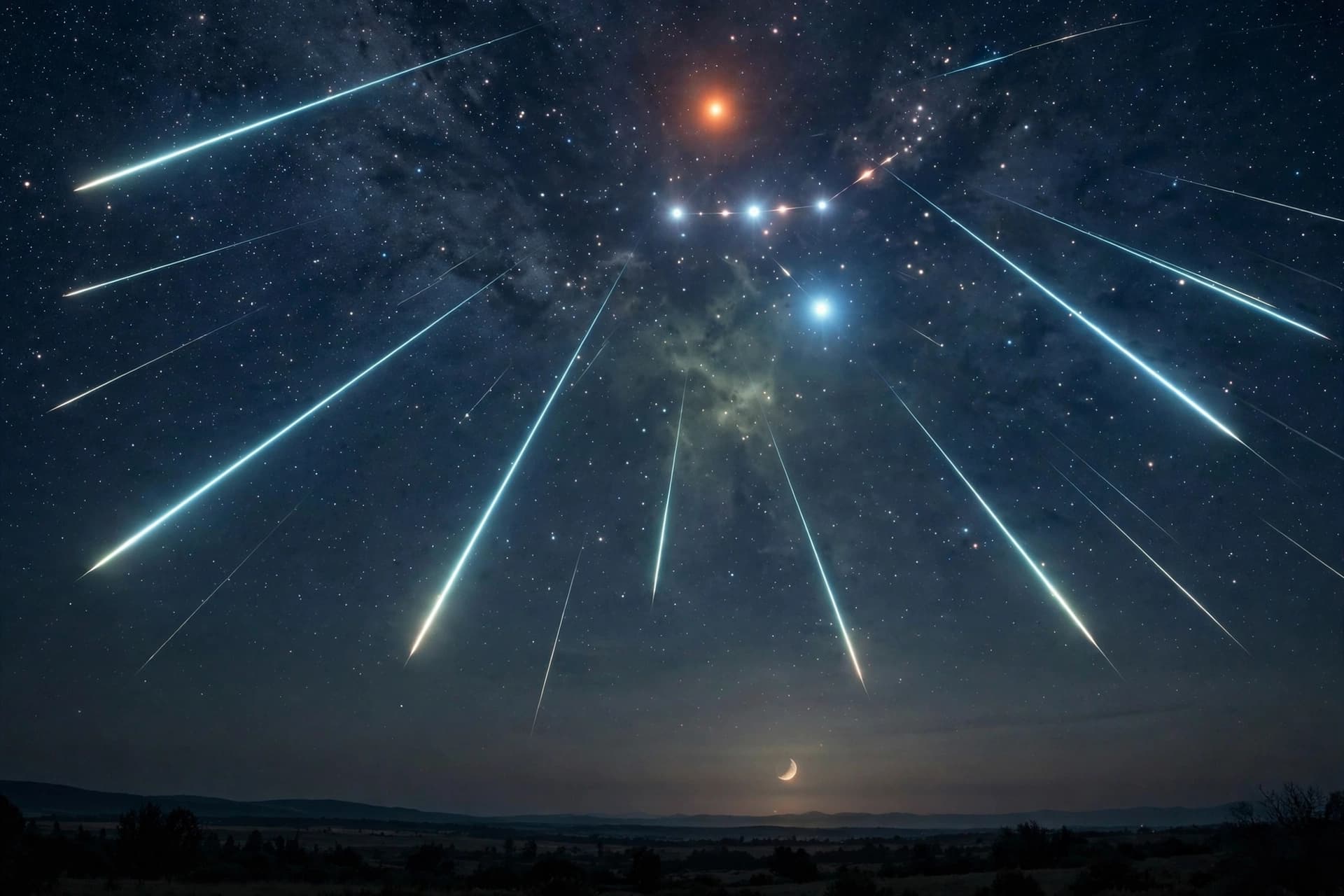
The meteors appear to radiate from the constellation Orion, near the upraised club of the Hunter, but they can flash across any part of the sky. NASA recommends looking about 45 to 90 degrees away from the radiant, where the meteor trails appear longer . No special equipment is needed. Binoculars and telescopes narrow your field of view and make it harder to catch the brief streaks. The best approach is to lie back, let your eyes adjust for at least fifteen to twenty minutes, and watch as much of the sky as possible.
The Orionids are not the most prolific shower of the year—the Perseids in August and the Geminids in December typically offer higher rates—but they carry a particular significance. They are a direct physical connection to Halley’s Comet, a object that has been recorded in human history for more than two millennia and whose next return none of us alive today will see . The dust that burns up in our atmosphere this October was shed by the comet during one of its previous passes around the Sun, perhaps centuries ago. It has been drifting through space ever since, waiting for Earth to cross its path.
So if you find yourself awake at 3 a.m. on a clear October night, step outside, find a spot away from streetlights, and look up. The light you see may have been released by a comet before your grandparents were born. And the comet itself will not return until long after you are gone.
AI Image Disclaimer: The imagery in this article was generated using artificial intelligence for illustrative purposes only and does not depict the actual meteor shower or night sky conditions described.
Sources: BBC Weather, Antigua State College, Chip.cz, NewsBreak, Star Walk, Yahoo Tech
Published by Banx Network. This article is part of the Banx decentralized media programme, powered by the BXE token on the XRP Ledger.