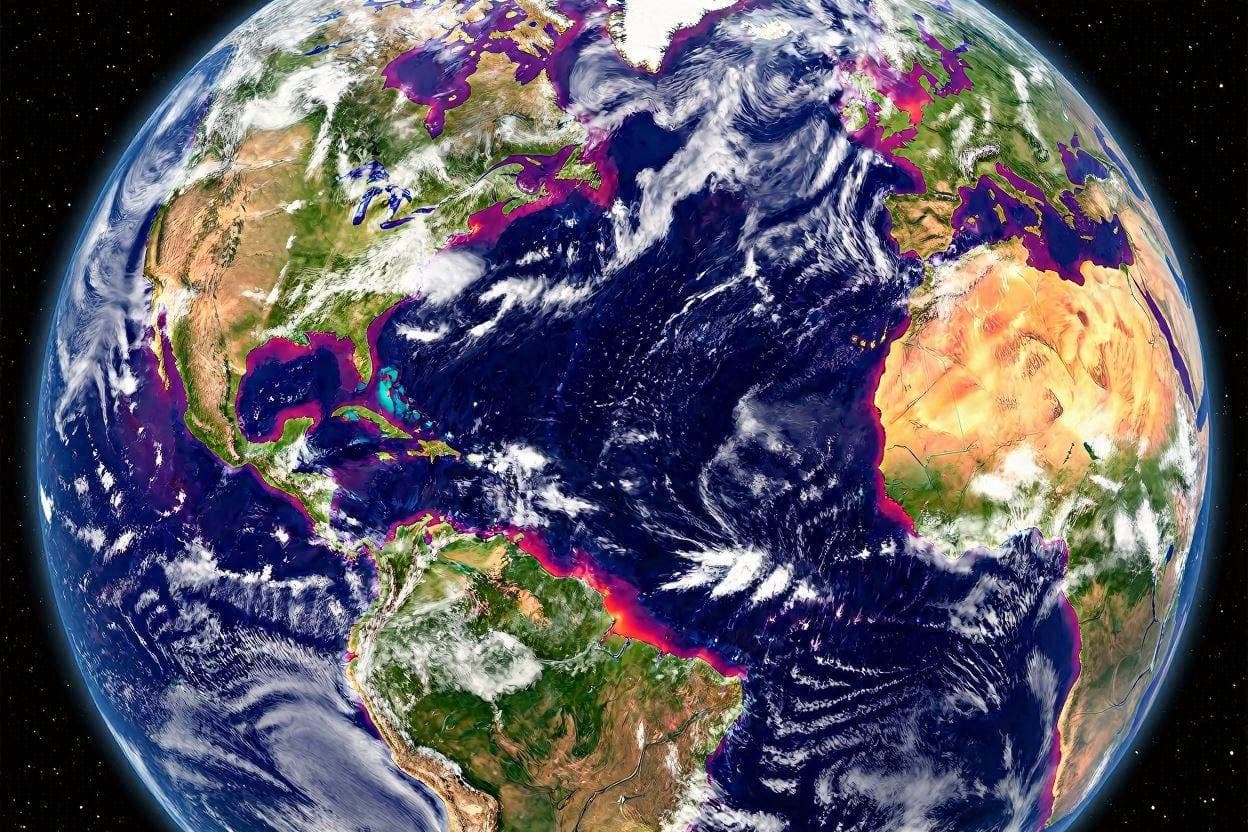
The oceans have long served as Earth's quiet memory, absorbing heat, regulating weather, and sustaining countless forms of life. Their vastness often gives the impression of permanence, yet subtle shifts beneath the waves can influence climates, coastlines, and ecosystems across the globe. New scientific observations indicate that June marked the warmest global ocean temperatures ever recorded for the month, reinforcing concerns about the continuing accumulation of heat within the planet's climate system.
According to international climate monitoring agencies, average sea surface temperatures reached record levels across large portions of the world's oceans during June. Scientists note that these measurements are based on extensive observations collected through satellites, drifting buoys, research vessels, and other long-term monitoring systems. The data continue a broader trend of unusually warm ocean conditions observed in recent years.
The oceans absorb more than 90 percent of the excess heat trapped by greenhouse gases in Earth's atmosphere. This natural buffering process has helped moderate atmospheric warming, but it also means that marine environments are storing increasing amounts of thermal energy. Rising ocean temperatures influence weather patterns, marine ecosystems, and the intensity of certain extreme climate events.
Warmer oceans can contribute to marine heatwaves, coral bleaching, changing fish distributions, and stronger evaporation that may influence rainfall patterns in some regions. Scientists also monitor ocean temperatures because they play an important role in the development of tropical cyclones, although many additional atmospheric and environmental factors determine whether storms ultimately form and intensify.
Researchers emphasize that no single month defines the long-term climate trend. Instead, climate assessments rely on decades of observations that consistently show increasing ocean temperatures alongside rising global average temperatures. Continued monitoring allows scientists to distinguish temporary natural variability from persistent long-term changes within Earth's climate system.
Climate experts are also observing the interaction between long-term global warming and naturally occurring climate patterns such as El Niño and La Niña, both of which influence regional weather and ocean conditions. While these cycles affect year-to-year variability, scientists state that the underlying warming trend remains closely associated with increasing concentrations of greenhouse gases in the atmosphere.
The latest ocean temperature records underscore the importance of sustained international observation programs. Satellite missions, autonomous ocean floats, research expeditions, and coastal monitoring networks provide the data necessary for improving climate models, forecasting environmental changes, and supporting marine resource management across the world.
As researchers continue tracking ocean conditions throughout the year, they caution that warmer seas may influence weather and marine ecosystems in the months ahead. Ongoing scientific observations will help refine future climate assessments while providing governments, industries, and coastal communities with evidence-based information to support long-term planning and environmental resilience.
AI Image Disclaimer: The illustrations accompanying this article are AI-generated visual representations created for editorial purposes and are not actual satellite or field photographs.
Source Verification Check: Strong credible sources found.
Sources:
Copernicus Climate Change Service National Oceanic and Atmospheric Administration (NOAA) World Meteorological Organization (WMO) Reuters Nature Climate Change
Published by Banx Network. This article is part of the Banx decentralized media programme, powered by the BXE token on the XRP Ledger.