

Key Highlights
- New Species:Marine scientists discovered several previously unknown deep-sea species during a recent expedition.
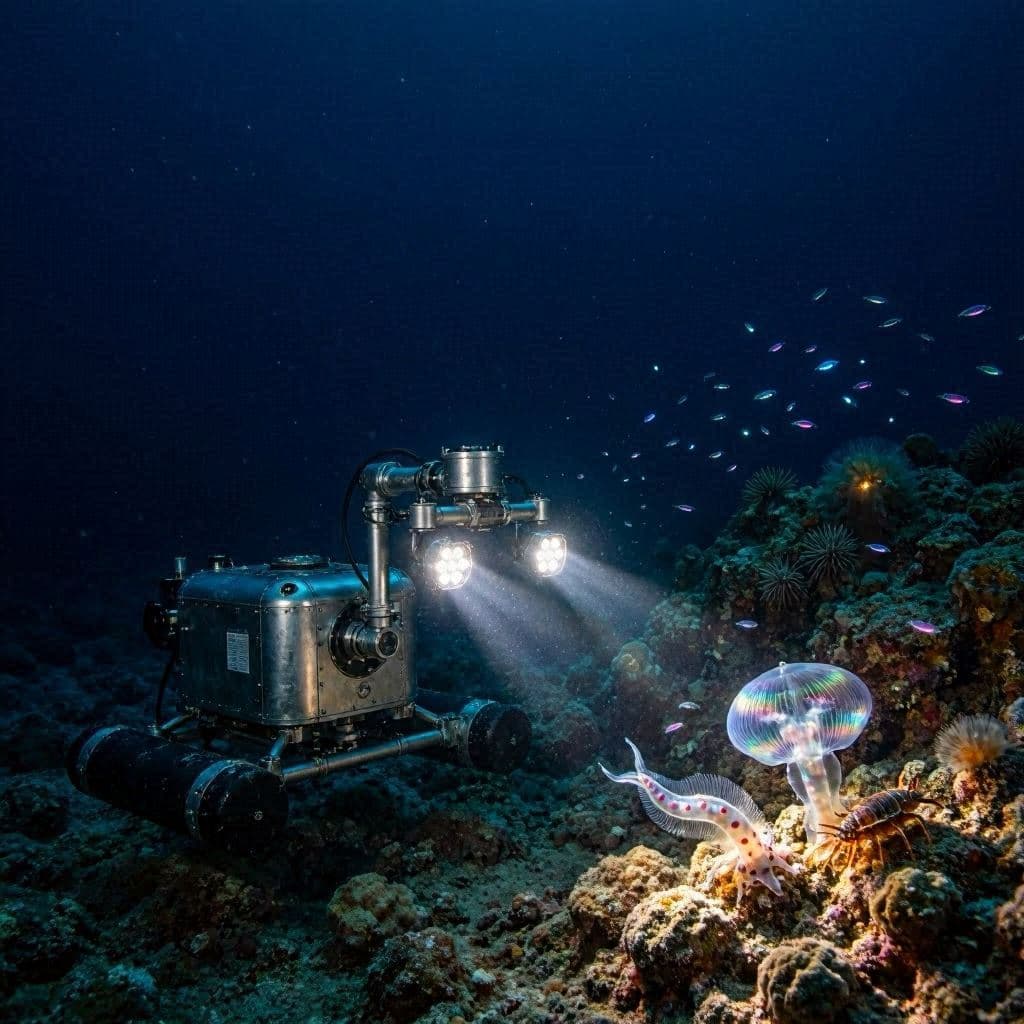
- Advanced Technology:Researchers utilized remotely operated vehicles and high-resolution cameras to explore the ocean's depths.
- Biodiversity Insights:The findings contribute to understanding the unique adaptations of life in extreme environments.
[Deep-Sea Discoveries]
The deepest parts of the ocean remain among the least explored places on Earth. Hidden beneath kilometers of water, where sunlight never reaches and pressure is immense, countless forms of life continue to thrive in ways that challenge scientific understanding. Every expedition into these remote environments serves as a reminder that exploration is not limited to distant planets; remarkable discoveries still await beneath the surface of our own world.
An international team of marine scientists has identified several previously unknown deep-sea species during a recent scientific expedition in the Pacific Ocean. Utilizing cutting-edge technology, including remotely operated vehicles (ROVs) and high-resolution cameras, researchers explored habitats located thousands of meters below sea level. The discoveries contribute to a growing body of knowledge about biodiversity in one of Earth's most isolated ecosystems.
According to the research team, the newly documented organisms include marine invertebrates and other species that exhibit unique physical adaptations for surviving under extreme pressure, near-freezing temperatures, and complete darkness. Scientists are conducting detailed laboratory analyses to determine the evolutionary relationships of the newly observed organisms and to confirm whether they represent entirely new species. This research is crucial as it helps to fill gaps in our understanding of marine life and its evolution.
[Unique Ecosystems]
Deep-sea ecosystems differ significantly from shallow marine environments. Without sunlight, many organisms rely on marine snow—organic particles drifting from upper ocean layers—or on chemical energy released through hydrothermal vents and cold seeps. These unusual ecological conditions have driven the evolution of highly specialized life forms that are rarely encountered during conventional marine research. The adaptations observed in these organisms are a testament to the resilience of life in extreme conditions.
Researchers emphasize that documenting new species is only one objective of deep-sea exploration. Understanding how these organisms interact with their environment helps scientists better assess ecosystem resilience, nutrient cycling, and the broader health of the world's oceans. Information gathered during expeditions also contributes to conservation planning as interest in deep-sea resource development continues to grow. The balance between exploration and conservation is critical as we seek to understand and protect these fragile ecosystems.
[Technological Advances]
Technological advances have significantly expanded scientists' ability to investigate previously inaccessible ocean depths. Modern ROVs equipped with robotic arms, high-definition imaging systems, and precision navigation allow researchers to observe fragile marine organisms with minimal disturbance. These tools continue to transform oceanography by providing unprecedented access to some of the planet's most remote environments. The integration of technology in marine research not only enhances our understanding but also raises ethical considerations regarding the impact of human activity on these ecosystems.
[Future of Ocean Research]
Marine biologists note that only a small fraction of the deep ocean has been systematically explored. As a result, many experts believe that thousands of marine species remain undiscovered. Continued international collaboration and sustained investment in ocean research will be essential for expanding scientific knowledge while supporting responsible stewardship of deep-sea ecosystems. The latest Pacific Ocean expedition demonstrates that Earth's oceans continue to hold extraordinary scientific discoveries. Every newly identified species enriches our understanding of biodiversity and highlights the importance of protecting environments that remain largely unexplored. As future expeditions venture into even greater depths, researchers hope to uncover further insights into the remarkable diversity of life beneath the waves.
Published by Banx Network. This article is part of the Banx decentralized media programme, powered by the BXE token on the XRP Ledger.




