In the vast, silent theater of the early universe, where particles danced in a hot, dense soup, physicists have long searched for shadows that might hint at unseen forces. Dark photons, hypothetical cousins of the light we see, were thought to be constrained by the behavior of cosmic plasma. The prevailing theory suggested that if these particles existed, they would have transferred energy to the plasma, heating it in a way that should have left a detectable signature. For years, this assumption served as a boundary, narrowing the search for one of nature’s most elusive secrets.
However, new simulations have upended this conventional wisdom. Researchers using advanced computational models have discovered that the interaction between dark photons and plasma is far more complex than previously understood. Instead of a smooth, linear transfer of energy, the system becomes violently nonlinear. As soon as dark photon energy begins to flow into the plasma, the dynamics shift dramatically, effectively shutting off the conversion process before significant heating can occur. This finding invalidates a major constraint that had ruled out large portions of the dark photon parameter space.
The implications are profound. By removing this barrier, scientists have reopened a wide window of possibility for dark photon dark matter. What was once considered excluded territory is now viable ground for exploration. This shift does not confirm the existence of dark photons, but it certainly revitalizes the hunt, encouraging researchers to look in places they had previously abandoned. It is a reminder that our understanding of the cosmos is always evolving, shaped by deeper insights and better tools.
The study, published in recent physical review journals, highlights the importance of nonlinear plasma dynamics. Traditional models often relied on simplified assumptions that could not capture the chaotic reality of the early universe. The new simulations account for these complexities, offering a more accurate picture of how particles interact under extreme conditions. This technical breakthrough underscores the value of high-performance computing in modern theoretical physics.
For the scientific community, this development is a call to action. Experimentalists are now revisiting data from particle accelerators and astrophysical observations, looking for signs of dark photons in the newly allowed mass ranges. Theoretical physicists are refining their models, exploring other potential constraints and signatures. The field is alive with renewed energy, driven by the possibility that a fundamental piece of the puzzle may have been hiding in plain sight.
Public interest in dark matter remains high, fueled by the mystery of what makes up most of the universe’s mass. While dark photons are just one candidate among many, their potential discovery would revolutionize our understanding of physics. It could bridge the gap between the visible world and the hidden sectors of reality, offering explanations for phenomena that currently defy standard models. The search is not just academic; it is a quest to understand the very fabric of existence.
As research continues, collaboration between theorists and experimentalists will be key. The synergy of simulation and observation drives progress, turning abstract ideas into testable hypotheses. The journey to uncover dark photons is long and challenging, but each step brings us closer to the truth. The recent findings serve as a beacon, guiding the way forward in the dark.
In the end, the story of cosmic plasma and dark photons is one of humility and discovery. It shows that even well-established limits can be overturned by deeper inquiry. For science, it is a victory of curiosity over certainty. The universe remains full of surprises, waiting for those willing to look beyond the obvious.
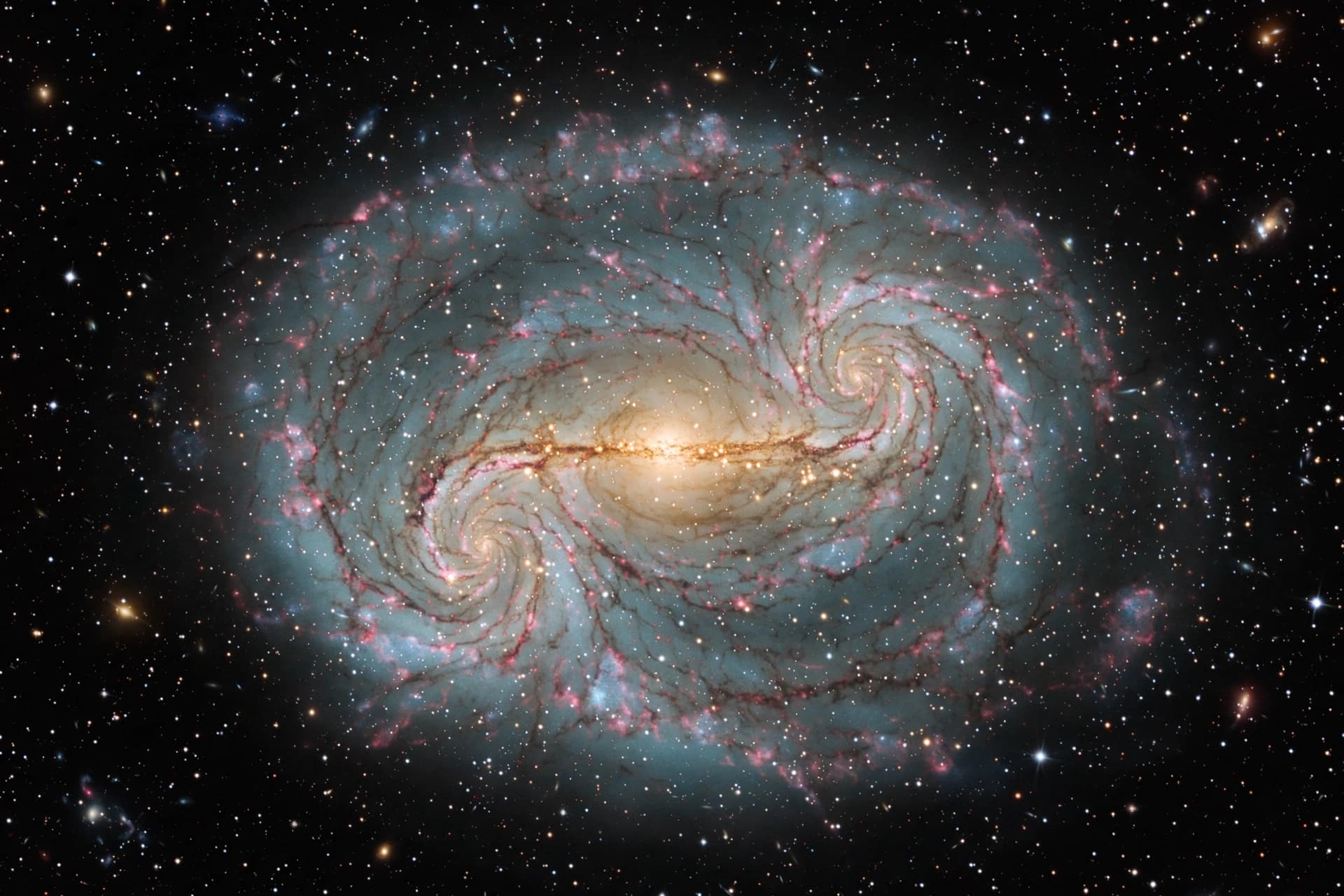
AI Image Disclaimer: The visual elements in this article are AI-generated illustrations depicting abstract cosmic plasmas and particle interactions, designed to reflect the themes of theoretical physics and simulation without showing real proprietary data visualizations or specific experimental setups.
Sources: Phys.org, The Brighter Side News, arXiv, American Physical Society
Published by Banx Network. This article is part of the Banx decentralized media programme, powered by the BXE token on the XRP Ledger.