
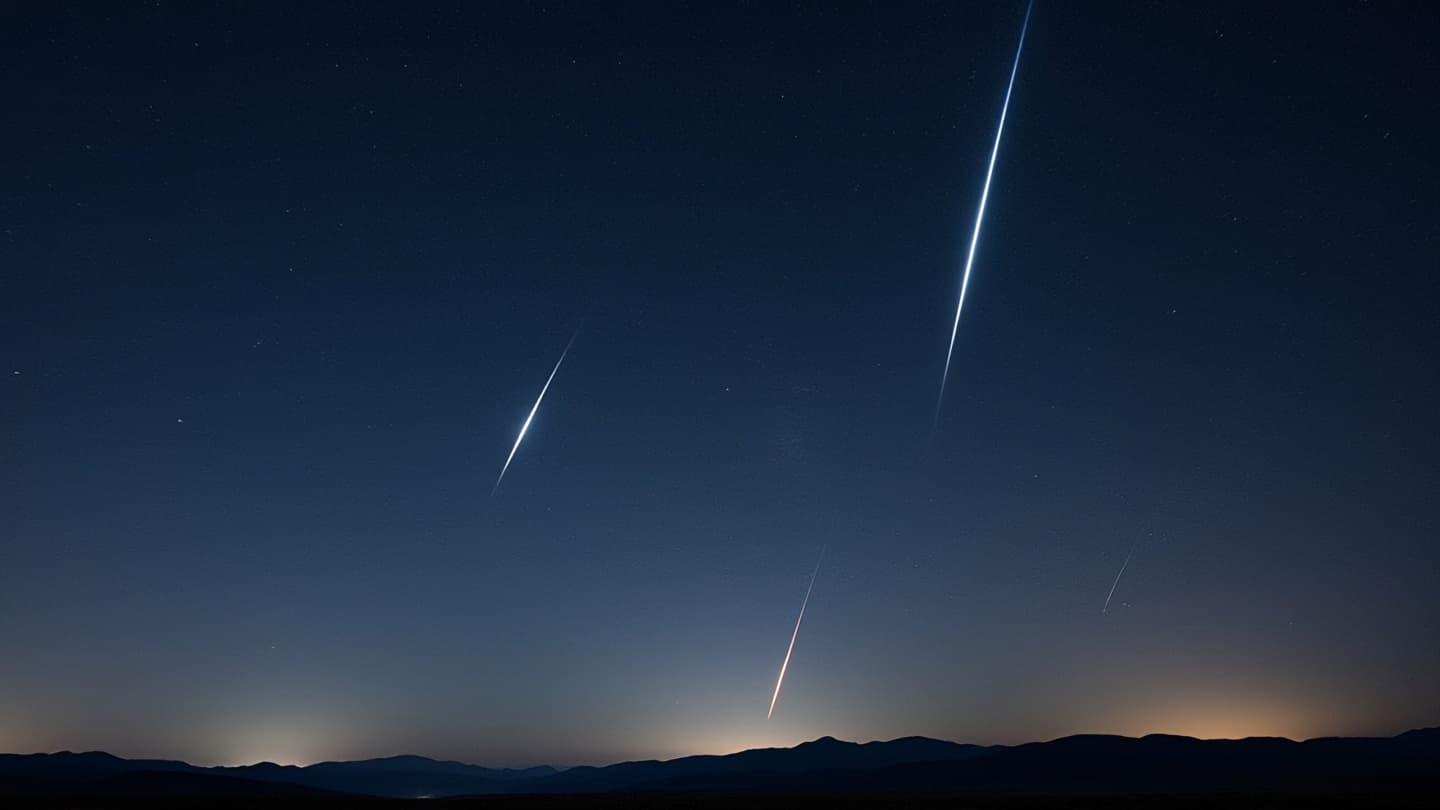
Each year, the night sky offers moments that feel both predictable and quietly remarkable. Among them are meteor showers, brief intervals when the sky seems to trace fleeting lines of light, as if marking time itself.
The Eta Aquarid meteor shower is set to reach its peak in the coming days, providing observers with an opportunity to witness one of the more consistent annual celestial events. Originating from debris left by Halley’s Comet, the shower has been observed for generations.
As Earth passes through this stream of particles, small fragments enter the atmosphere at high speed, producing bright streaks of light. These meteors are typically fast-moving and can leave persistent trails visible for a few moments.
The best viewing conditions are usually in the early hours before dawn, when the radiant point—the area of the sky from which the meteors appear to originate—is higher above the horizon. Clear skies and minimal light pollution can significantly improve visibility.
Observers in the Southern Hemisphere often experience stronger displays, though those in northern regions can still see a number of meteors under favorable conditions. Patience is often key, as activity can vary throughout the night.
Astronomers note that no special equipment is required. A comfortable viewing spot, away from city lights, is generally sufficient to enjoy the event.
Weather conditions and moonlight can influence visibility. A bright Moon may reduce the number of visible meteors, while cloud cover can obscure the sky entirely.
Meteor showers like the Eta Aquarids serve as reminders of Earth’s ongoing interaction with the broader solar system, each streak of light marking a brief encounter with cosmic material.
With its peak approaching, the Eta Aquarid meteor shower offers a familiar yet quietly compelling opportunity to observe the night sky.
AI Image Disclaimer: Some visuals are AI-generated representations of meteor showers intended to illustrate viewing conditions.
Sources: NASA, American Meteor Society, Space.com, Royal Astronomical Society
Published by Banx Network. This article is part of the Banx decentralized media programme, powered by the BXE token on the XRP Ledger.



