
Key Highlights
- Recent missile strikes in Kyiv resulted in civilian casualties and damage to buildings.
- Ukrainian air defense systems were activated as drones and missiles approached.
- International leaders condemned the attacks and reiterated support for Ukraine.
In many cities, nighttime brings stillness and rest. In Kyiv, however, the darkness has increasingly become a moment of vigilance. Overnight missile strikes once again struck parts of the Ukrainian capital, leaving damaged buildings, civilian casualties, and renewed reminders that the war continues to shape daily life far beyond the battlefield itself.
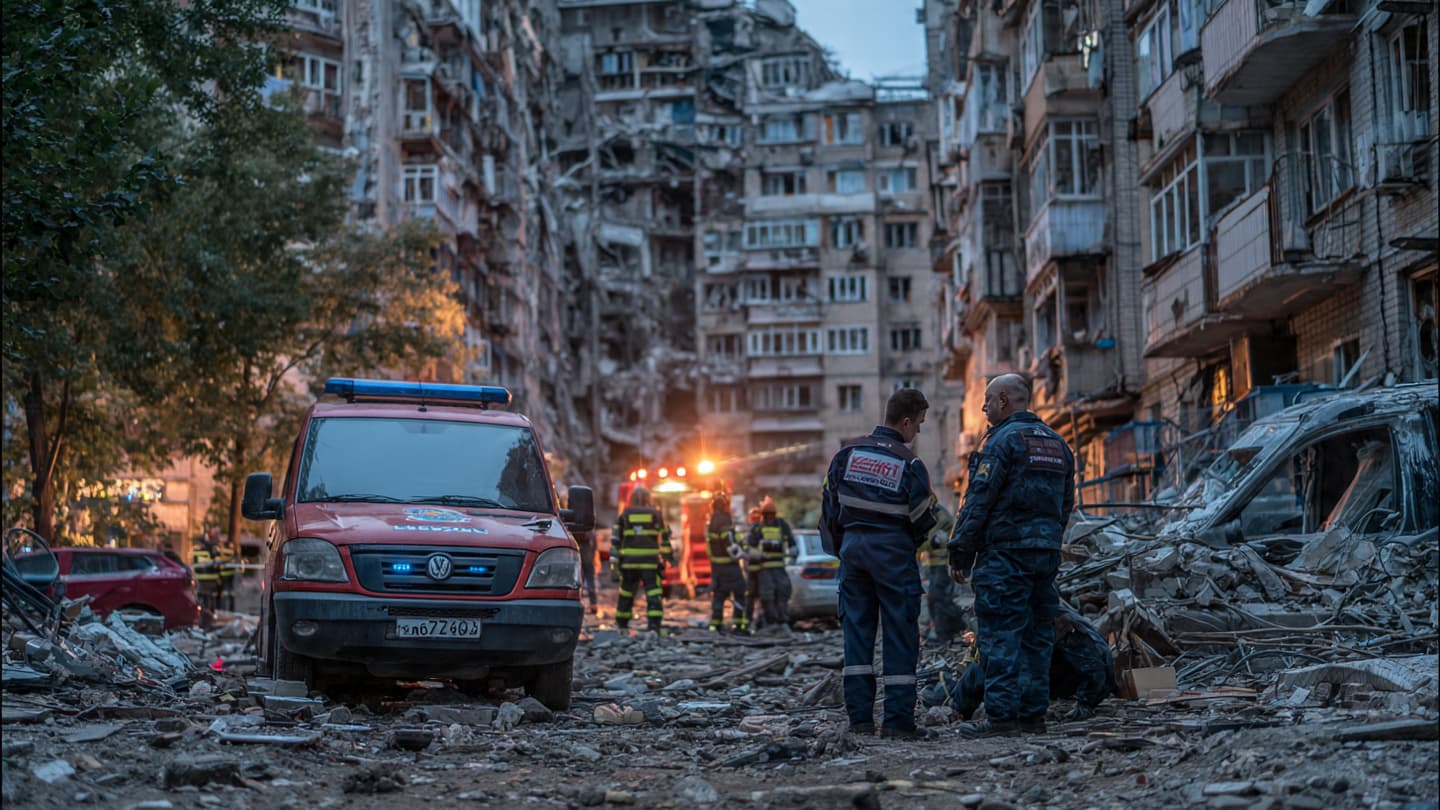
Ukrainian officials reported that air defense systems were activated across several districts as missiles and drones approached the city during the night. Explosions were heard in residential areas, with emergency crews responding quickly to damaged apartment buildings and infrastructure sites shortly before dawn. Authorities confirmed that civilians were among those killed and injured in the attacks. Rescue operations continued through the morning as firefighters and medical workers searched damaged structures and assisted displaced residents. Images released by local officials showed shattered windows, burned vehicles, and debris scattered along quiet streets.
Russia has intensified aerial operations against Ukrainian cities in recent months, often targeting energy systems, transportation hubs, and urban infrastructure. Moscow maintains that such strikes are linked to military objectives, while Ukrainian leaders and Western governments continue condemning the attacks for their humanitarian impact. The ongoing conflict has led to a significant humanitarian crisis, with many civilians caught in the crossfire.
For civilians living in Kyiv, the repeated air raid sirens have become part of an exhausting routine. Families frequently move into underground shelters during the night, carrying blankets, phones, and emergency supplies while waiting for official updates. Schools, transportation networks, and businesses continue operating, though always under the possibility of sudden disruption. The psychological toll of living under constant threat is immense, with many residents expressing feelings of anxiety and uncertainty about the future.
International reaction to the latest strikes was swift. European leaders reiterated support for Ukraine, while humanitarian organizations expressed concern over the ongoing toll on civilian populations. Aid groups continue working across affected areas, providing emergency shelter, medical care, and psychological assistance to families impacted by the conflict. The international community remains engaged, with discussions about further sanctions and military support for Ukraine ongoing.
Military analysts note that missile campaigns often carry both strategic and symbolic significance. Beyond physical destruction, repeated strikes can place emotional strain on populations and public services. Yet observers also point to Ukraine’s increasingly sophisticated air defense systems, which have intercepted many incoming threats over the course of the war. This development has provided some reassurance to residents, even as the threat remains ever-present.
The conflict has also continued reshaping diplomatic relations far beyond Eastern Europe. Governments around the world remain divided over sanctions, military support, and negotiations, while global markets monitor the broader economic consequences of prolonged instability in the region. As daylight returned to Kyiv, workers began clearing debris while residents cautiously resumed daily routines. Though the city continues to endure repeated attacks, many citizens remain determined to preserve a sense of normal life amid uncertainty that has now stretched across years.
Published by Banx Network. This article is part of the Banx decentralized media programme, powered by the BXE token on the XRP Ledger.



