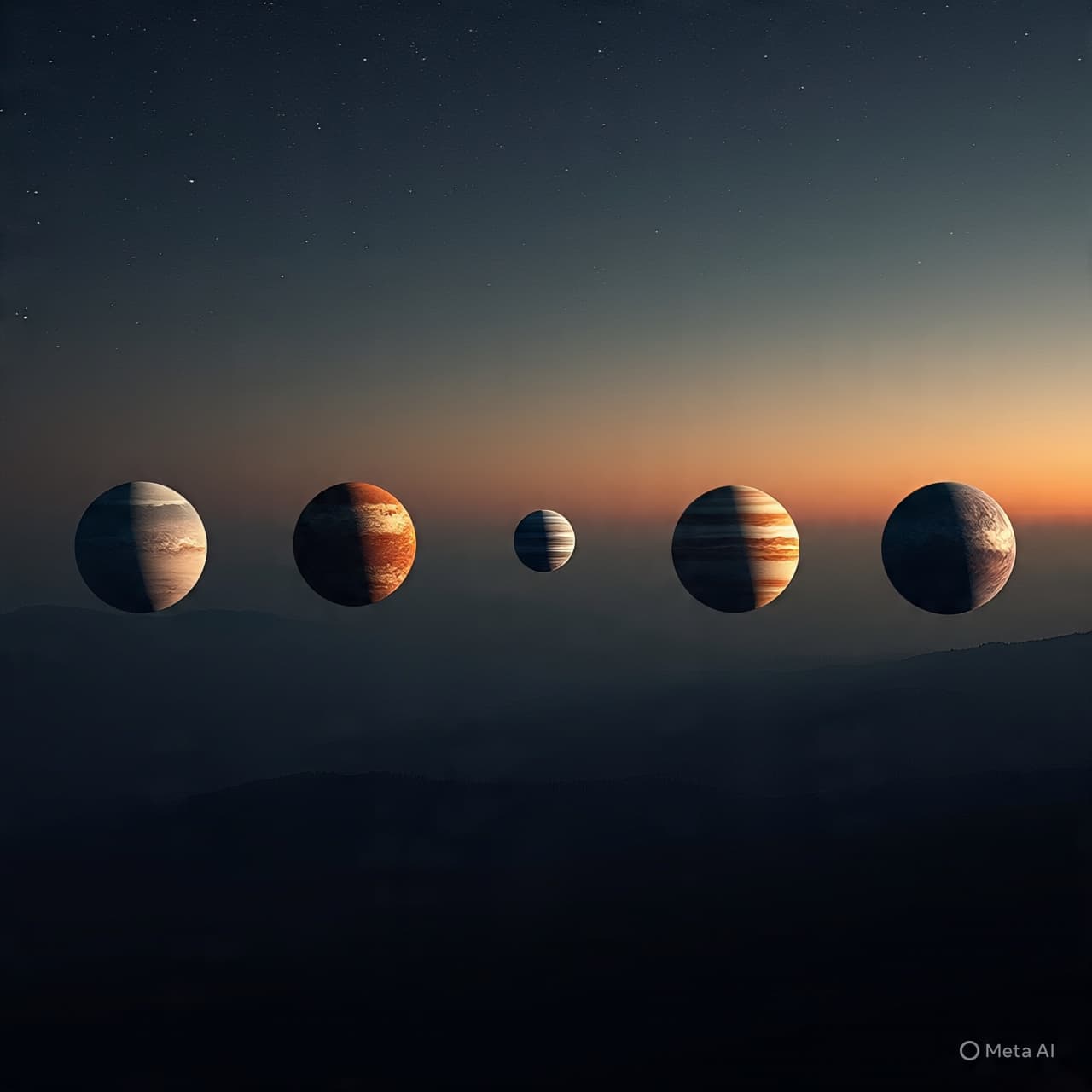
There are moments when the night sky feels less like a distant ceiling and more like a quiet gathering—when the stars seem to lean closer, and the planets, usually scattered across the vastness, begin to share the same stretch of darkness. At the end of February, such a moment gently arrives, inviting those who look up to witness a rare alignment: six planets appearing together in the evening sky, like a slow and silent procession across the cosmos.
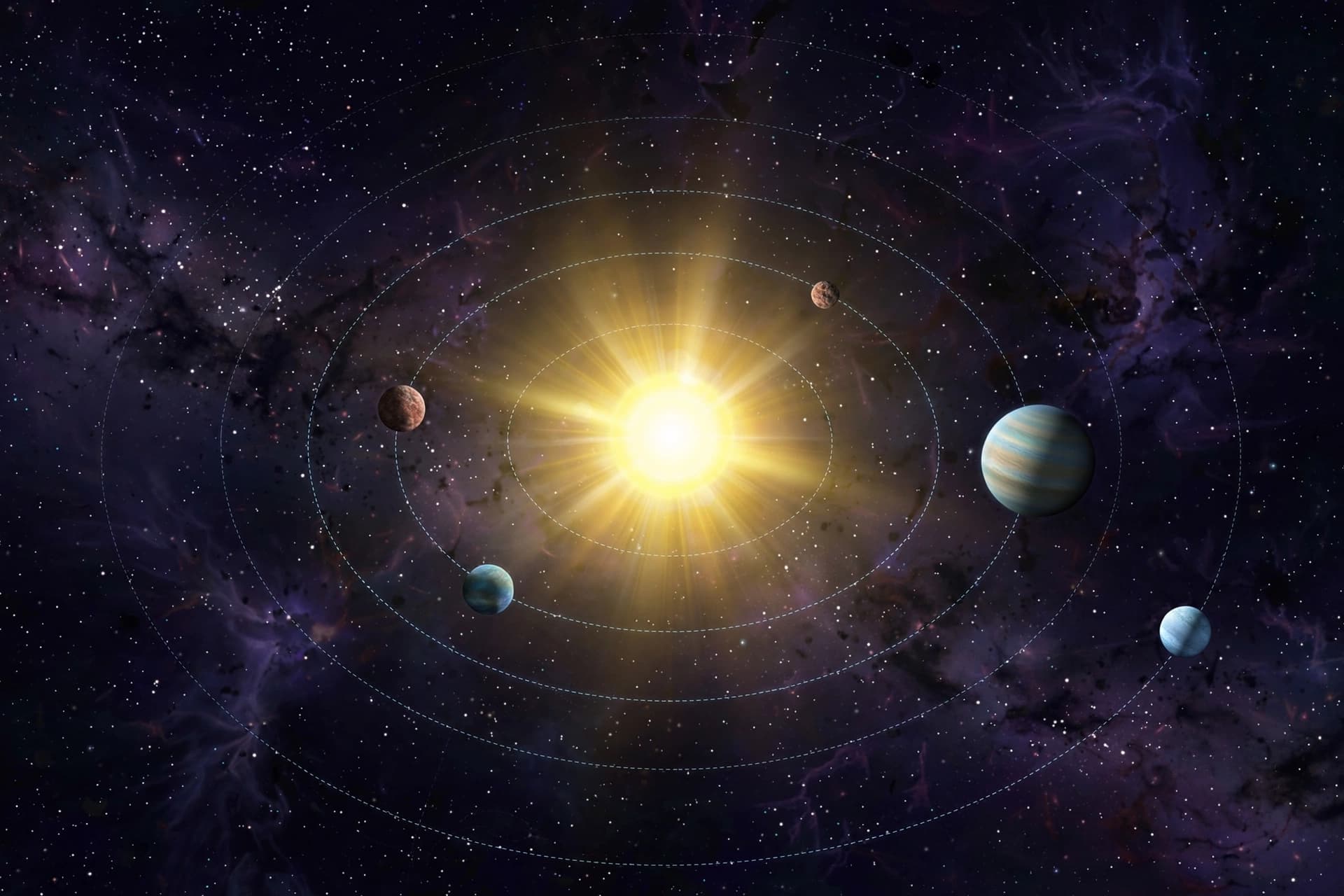
This celestial event, often described as a “planet parade,” does not mean the planets line up perfectly in space, but rather that from Earth’s perspective, several of them become visible along the same arc of the sky. Guided by the invisible path known as the ecliptic, these worlds appear to gather in a way that feels both orderly and poetic. It is a visual coincidence shaped by orbital mechanics, yet it carries a sense of quiet wonder.
The planets expected to take part in this gathering include , , , , , and . Not all will shine with equal ease. Some, like Venus and Jupiter, will glow brightly and confidently, visible even to the casual observer. Others, such as Uranus, may require binoculars or a small telescope, lingering faintly at the edge of visibility.
Timing, as always in astronomy, is a quiet but decisive factor. The best viewing window comes shortly after sunset, when the sky has darkened enough to reveal the planets, yet not so late that some have already dipped below the horizon. A clear western sky, free from city lights, will offer the most rewarding view. Even then, patience becomes part of the experience—allowing the eyes to adjust, letting the scene slowly unfold.
There is something deeply grounding in these events. In a world often measured in seconds and signals, the motion of planets reminds us of a different rhythm—one that unfolds over months, years, and centuries. These alignments are not rare in a strict astronomical sense, but they are rare in how they make us feel: briefly connected to something vast, ordered, and enduring.
And yet, the parade will not linger. Night by night, the arrangement will shift, the gathering will loosen, and the sky will return to its more familiar pattern of scattered lights. Nothing dramatic will mark its ending—only the quiet continuation of motion, as each planet resumes its solitary path.
In that sense, this celestial display asks for nothing more than attention. No instruments are strictly required, no special preparation beyond a glance upward. And perhaps that is its most gentle offering: a reminder that sometimes, the universe does not need to be reached—it only needs to be noticed.
AI Image Disclaimer Graphics are AI-generated and intended for representation, not reality.
Source Check NASA Sky & Telescope Space.com BBC Sky at Night The Guardian
Published by Banx Network. This article is part of the Banx decentralized media programme, powered by the BXE token on the XRP Ledger.