The Next Pandemic Is a Question of When, Not What
Pandemics are difficult to predict.
Scientists cannot identify the exact pathogen that will cause the next global outbreak, when it will emerge or where it will begin.
New infectious diseases can emerge through animal-to-human transmission, existing pathogens can evolve, and diseases that were previously limited geographically can spread into new populations.
The World Health Organization continues to warn that the number of high-threat infectious hazards remains significant, with both emerging and re-emerging diseases requiring sustained preparedness. [1]
That means preparing for the next pandemic cannot simply involve developing a vaccine for one particular disease.
The world needs systems capable of responding to something that has never been seen before.
That is a much harder problem.
COVID-19 Changed the Equation
The COVID-19 pandemic exposed weaknesses in healthcare systems, supply chains, international coordination and public communication.
But it also produced an enormous scientific acceleration.
Vaccines that historically required many years of development were produced at unprecedented speed.
Genomic sequencing became a critical tool for tracking viral evolution.
Scientists learned how rapidly new variants could emerge.
Wastewater surveillance became an important way of monitoring community-level transmission.
And governments gained experience responding to a global health emergency.
The lesson was not simply that another pandemic could happen.
It was that the speed of response matters enormously.
A pathogen that is detected weeks earlier could be a fundamentally different threat from one discovered after it has already spread internationally.
The First Line of Defence: Early Detection
The most important technology of the next pandemic may not be a vaccine.
It could be surveillance.
The WHO operates global systems designed to detect and verify health emergencies around the clock. The organisation says its surveillance system currently receives thousands of public-health threat signals each month. [2]
The objective is straightforward:
Find unusual disease activity before it becomes impossible to contain.
Future surveillance systems could combine information from hospitals, laboratories, pharmacies, airports, veterinary networks, environmental monitoring and digital systems.
Instead of waiting for a doctor to recognise an unusual cluster, algorithms could potentially identify abnormal patterns across multiple locations.
That could buy governments something incredibly valuable:
time.
Wastewater Could Become an Early-Warning Network
One of the most interesting developments in infectious-disease surveillance is wastewater monitoring.
People infected with certain pathogens can shed viral material into wastewater.
By analysing sewage from communities, scientists can monitor whether infectious diseases are circulating even when many infected people have no symptoms or never visit a doctor.
The U.S. Centers for Disease Control and Prevention currently uses wastewater surveillance to monitor respiratory viruses including influenza A, SARS-CoV-2 and RSV. The agency notes that wastewater can provide an early warning of community transmission and does not depend on individuals seeking medical care. [3]
This technology could become much more sophisticated.
Imagine thousands of wastewater monitoring sites continuously scanning for genetic fragments from hundreds of pathogens.
An unusual signal appears in a city.
The system detects it.
Scientists sequence the genetic material.
An alert is generated.
Public-health authorities investigate.
The outbreak could potentially be identified before hospitals begin filling.
Genomic Surveillance
Genomic sequencing provides another powerful weapon.
When a pathogen is detected, scientists can sequence its genetic material and compare it with previously identified strains.
This can reveal how the pathogen is changing.
It can also help scientists understand whether apparently separate outbreaks are connected.
During COVID-19, genomic surveillance became essential for tracking emerging variants.
WHO continues to emphasise the importance of genomic surveillance for SARS-CoV-2 and other pathogens with epidemic and pandemic potential. [4]
In the future, sequencing technology could become faster, cheaper and more widely distributed.
Instead of sending samples to specialised laboratories hundreds of kilometres away, some locations could potentially perform sophisticated sequencing much closer to where an outbreak begins.
That could reduce the delay between detection and identification.
Artificial Intelligence Could Search for the Signal
The volume of global health information is enormous.
Human researchers cannot manually examine every hospital report, laboratory result, genetic sequence and environmental signal.
Artificial intelligence could help.
AI systems could analyse enormous datasets looking for unusual patterns.
For example:
A sudden increase in respiratory illness + unusual genetic sequences + increased wastewater signals + geographical clustering
could potentially trigger an investigation.
AI would not replace epidemiologists.
Instead, it could act as an early-warning system that helps researchers determine where to look.
The goal would be to turn enormous amounts of fragmented information into actionable intelligence.
The 100-Day Vaccine Goal
One of the biggest ambitions in pandemic preparedness is dramatically reducing the time required to develop vaccines.
The Coalition for Epidemic Preparedness Innovations (CEPI) has established the 100 Days Mission, which aims to enable the development and initial authorisation of safe, effective and accessible vaccines within 100 days of identifying a new pandemic threat. [5]
That would represent a dramatic improvement over the response to COVID-19.
The first COVID-19 vaccines were developed at unprecedented speed, but hundreds of days still passed between identifying the virus and widespread vaccine deployment.
The objective now is to compress that timeline further.
The faster a vaccine becomes available, the smaller the window in which a pathogen can spread unchecked.
Vaccine Platforms Could Change Everything
The future may depend less on creating a completely new vaccine from scratch every time.
Instead, researchers are developing platform technologies.
A platform can provide a reusable foundation that can be adapted to different pathogens.
mRNA technology demonstrated the potential of this approach during COVID-19.
Future platforms could potentially allow scientists to modify vaccine designs rapidly once the genetic sequence of a new pathogen becomes available.
The process could increasingly resemble software development:
Identify → sequence → design → test → manufacture → distribute.
That does not eliminate clinical testing or safety requirements.
But it could significantly accelerate the early stages of development.
The Pandemic Factory
Another major challenge is manufacturing.
Creating a vaccine is one problem.
Producing billions of doses is another.
During COVID-19, countries competed for vaccines, raw materials and manufacturing capacity.
Future preparedness will therefore require manufacturing infrastructure that can expand rapidly during an emergency.
The WHO's 2026 discussions on pandemic preparedness have emphasised the importance of equitable access to vaccines, therapeutics and diagnostics, alongside systems for rapidly sharing pathogen materials and genetic information. [6]
The goal is to prevent a situation where wealthy countries secure supplies while poorer countries wait.
A pandemic does not respect national borders.
Neither should the ability to respond to one.
The WHO Pandemic Agreement
The COVID-19 experience also led to a major change in global pandemic policy.
In May 2025, the World Health Assembly formally adopted the WHO Pandemic Agreement, designed to strengthen international cooperation around pandemic prevention, preparedness and response. [7]
The agreement focuses on areas including access to vaccines, therapeutics and diagnostics, international coordination and stronger preparedness systems.
Implementation remains a continuing process.
In 2026, countries were still negotiating the agreement's Pathogen Access and Benefit Sharing component, which is intended to support rapid sharing of pathogen materials and genetic sequence information while establishing mechanisms for equitable sharing of benefits. [6]
The underlying principle is simple:
A pathogen can move faster than governments. International cooperation has to move faster too.
One Health: Humans Are Not Separate From Nature
Many infectious diseases that affect humans originate in animals.
That means pandemic prevention cannot focus exclusively on hospitals.
Scientists increasingly use a One Health approach, connecting human, animal and environmental health.
This means monitoring:
wildlife populations livestock agricultural environments humans ecosystems environmental changes
A pathogen circulating in an animal population could potentially be detected before it establishes sustained transmission in humans.
That creates another opportunity for early intervention.
The WHO's 2026 regional roadmap for respiratory pandemic preparedness explicitly emphasises One Health approaches because many pathogens with pandemic potential are zoonotic. [8]
The future of pandemic preparedness may therefore begin before a pathogen reaches humans.
Climate and Environmental Change
Environmental change could also influence infectious-disease risks.
Changes in temperature, rainfall, ecosystems and human settlement patterns can alter interactions between people, animals and disease vectors.
Urbanisation and increased movement of people can also affect how quickly diseases spread.
This does not mean climate change automatically creates pandemics.
The relationship is considerably more complicated.
But environmental changes can influence where certain pathogens, vectors and animal hosts are able to survive.
Future pandemic preparedness will therefore increasingly require collaboration between epidemiologists, ecologists, veterinarians, climatologists and environmental scientists.
Global Travel Is Both a Strength and a Weakness
Modern transportation has connected the world.
A person can travel between continents within a day.
That is one of humanity's greatest achievements.
It is also a major challenge during an infectious-disease outbreak.
A pathogen emerging in one city can potentially reach multiple countries before authorities realise what is happening.
But global connectivity can also help scientists respond.
Samples can be transported.
Genetic information can be shared.
Researchers can collaborate internationally.
Medical supplies can be manufactured across multiple countries.
The same global network that helps diseases spread can also help humanity fight them.
The question is whether the response network can operate faster than the pathogen.
Diagnostics Could Become Almost Instantaneous
Another critical technology is rapid testing.
During a pandemic, knowing whether someone is infected can determine whether they receive treatment, isolate themselves or unknowingly transmit the pathogen to others.
Future diagnostic systems could become significantly faster and more flexible.
Instead of designing a completely new testing infrastructure for every pathogen, researchers are developing technologies capable of rapidly adapting to new genetic targets.
Portable sequencing and molecular diagnostic systems could eventually allow sophisticated testing to take place closer to where outbreaks occur.
Hospitals, airports, laboratories and even community facilities could become part of a distributed global detection network.
Hospitals Need to Become More Flexible
Pandemic preparedness is not just about detecting viruses.
Hospitals need to handle sudden surges in demand.
COVID-19 demonstrated what happens when healthcare systems become overwhelmed.
Future hospitals could therefore be designed with greater flexibility.
Potential improvements include:
rapidly expandable intensive-care capacity modular clinical spaces improved ventilation stockpiles of essential equipment robotic logistics automated monitoring telemedicine flexible staffing systems
The objective would be to create healthcare systems capable of scaling up rapidly without maintaining enormous amounts of unused capacity during normal periods.
The Economic Cost of Being Unprepared
Pandemics are not simply health crises.
They are economic shocks.
A major outbreak can disrupt:
international trade manufacturing travel hospitality education financial markets supply chains employment
Businesses can lose billions.
Governments can spend enormous sums supporting economies during lockdowns and disruptions.
That makes pandemic preparedness an economic investment rather than simply a healthcare expense.
Spending money before a pandemic can be dramatically cheaper than responding after one has already spread globally.
The economic argument for preparedness is therefore straightforward:
Prevention is cheaper than emergency recovery.
Misinformation Could Become Another Pandemic
The next pandemic may also produce another kind of outbreak:
an information outbreak.
During COVID-19, misinformation spread rapidly through social media.
False claims about treatments, vaccines, transmission and the severity of the disease complicated the public-health response.
Future pandemics will occur in an even more connected digital environment.
Artificial intelligence could make the problem more difficult by allowing convincing synthetic text, images, audio and video to be generated at enormous scale.
That means pandemic preparedness will increasingly involve information security.
Governments and health organisations will need systems capable of communicating reliable information quickly and building public trust.
Scientific accuracy alone is not enough.
People have to believe the information.
Could AI Predict the Next Pandemic?
This is where the technology becomes particularly interesting.
AI could potentially analyse enormous datasets from around the world looking for combinations of signals associated with emerging outbreaks.
It might monitor:
animal disease + unusual human symptoms + environmental changes + genomic mutations + wastewater signals
and identify patterns that would be difficult for humans to notice.
But prediction has limits.
AI cannot magically predict a completely unknown pathogen with certainty.
Its effectiveness depends on the quality and availability of the data it receives.
If surveillance systems miss an outbreak, the AI cannot analyse information that does not exist.
The future is therefore unlikely to involve a machine announcing:
"Pandemic begins in 17 days."
Instead, AI may provide something more realistic and useful:
"Something unusual is happening here. Investigate."
That warning could save enormous amounts of time.
The 2030s: From Reaction to Preparation
The next decade could see pandemic preparedness shift from a reactive model toward a more anticipatory one.
Instead of waiting for hospitals to report unusual disease activity, countries could increasingly integrate:
genomic surveillance wastewater monitoring AI analysis animal surveillance environmental monitoring rapid diagnostics vaccine platforms
into interconnected early-warning systems.
The WHO's 2026 framework for national public-health agencies identifies surveillance and intelligence, laboratory systems, diagnostics, emergency management and countermeasure deployment among the core capabilities countries need to strengthen. [9]
The goal is to build the infrastructure before the crisis.
The 2040s: A Global Disease Detection Network?
By the 2040s, it is possible that pandemic surveillance could look very different from today.
Thousands of laboratories could continuously sequence pathogens.
Wastewater systems could monitor communities automatically.
AI could analyse global disease signals in real time.
Animal-health networks could detect emerging pathogens before widespread human transmission.
Rapid vaccine platforms could begin producing candidate vaccines within days of pathogen identification.
And manufacturing facilities around the world could rapidly switch production toward the required vaccines, diagnostics or treatments.
In the best-case scenario, a future outbreak might be detected while it is still relatively small.
The world would know what it was dealing with much earlier.
And the response could begin before international spread becomes overwhelming.
Three Possible Futures 1. The Next Pandemic Catches Us Off Guard
Preparedness efforts could fail because of political divisions, inadequate funding or a pathogen that behaves in an unexpected way.
The world could once again face a rapidly spreading disease before scientists understand it.
2. We Detect It Early
A new pathogen appears.
Wastewater systems detect an unusual signal.
Genomic sequencing identifies the pathogen.
AI systems identify an emerging cluster.
Scientists begin developing diagnostics.
Vaccine platforms are activated.
Governments respond before widespread global transmission occurs.
The outbreak is contained.
3. Pandemic Preparedness Becomes Permanent Infrastructure
The most optimistic future is that pandemic preparedness becomes as normal as national defence, energy security and emergency services.
Countries continuously monitor infectious diseases.
Vaccines and diagnostics remain ready for rapid deployment.
Manufacturing capacity is maintained.
International data-sharing systems operate continuously.
The next pandemic still happens.
But its impact is dramatically reduced.
The Next Pandemic May Be Different From COVID-19
It is important not to assume that the next pandemic will look like COVID-19.
It could spread differently.
It could produce different symptoms.
It could affect different age groups.
It could require completely different treatments.
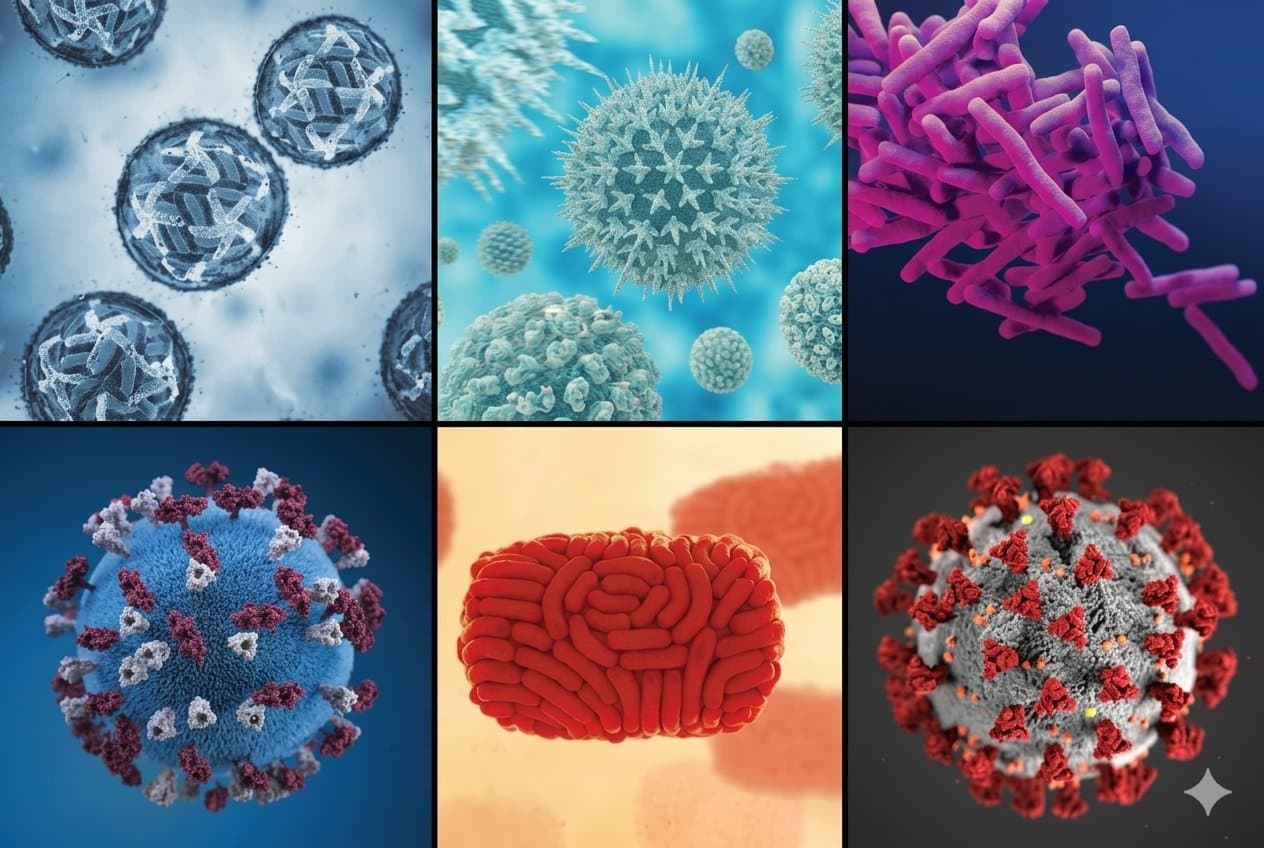
It could be caused by a virus, bacterium or another infectious agent.
That uncertainty is exactly why preparedness has to be flexible.
The objective should not be to build a system designed specifically for the next coronavirus.
It should be to build a system capable of responding to unknown threats.
Could Humanity Stop the Next Pandemic Before It Goes Global?
This is the ultimate goal.
Imagine a pathogen emerging in a relatively small community.
Within days, surveillance detects something unusual.
Samples are sequenced.
Scientists identify the pathogen.
AI models estimate its transmission characteristics.
Rapid diagnostics are developed.
Candidate vaccines are generated.
Contact networks are investigated.
Medical teams deploy.
Manufacturing begins.
International authorities coordinate.
And the outbreak is contained.
The world never enters lockdown.
Air travel continues.
Schools remain open.
Businesses continue operating.
Millions of people never even realise a potential pandemic was prevented.
That would represent a completely different philosophy of public health.
Instead of asking:
How do we survive the next pandemic?
Humanity would be asking:
How do we stop it from becoming one?
The Pandemic Technology Race
The next major public-health revolution may not be a single invention.
It could be the integration of many technologies.
AI.
Genomics.
Wastewater surveillance.
Rapid diagnostics.
mRNA and other vaccine platforms.
Robotics.
Telemedicine.
Cloud computing.
Global data-sharing systems.
Together, these technologies could create a biological early-warning network covering much of the planet.
The challenge will be connecting them.
A brilliant diagnostic system is less useful if its results cannot reach public-health authorities.
A powerful AI system is less useful if countries refuse to share data.
A vaccine platform is less useful if manufacturing capacity does not exist.
Preparedness is therefore a systems problem.
The Real Threat Is Complacency
Perhaps the greatest danger is assuming that because COVID-19 eventually became manageable, the pandemic threat has disappeared.
It hasn't.
The WHO continues to emphasise the need for sustained preparedness against emerging and re-emerging infectious diseases. [1]
Preparedness also cannot be built during a crisis.
Laboratories need to exist before the outbreak.
Scientists need to be trained before the outbreak.
Manufacturing capacity needs to exist before the outbreak.
International agreements need to be negotiated before the outbreak.
Surveillance networks need to be operating before the outbreak.
The time to prepare for the next pandemic is therefore before anyone knows what it will be.
The Next Pandemic
Another pandemic will eventually emerge.
Exactly when remains impossible to predict.
Exactly where it will begin is unknown.
And its biological characteristics cannot be known in advance.
But humanity is no longer starting from zero.
The world has learned from COVID-19.
We have faster vaccine platforms.
More sophisticated genomic surveillance.
Wastewater monitoring.
AI-powered analysis.
Improved outbreak detection.
International preparedness frameworks.
And a growing understanding of how quickly an infectious disease can disrupt civilisation.
The next pandemic could still be devastating.
But it does not have to become another global catastrophe.
The real technological challenge of the coming decades is not simply creating better vaccines.
It is building a global system capable of detecting biological threats before they become uncontrollable.
The next pandemic may be inevitable.
A global catastrophe isn't.
References
[1] World Health Organization — Preparing and Preventing Epidemics and Pandemics. WHO outlines the continuing threat posed by emerging and re-emerging infectious diseases and the need for sustained preparedness.
[2] World Health Organization — Rapidly Detecting and Responding to Health Emergencies. WHO describes its 24/7 global surveillance system and mechanisms for detecting, verifying and responding to health threats.
[3] U.S. Centers for Disease Control and Prevention — Wastewater Data for Respiratory Viruses. CDC explains how wastewater surveillance can identify community-level respiratory virus activity, including infections that may not be detected through clinical testing.
[4] World Health Organization — COVID-19 Surveillance Policy Brief. WHO highlights the continuing importance of genomic surveillance for SARS-CoV-2 and other pathogens with epidemic and pandemic potential.
[5] Coalition for Epidemic Preparedness Innovations (CEPI) — The 100 Days Mission. CEPI's goal is to develop safe, effective and accessible vaccines within 100 days of identifying a new pandemic threat.
[6] World Health Organization — Global Commitment on Display as Countries Negotiate Key Annex to the Pandemic Agreement. Details the 2026 negotiations surrounding the Pathogen Access and Benefit Sharing system and rapid sharing of pathogen materials and genetic information.
[7] World Health Organization — World Health Assembly Adopts Historic Pandemic Agreement. Details the adoption of the WHO Pandemic Agreement in May 2025 and its goals for strengthening international pandemic preparedness and equitable access to health products.
[8] World Health Organization — Regional Roadmap and Strategic Action Framework for Implementing National Respiratory Pathogen Pandemic Preparedness and Response Plans, 2026–2031. Discusses One Health approaches, zoonotic pathogens, surveillance and pandemic preparedness.
[9] World Health Organization — Framework for Health Emergency Preparedness and Response Capabilities for National Public Health Agencies. The 2026 framework identifies core national capabilities including surveillance, laboratory systems, emergency management, risk communication and countermeasure deployment.
Published by Banx Network. This article is part of the Banx decentralized media programme, powered by the BXE token on the XRP Ledger.