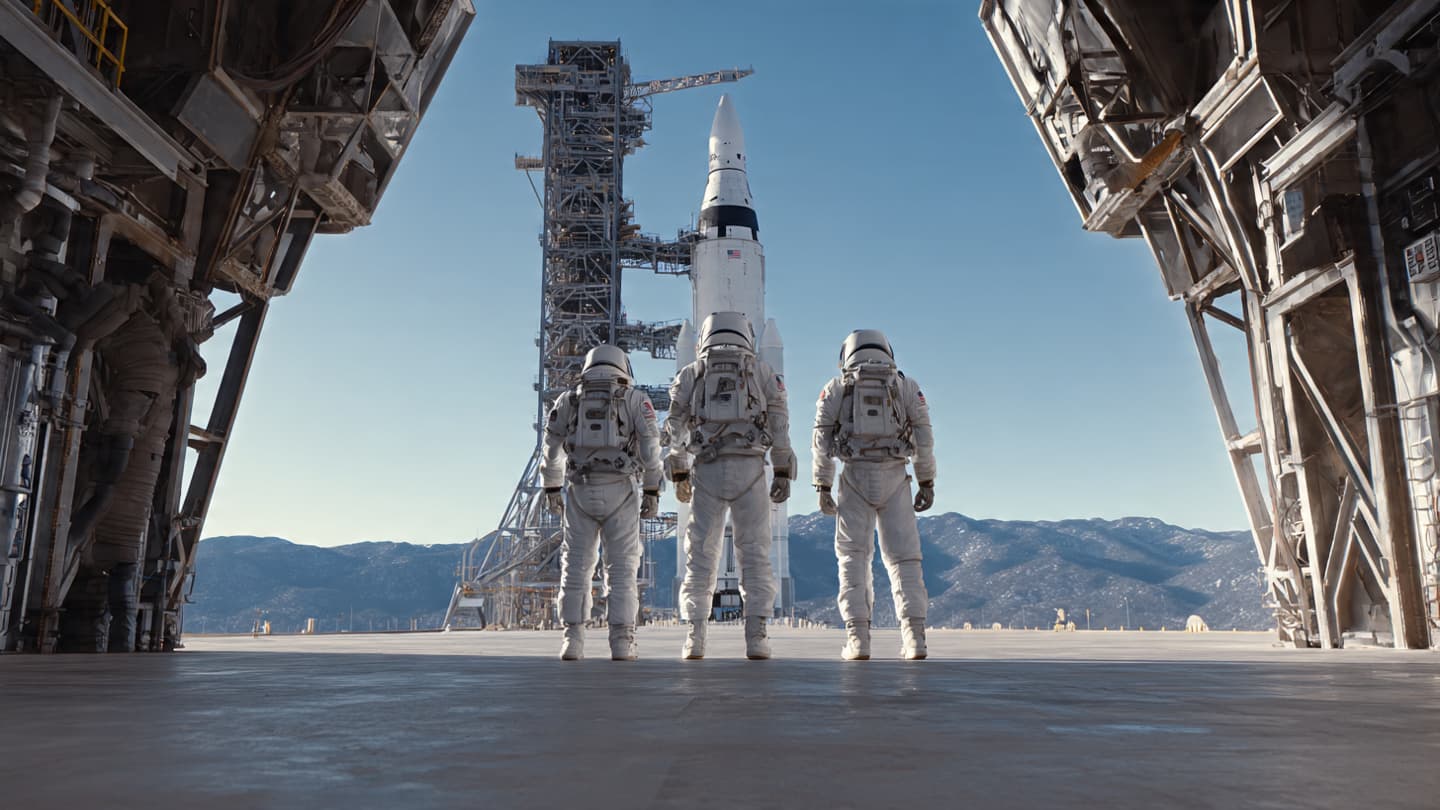
For generations, the Moon has inspired stories, scientific curiosity, and the human desire to explore the unknown. Decades after the Apollo era reshaped history, NASA has announced the crew selected for the Artemis III mission, marking another significant step in humanity's return to lunar exploration.
The Artemis program aims to build upon previous achievements while expanding scientific knowledge and preparing for future deep-space missions. Artemis III is expected to carry astronauts to the lunar surface, supporting research and technological development that could benefit later expeditions to Mars and beyond.
NASA officials describe the mission as part of a broader strategy for sustainable exploration. Rather than focusing on a single journey, the Artemis program seeks to establish long-term capabilities for operating on and around the Moon through international partnerships and advanced technologies.
The selected crew members bring diverse backgrounds and extensive experience in aviation, engineering, and space operations. Years of preparation and training are required before astronauts are ready to participate in missions involving the complex challenges of spaceflight.
Scientific research remains one of the mission's primary objectives. Astronauts are expected to conduct experiments, collect geological samples, and study the lunar environment. These activities may provide new insights into the history of the Moon and the early development of the solar system.
The mission also supports technological innovation. Engineers continue developing advanced spacecraft, communication systems, life-support equipment, and lunar landing technologies designed to improve safety and mission capabilities.
International cooperation plays an important role in the Artemis program. Space agencies and private industry partners contribute expertise and technology, reflecting the increasingly collaborative nature of modern space exploration.
Public interest in lunar exploration has grown as new missions capture global attention. Educational programs and scientific outreach initiatives encourage younger generations to pursue careers in science, technology, engineering, and mathematics.
The announcement of the Artemis III crew represents more than a milestone for one mission. It reflects a continuing commitment to exploration, scientific discovery, and the belief that expanding humanity's understanding of space can inspire progress for generations to come.
AI Image Disclaimer: The accompanying illustrations are AI-generated artistic interpretations for editorial storytelling.
Sources Verified: NASA, Reuters, Associated Press, Space.com, Live Science
Published by Banx Network. This article is part of the Banx decentralized media programme, powered by the BXE token on the XRP Ledger.