The relationship between Earth and the Moon has often been described as ancient and silent, a partnership written in tides, shadows, and distant light. Yet beneath that quiet celestial rhythm lies a conversation still taking place across nearly 240,000 miles of space. More than half a century after the Apollo era transformed human imagination, small mirrors placed carefully on the lunar surface continue reflecting laser beams back toward Earth, allowing scientists to measure the Moon’s slow retreat with remarkable precision.
The story began during NASA’s Apollo missions in the late 1960s and early 1970s, when astronauts installed special retroreflectors on the Moon. Unlike ordinary mirrors, these instruments are designed to send incoming light directly back to its source. Even decades later, observatories on Earth can aim lasers toward those devices and detect the faint returning signals.
The process may sound simple, but the achievement remains extraordinary. A laser pulse travels from Earth to the Moon and back again in roughly two and a half seconds. By calculating that travel time with exceptional accuracy, scientists can determine the Earth-Moon distance within mere centimeters. Such measurements have become one of the most enduring scientific legacies of the Apollo program.
Over time, these observations revealed that the Moon is gradually drifting away from Earth at a rate of about 3.8 centimeters each year. The pace is often compared to the growth of human fingernails. Though small on a yearly scale, the movement reflects the immense gravitational dance between the two worlds.
The phenomenon is tied closely to Earth’s tides. As the Moon’s gravity pulls on Earth’s oceans, tidal bulges form and slightly lead ahead of the Moon because Earth rotates faster than the Moon orbits. This transfers a tiny amount of rotational energy from Earth to the Moon, slowly pushing the lunar orbit outward while also gradually slowing Earth’s rotation.
Scientists say the measurements also contribute to broader research in physics and astronomy. Lunar laser ranging experiments help test aspects of Albert Einstein’s theory of general relativity and improve understanding of planetary motion. In a sense, the mirrors serve not only as artifacts of exploration but also as active scientific instruments bridging generations of research.
The persistence of the equipment is itself remarkable. Exposed to harsh lunar temperatures, radiation, and micrometeorites for decades, the retroreflectors continue functioning long after many technologies on Earth would have failed. Their endurance has become a quiet reminder that some scientific tools are designed not merely for missions, but for eras.
There is also something deeply human in the image of lasers crossing the darkness between worlds night after night. The Apollo missions are often remembered for dramatic launches and historic footsteps, yet these mirrors represent another side of exploration: patience, continuity, and the willingness to ask questions whose answers unfold slowly over generations.
Today, scientists around the world continue using those reflections to refine humanity’s understanding of the Earth-Moon system, proving that even small instruments placed carefully in distant dust can continue shaping knowledge long after history’s headlines fade.
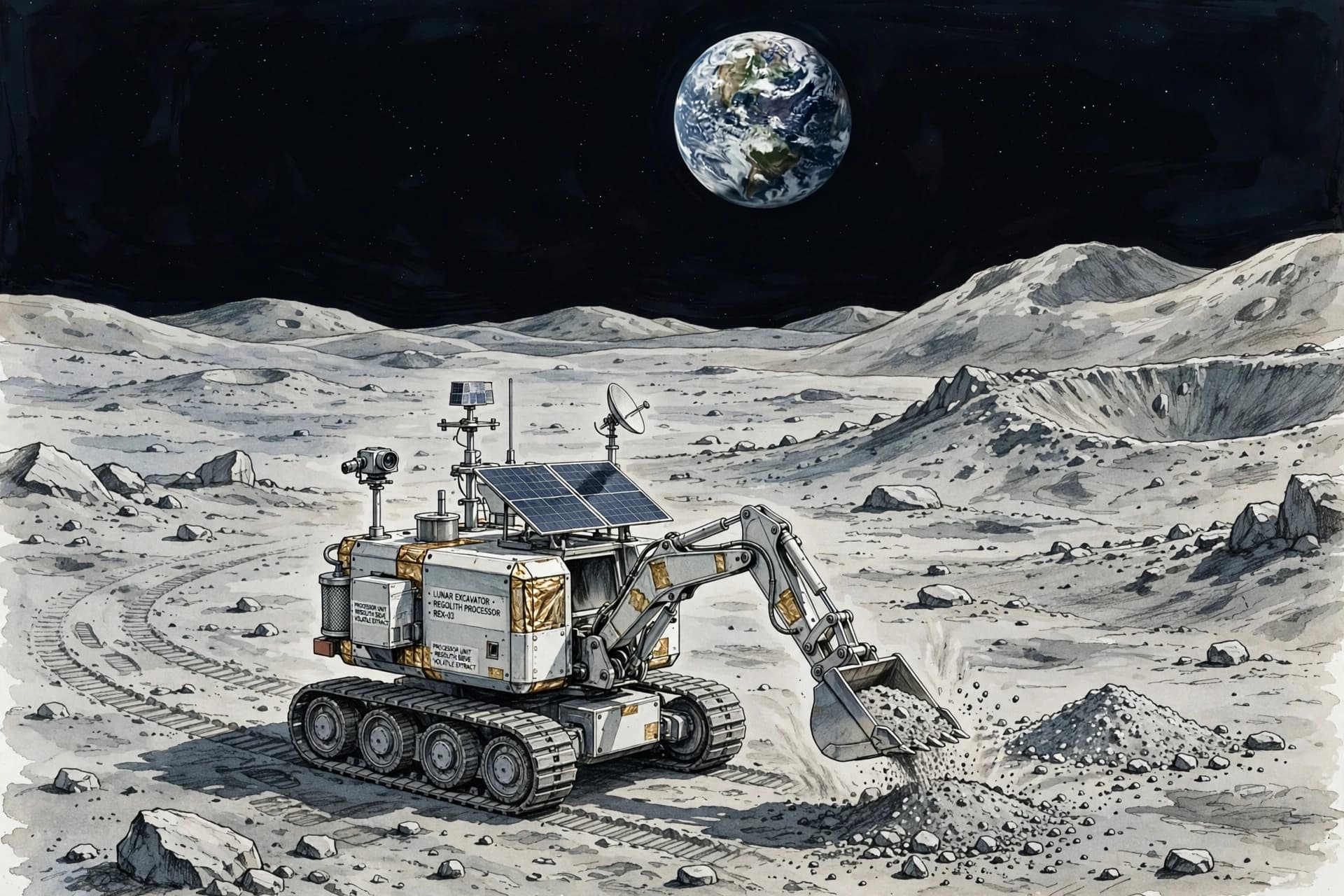
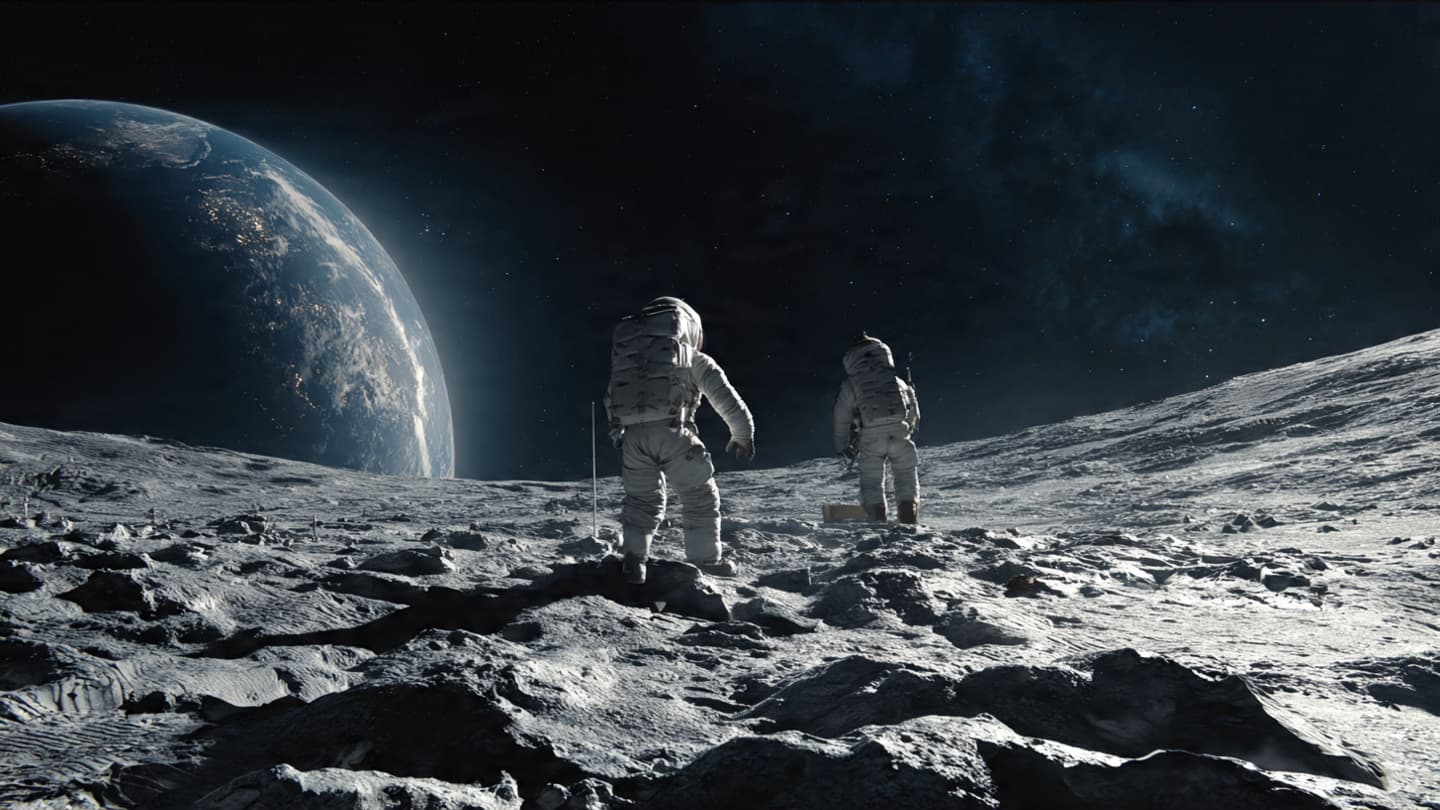
AI-generated image notice: Some accompanying visuals for this article may have been created using artificial intelligence to illustrate the scientific setting described above.
Sources: NASA, Smithsonian Magazine, Jet Propulsion Laboratory, Scientific American, Space.com
Published by Banx Network. This article is part of the Banx decentralized media programme, powered by the BXE token on the XRP Ledger.