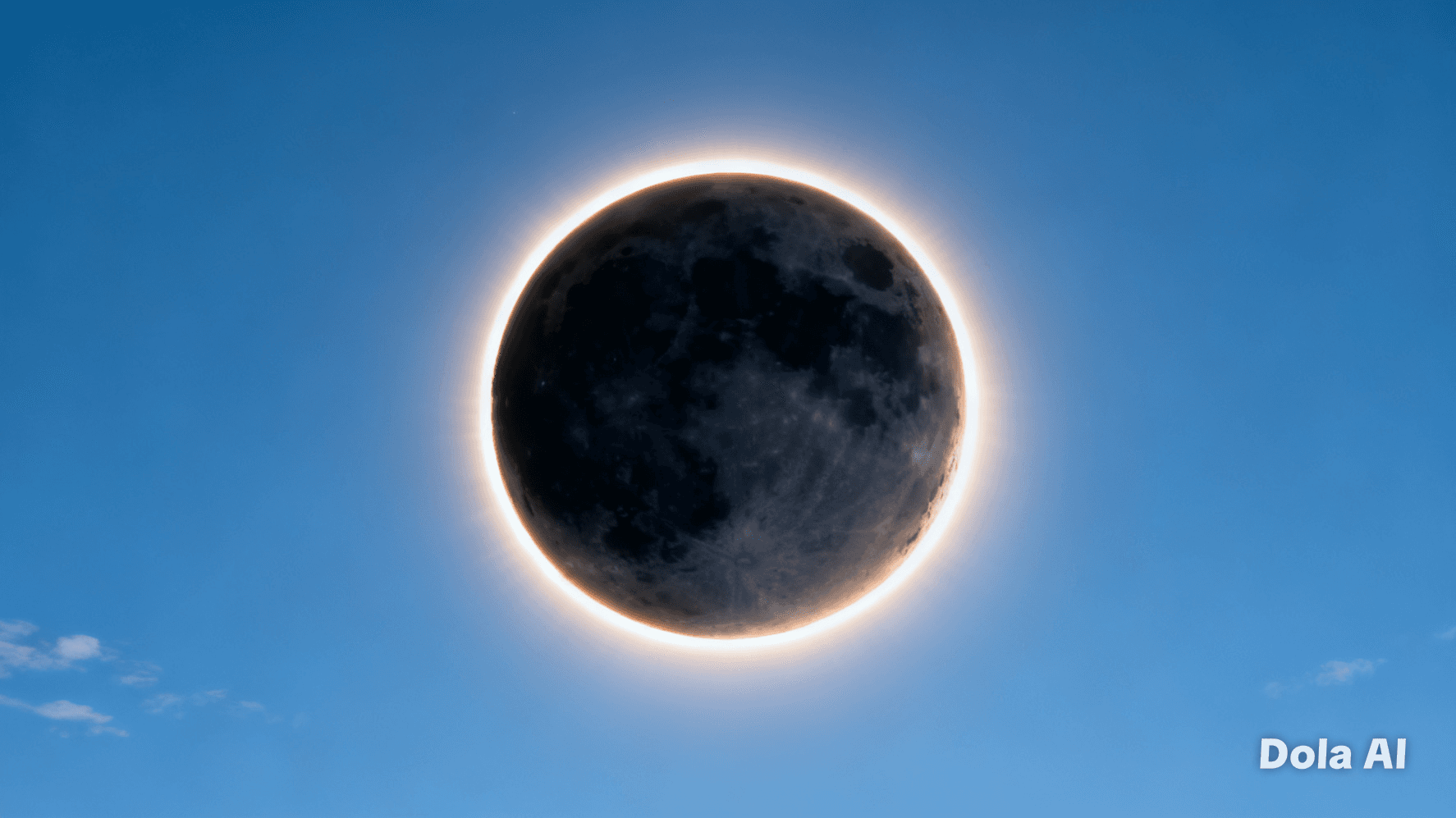
Celestial events often unfold with a quiet majesty, unfolding above daily life without sound or announcement. The sky, which so often feels constant and familiar, occasionally reveals moments that invite people to pause, look upward, and remember the vast choreography unfolding beyond the horizon.
On 17 February 2026, a will occur, a phenomenon in which the Moon passes directly in front of the Sun but appears slightly smaller, leaving a luminous ring of sunlight around its silhouette. This glowing circle — often called a “ring of fire” — forms when the Moon is near its farthest distance from Earth, allowing sunlight to remain visible at the edges.
According to observations and projections from , the eclipse will be visible across a wide region, though the level of visibility will vary. Indonesia lies outside the narrow path of annularity, meaning the full ring effect will not be visible from the archipelago. Instead, much of the country will experience a partial solar eclipse, where the Moon appears to “bite” into the Sun’s disk.
The path of annularity is expected to cross parts of the Southern Hemisphere, including regions of the southern Pacific Ocean and portions of South America and Antarctica. Within this narrow corridor, observers will see the complete ring effect. Outside the path, a partial eclipse will still offer a striking visual experience as the Sun appears crescent-shaped during peak coverage.
Across Indonesia, partial eclipse visibility is expected in many regions, especially during late afternoon hours depending on local time zones. Western Indonesia, including Sumatra and Java, may observe the event closer to sunset, while eastern regions could experience slightly different timing. Weather conditions will play a crucial role; cloud cover may affect visibility in some areas.
Astronomers and educators emphasize the importance of safe viewing practices. Looking directly at the Sun without proper protection can cause serious eye damage. Observers should use certified eclipse glasses, solar filters, or indirect viewing methods such as pinhole projection to watch the event safely.
Eclipses have long inspired reflection across cultures — once seen as omens, now understood as predictable celestial alignments governed by orbital mechanics. Yet even with scientific certainty, their beauty remains unchanged. For a few moments, daylight softens, shadows sharpen, and the sky appears subtly altered, as if the world pauses in quiet acknowledgment of the cosmos.
While Indonesia will not witness the full ring of fire this time, the partial eclipse offers a rare opportunity to observe the Moon’s passage across the Sun — a reminder of the intricate balance among Earth, Moon, and Sun that shapes tides, seasons, and the rhythm of life itself.
As the afternoon light dims briefly on 17 February, those who look upward may glimpse a small, fleeting alignment — a celestial passage reminding us that even the most familiar sky holds moments of wonder.
AI Image Disclaimer Images in this article are AI-generated illustrations, meant for concept only.
Sources : BMKG BRIN NASA TimeandDate Kompas
Published by Banx Network. This article is part of the Banx decentralized media programme, powered by the BXE token on the XRP Ledger.