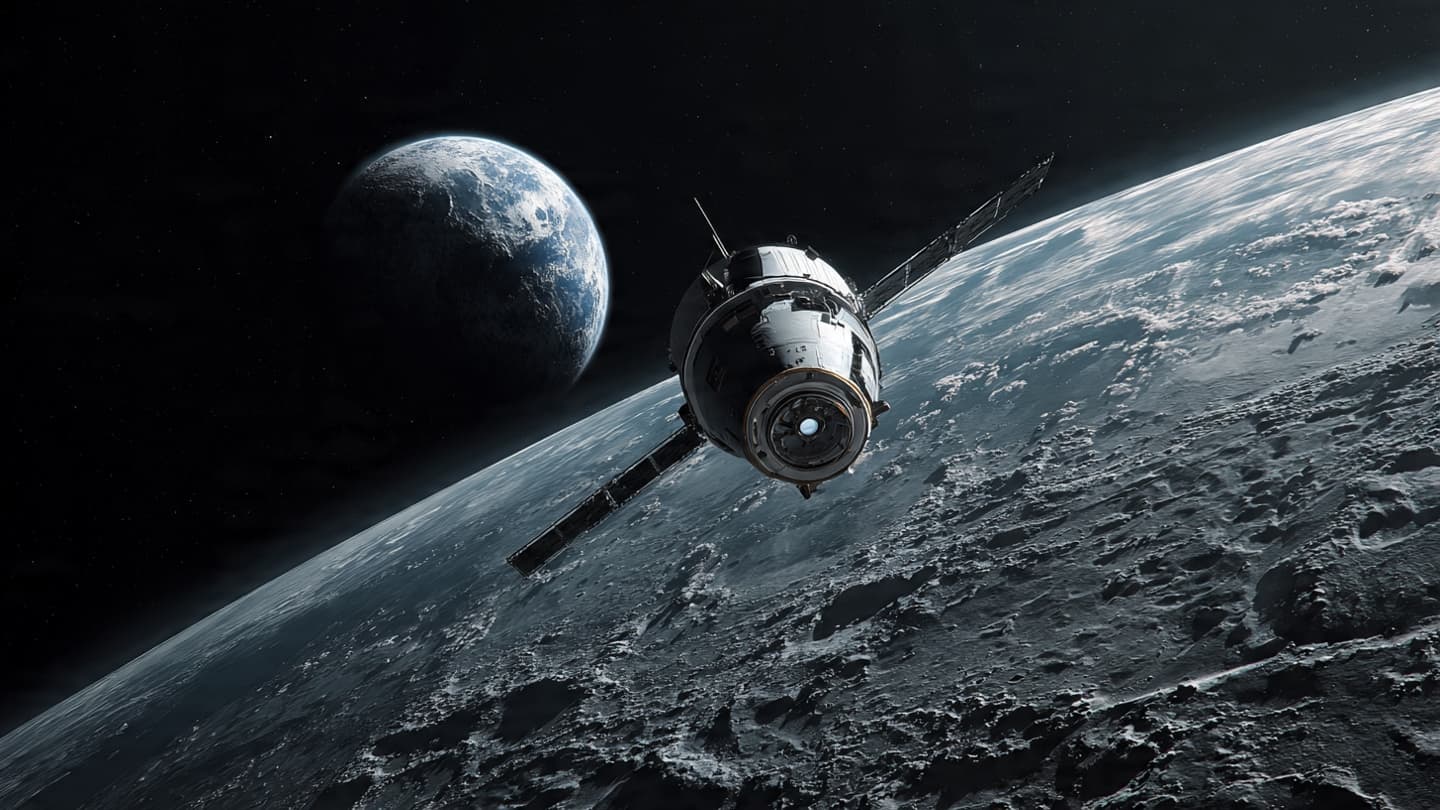
Humanity has always looked upward with a mixture of wonder and ambition. Long before rockets pierced the atmosphere, people studied the stars and imagined journeys beyond the horizon. Today, that enduring curiosity is preparing to take another significant step through the Artemis II mission.
The upcoming mission is expected to carry astronauts farther from Earth than any human crew has traveled since the Apollo era. For many observers, the mission represents both a technological achievement and a symbolic continuation of humanity’s exploration of deep space.
Unlike missions confined to low Earth orbit, Artemis II is designed to venture into the broader space environment surrounding the Moon. Astronauts will test systems, procedures, and spacecraft capabilities necessary for future lunar exploration initiatives.
NASA and its international partners view the mission as an essential bridge between previous achievements and upcoming objectives. Lessons learned during Artemis II are expected to support future missions that aim to establish a more sustained human presence near and on the lunar surface.
The spacecraft itself incorporates decades of engineering progress. Advanced navigation systems, life-support technologies, communication equipment, and safety mechanisms reflect extensive research conducted since the final Apollo missions more than half a century ago.
Space exploration often requires collaboration on a global scale. Scientists, engineers, technicians, and researchers from multiple countries contribute expertise that supports mission planning and execution. Artemis II continues that tradition of international cooperation.
Beyond scientific goals, the mission also carries educational significance. Space programs frequently inspire interest in science, technology, engineering, and mathematics among younger generations. Historic missions often become defining moments that encourage future innovation.
Researchers anticipate valuable opportunities to study how astronauts perform during longer-duration missions beyond Earth orbit. Such knowledge may prove important as agencies explore future possibilities involving lunar bases and eventually missions to Mars.
Public interest in lunar exploration has grown steadily as preparations advance. The Moon, once viewed primarily as a destination reached decades ago, is increasingly seen as a gateway to broader exploration throughout the solar system.
For now, Artemis II represents a step toward a future in which human exploration extends farther into space. Whether measured in kilometers or inspiration, the mission reflects a continuing desire to understand what lies beyond the world we call home.
AI Image Disclaimer
Illustrations were produced with AI and serve as conceptual depictions.
Source Check Credible sources identified:
Reuters NASA European Space Agency (ESA) Space.com Scientific American
Published by Banx Network. This article is part of the Banx decentralized media programme, powered by the BXE token on the XRP Ledger.