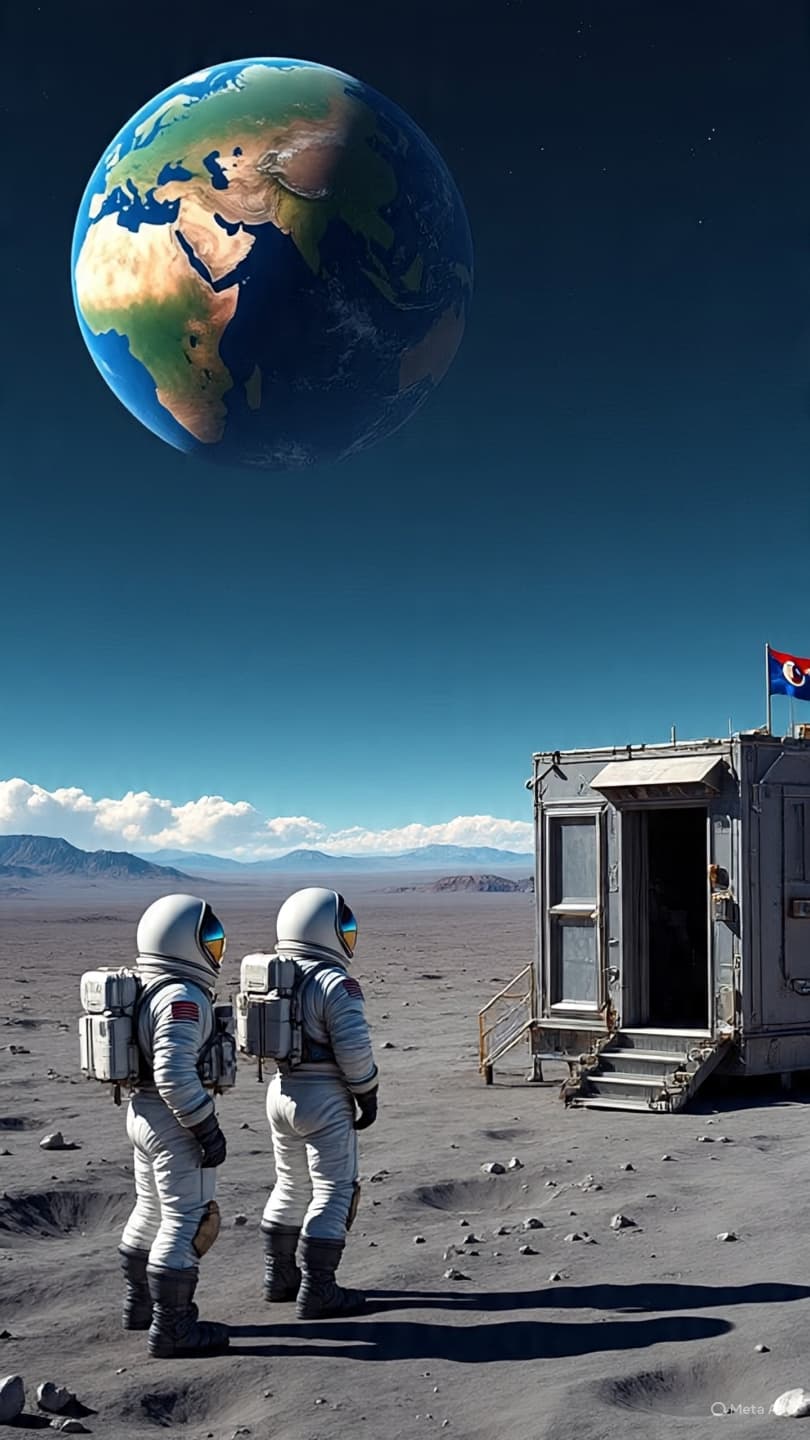
There are eras in exploration that begin not with a single step, but with a quiet accumulation of intentions. Plans are drawn, technologies refined, and somewhere between ambition and patience, a new chapter starts to take form. The Moon, long a symbol of what has already been achieved, now seems to be returning as a place of becoming—a threshold rather than a destination.
At the center of this renewed focus is , an effort designed to carry human presence back to the lunar surface and, in doing so, to reshape how space exploration unfolds in the decades ahead. Unlike earlier missions, which were defined by brief visits and symbolic milestones, Artemis is framed with continuity in mind—a sustained engagement rather than a singular achievement.
The approach reflects a shift in perspective. The Moon is no longer viewed solely as an endpoint, but as a platform—a place where technologies can be tested, systems refined, and experience gained for journeys that extend further into space. In this sense, Artemis becomes both a return and a preparation, linking past accomplishments with future ambitions.
Central to the program is the development of new spacecraft and infrastructure. The is designed to carry astronauts beyond low Earth orbit, while the provides the capability to send these missions toward the Moon. Together, they represent a combination of familiar principles and new engineering, built to operate in environments where distance and duration introduce new challenges.
There is also the planned construction of the , a station that would orbit the Moon and serve as a point of coordination for missions. From there, astronauts could travel to and from the lunar surface, conduct research, and prepare for further exploration. It is an idea that extends the concept of a space station beyond Earth orbit, placing it within a broader, more expansive context.
The goals of Artemis are not limited to technology alone. Scientific research plays a central role, particularly in regions of the Moon that have remained largely unexplored. The lunar south pole, for instance, is of interest due to the presence of water ice in permanently shadowed areas. Studying these resources could provide insights into the Moon’s history, as well as practical support for future missions.
There is also a broader dimension to consider—the way in which Artemis is structured as a collaborative effort. Partnerships with international space agencies and private companies reflect a model of exploration that is shared rather than singular. The journey outward becomes a collective endeavor, shaped by multiple perspectives and capabilities.
In this evolving landscape, the meaning of exploration itself begins to shift. It becomes less about reaching a place for the first time and more about learning how to remain, how to build, and how to extend human presence in a sustainable way. The Moon, once a distant objective, becomes part of a larger system of activity.
And yet, the tone of this new era remains measured. Each mission builds on the last, each success accompanied by further questions. The process is deliberate, guided by both ambition and caution, as scientists and engineers work to ensure that progress is steady and well understood.
As upcoming Artemis missions continue to develop, timelines and objectives will be refined, shaped by both technical readiness and broader collaboration. The program represents an ongoing effort rather than a fixed endpoint, one that will evolve as new discoveries and capabilities emerge.
For now, Artemis stands as a thoughtful step into a renewed phase of exploration—one that looks outward with curiosity, but also inward with reflection, considering not only where we can go, but how we choose to get there.
AI Image Disclaimer Illustrations were produced with AI and serve as conceptual depictions.
Source Check (Credible Media Mentions)
NASA BBC Reuters The New York Times Space.com
Published by Banx Network. This article is part of the Banx decentralized media programme, powered by the BXE token on the XRP Ledger.