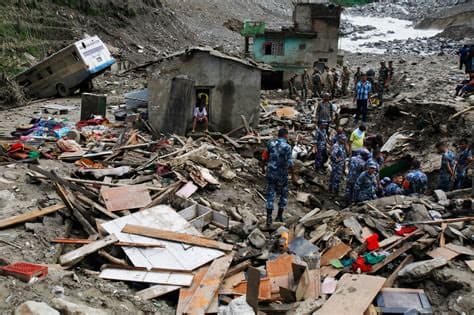
There are moments when a highway, usually defined by motion and distance, becomes something else entirely—a narrow stage where speed, routine, and fragility intersect in a single unfolding instant. In those moments, the road is no longer just infrastructure, but a place where ordinary travel can suddenly turn into irreversible disruption.
In Virginia, authorities have identified the driver involved in a bus crash that left five people dead and dozens injured, transforming a routine journey into one of the state’s more severe recent traffic incidents. The investigation, led by local law enforcement and transport safety officials, continues as details of the crash are being reconstructed from physical evidence and witness accounts.
The vehicle, a passenger bus carrying multiple travelers, was reportedly in transit along a highway corridor when the incident occurred. Emergency responders arrived to a scene shaped by collision impact and scattered debris, where the immediate priority became triage, evacuation, and stabilization of the injured. Survivors were transported to nearby medical facilities, while others were accounted for through coordinated emergency response efforts.
Highway travel across United States is often framed by its scale and efficiency—vast networks connecting cities, states, and regions through continuous movement. Yet within that system, accidents of this nature highlight the underlying vulnerability present in even the most structured transportation environments. Each journey, while routine in appearance, carries layers of dependency on timing, human judgment, mechanical condition, and environmental factors.
Officials have not yet released full conclusions regarding contributing causes, as investigations typically involve multiple stages: mechanical inspection, driver history review, roadway condition assessment, and reconstruction of the sequence of events. In such cases, clarity often emerges gradually, assembled from both technical findings and corroborated testimony.
For families of those affected, however, the timeline of investigation moves differently. News of identification marks a shift from uncertainty toward specificity, where abstract concern becomes tied to named individuals and personal loss. This transition often defines the emotional trajectory of such incidents long before official reports are finalized.
The aftermath of serious road accidents extends beyond the immediate site of impact. Hospitals absorb the injured, emergency teams return to readiness, and traffic routes resume function, yet the disruption lingers in affected communities. The memory of a single journey altered in seconds becomes part of the collective awareness of risk embedded in everyday travel.
Transportation safety experts frequently note that highway systems, while statistically safer than many other forms of travel, still concentrate risk in moments of high speed and reduced reaction time. When accidents occur at scale—such as bus collisions—the consequences are amplified by passenger density and limited protective separation between individuals and impact forces.
As investigators continue their work in Virginia, the broader focus remains on understanding not only what happened, but how similar incidents might be prevented. That process typically informs adjustments in safety standards, enforcement practices, or infrastructure design, depending on findings.
For now, the scene itself has already moved from physical disruption to procedural analysis. But for those directly affected, the event remains present in a different form—carried in recovery, in absence, and in the quiet recalibration of lives that were altered mid-journey.
In the wider rhythm of highways stretching across the country, traffic resumes its steady flow. Yet incidents like this leave a trace in collective awareness, reminding that even in systems built for movement, stillness can arrive without warning.
AI Image Disclaimer Visuals were created using AI tools and are not real photographs.
Sources Reuters, Associated Press, BBC News, The Washington Post, Virginia State Police
Published by Banx Network. This article is part of the Banx decentralized media programme, powered by the BXE token on the XRP Ledger.