
Key Highlights
- Technology firms are investing in renewable energy to meet rising electricity demands.
- Large data centers significantly contribute to global energy consumption.
- Governments are promoting sustainability through regulations and incentives.
The digital world often appears effortless, with information moving instantly and artificial intelligence responding within moments. However, beneath this convenience lies a growing physical reality: modern technology requires enormous amounts of energy to sustain itself. As the demand for digital services continues to rise, technology companies worldwide are increasingly focused on renewable energy solutions to power their operations sustainably.
Large data centers, which are essential for powering online services and AI systems, consume significant amounts of electricity every day. The need for cooling systems, high-performance processors, and continuous server operations places increasing pressure on energy infrastructure globally. According to recent studies, data centers account for about 1% of the global electricity demand, a figure that is expected to rise as digital services proliferate.
In response to these challenges, many technology firms are pursuing partnerships with renewable energy providers, focusing on solar, wind, and hydroelectric power sources. Companies are also investing in energy-efficient cooling technologies and sustainable infrastructure designs aimed at reducing their environmental impact. For instance, Google has committed to operating on 24/7 carbon-free energy in all its data centers by 2030, setting a benchmark for the industry.
The shift towards sustainability reflects broader concerns surrounding climate change and long-term environmental responsibility. As digital technologies become more integrated into economies and daily life, questions about energy consumption and environmental impact have gained prominence. The rise of artificial intelligence has intensified these discussions, as training advanced AI models requires extraordinary computational power. Researchers and infrastructure providers are now exploring methods to improve energy efficiency without hindering technological progress.
Governments are also playing a crucial role in promoting sustainability within the technology sector. Environmental regulations and renewable energy incentives are becoming more common as policymakers recognize the need to balance digital expansion with long-term environmental goals. For example, the European Union has introduced regulations aimed at reducing carbon emissions from data centers, pushing companies to adopt greener practices.
Researchers continue to explore innovative approaches to reducing energy consumption across digital infrastructure. Advances in semiconductor efficiency, liquid cooling systems, and smart energy management technologies may help support future technological growth more sustainably. These innovations are critical as the demand for digital services continues to grow, and the need for sustainable solutions becomes increasingly urgent.
Despite ongoing challenges, many analysts view the current transition as a pivotal moment for the technology industry. Sustainability is no longer treated merely as a secondary issue but is increasingly integrated into core infrastructure planning and operational strategies. As artificial intelligence and cloud computing expand globally, renewable energy may become one of the defining foundations supporting the next era of digital growth. Beneath the rise of intelligent systems lies another quiet transformation — the search for cleaner ways to power the future itself.
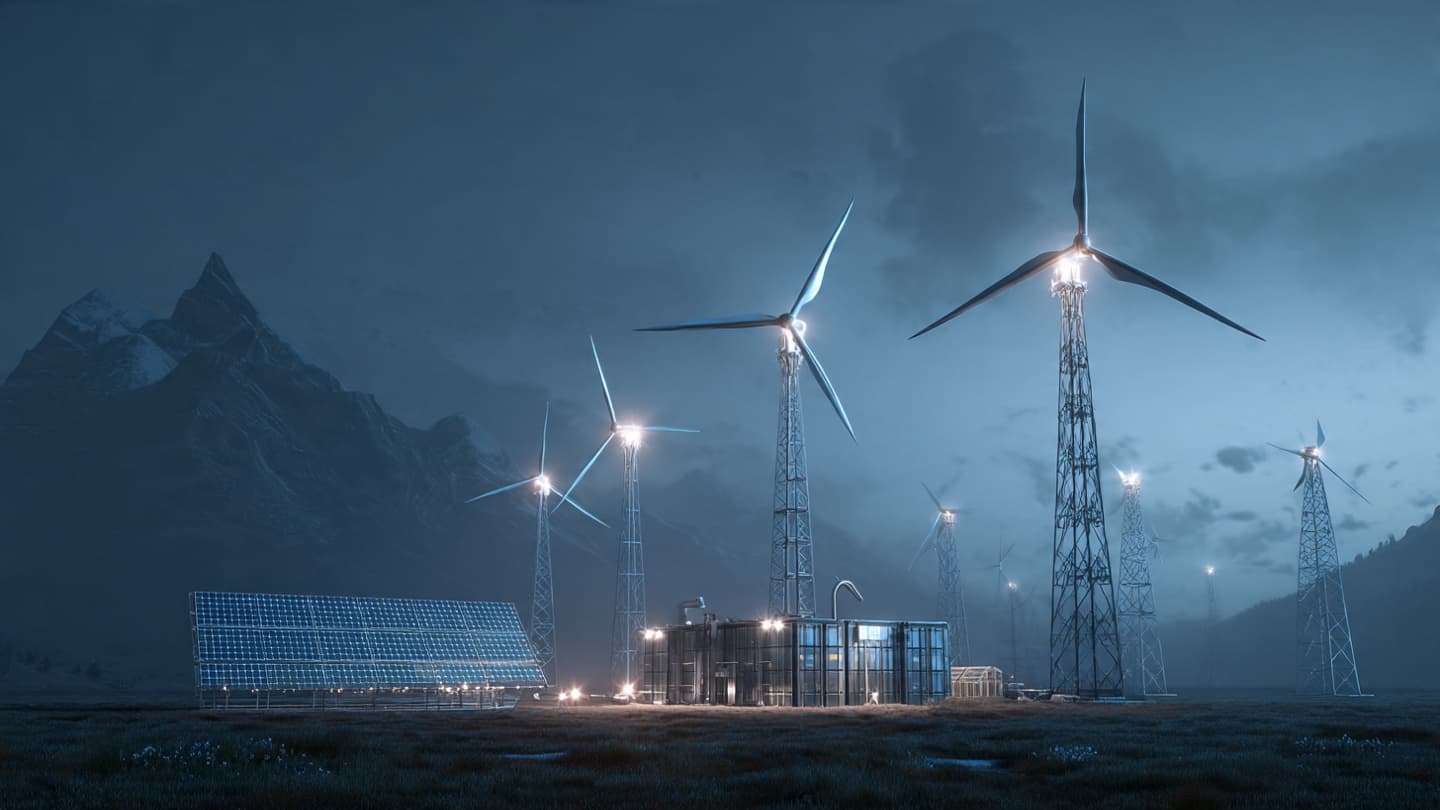
AI Image Disclaimer: Illustrations were produced with AI and serve as conceptual depictions.
Published by Banx Network. This article is part of the Banx decentralized media programme, powered by the BXE token on the XRP Ledger.



