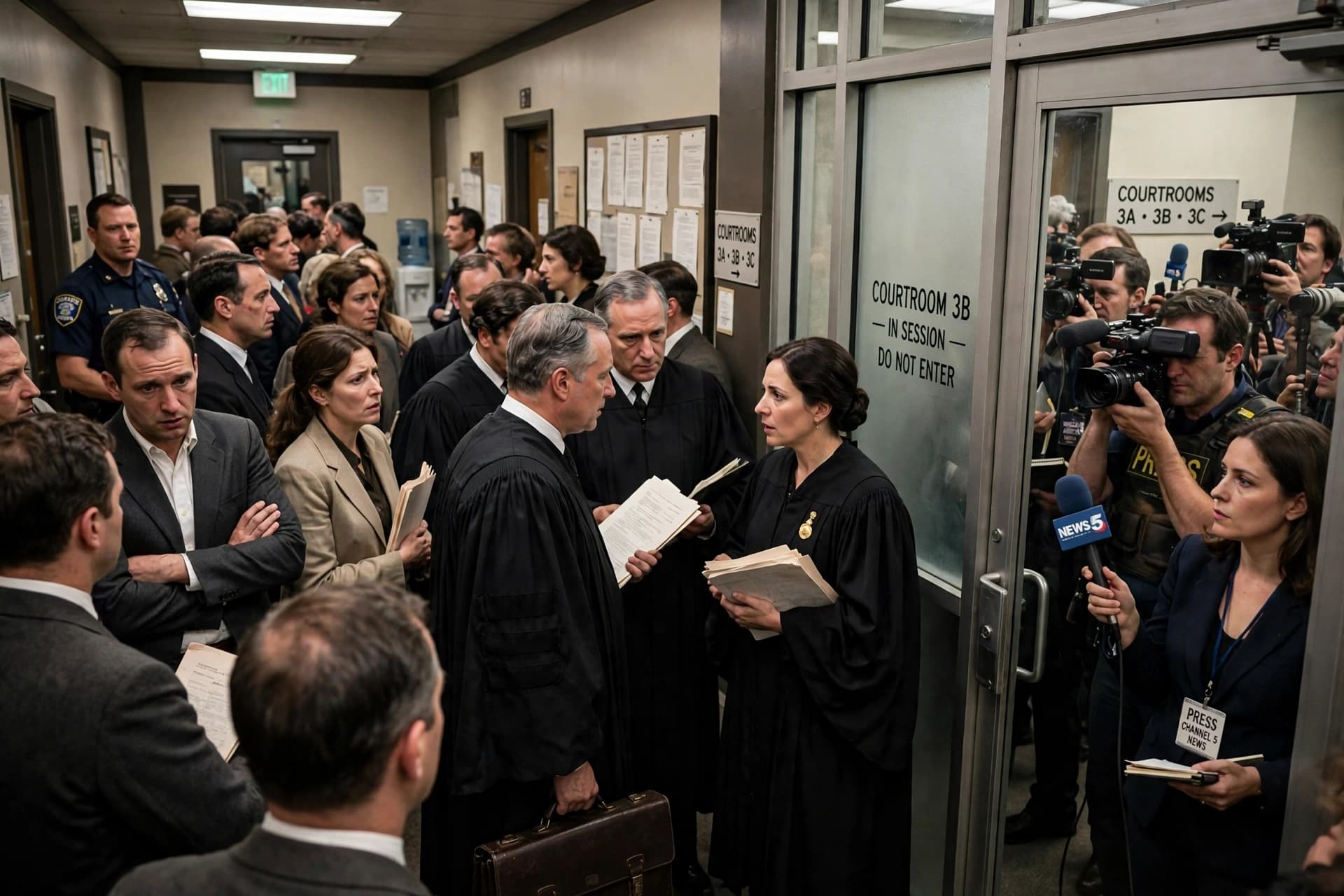
There is a particular rhythm to a courtroom operating at speed, a carousel of faces and charges and verdicts that moves so quickly the humanity of each case can blur into procedure. At the Tribunal de Paris this week, that rhythm was on display in four courtrooms instead of the usual one or two, as judges processed the hundreds of people detained during the unrest that followed France's largest protests in years. By Tuesday, more than 2,500 people had been taken into custody nationwide, about 550 in Paris alone, and the justice system was attempting to reassert control one expedited hearing at a time .
The cases observed by reporters offered glimpses of who had been arrested, fragments of lives caught in the machinery of a state promising firmness. A twenty-one-year-old video production student named Victor Bertois arrived in the glass box with a purple bruise under one eye, wearing the black T-shirt he had been arrested in. Prosecutors accused him of building a barricade, throwing paving stones, and screaming an insult at police. He told the judges he had done none of those things—that he had pulled a plank from a burning trash can to stop it catching fire, and that police had charged and beaten him. His father, visibly distressed, told the court, "I don't understand what he is doing there" .
The justice minister, Gérald Darmanin, had instructed prosecutors to seek harsh sentences and called the first convictions "just the beginning of the guilty verdicts" . His outspokenness drew dozens of defense lawyers in their black robes to crowd before a panel of judges and denounce what they called the politicization of justice. They reminded the court that the protests had begun in September with teenagers demanding better conditions in their schools, and that the violence that followed was not the whole story .
The fast-track trials are typically reserved for lower-level crimes where someone is caught red-handed, but the volume of detainees forced an expansion. Each trial lasted less than an hour, offering only snippets of a defendant's background. Of the fourteen cases followed closely by one reporter, ten involved young men, often from working-class suburbs on the edge of Paris . The government had blamed far-left insurgents and opportunistic delinquents, and Darmanin noted that 95 percent of detainees were men, 70 percent adults, and that they included people from immigrant backgrounds and foreigners as well as fully integrated French citizens .
There is a tension in these proceedings that the speed cannot resolve. The state has a legitimate interest in accountability after buildings were attacked and more than 3,000 businesses looted. The defendants have a legitimate interest in being seen as individuals rather than a category. The judges, moving from case to case, are asked to hold both. Whether the fast-track process allows for that holding is a question the lawyers raised and the verdicts will answer.
For Bertois, the decision came quickly: a five-month prison sentence with immediate imprisonment, despite his clean record and his father's testimony . His lawyer had argued he was "at the wrong place at the wrong time." The court did not agree. The carousel moved on to the next case, and the next, and the work of sorting through the aftermath of a weekend of rage continued.
---
AI Image Disclaimer: The images in this article are generated by artificial intelligence and are intended for illustrative purposes only.
Sources: The New York Times, France 24, Flipboard (The New York Times)
Published by Banx Network. This article is part of the Banx decentralized media programme, powered by the BXE token on the XRP Ledger.