
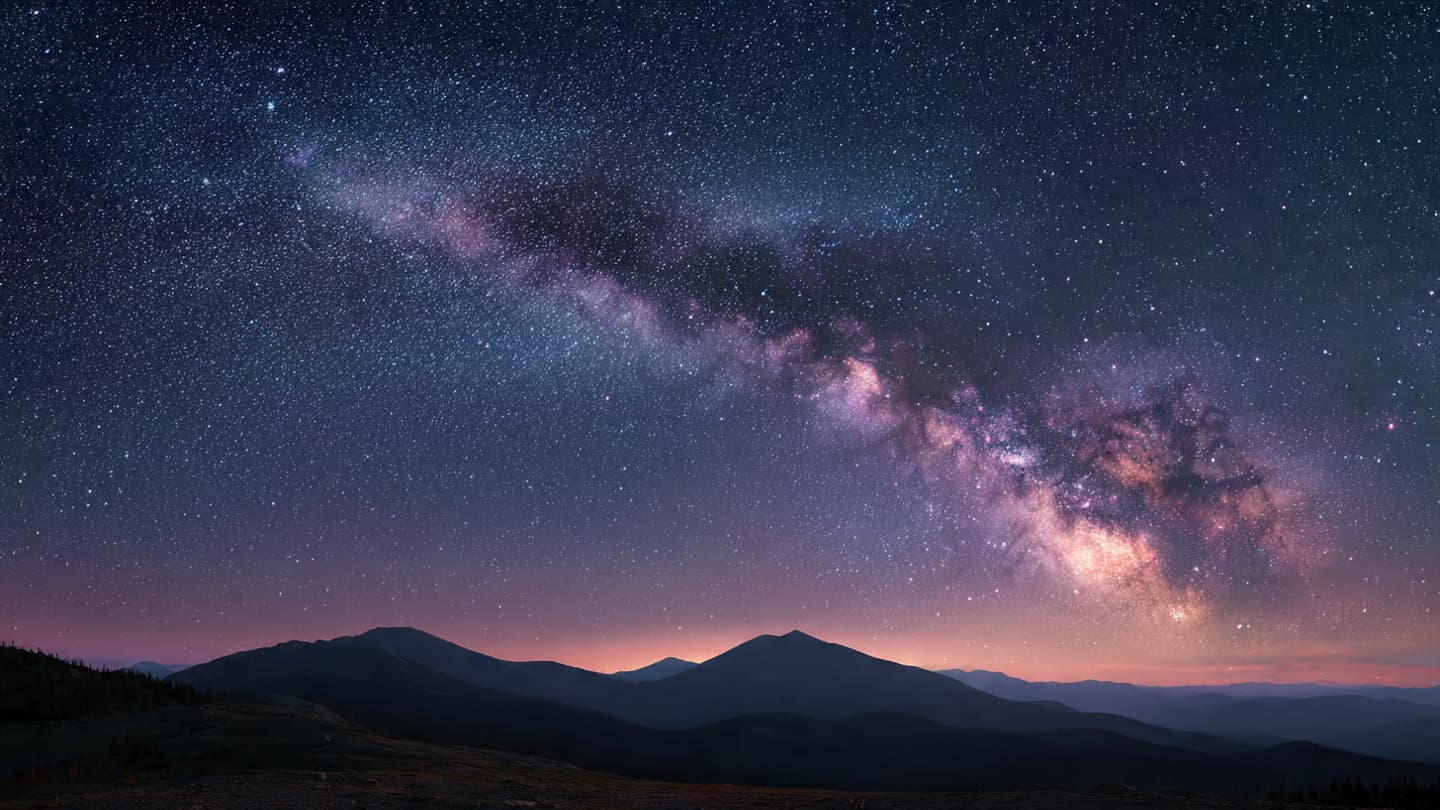
Every year, there comes a brief season when the heart of our galaxy rises with unusual clarity, as though the universe has opened a curtain for a few quiet hours before dawn. This May, astronomers say those moments may become especially memorable. Favorable moon conditions and spring skies are aligning to create one of the best opportunities of the year to observe the glowing core of the Milky Way.
The Milky Way’s core is the bright central region of our galaxy, dense with stars, gas, and cosmic dust. From Earth, it appears as a luminous band arching across the southern sky. While visible during several months each year, astronomers note that certain nights offer much clearer conditions than others.
According to recent astronomy reports, the new moon arriving in mid-May will significantly reduce lunar brightness, allowing darker skies to reveal finer galactic details. Experts say the best viewing period will occur between midnight and dawn, when the galactic core climbs higher above the horizon.
The ideal viewing locations are areas with minimal light pollution. Remote countryside regions, deserts, mountain overlooks, and protected dark-sky parks are often recommended. Artificial city lighting can obscure much of the Milky Way’s structure, leaving only the brightest stars visible.
Observers are advised to look toward the southern sky, particularly near the constellations Sagittarius and Scorpius. In these regions, the Milky Way appears thicker and brighter because viewers are facing toward the galaxy’s crowded central zone. Under sufficiently dark conditions, dust lanes and glowing star clouds can become visible even without telescopes.
Astronomers describe May as especially important because summer twilight gradually shortens the darkest nighttime hours. By June and July, lingering evening light in some regions reduces the ideal viewing window. Mid-May therefore offers a balance between comfortable weather and longer periods of darkness.
For photographers, the event presents a valuable opportunity for wide-angle night imaging. Long exposures can capture the layered texture of the galactic core, along with foreground landscapes such as forests, lakes, or desert terrain. Many astrophotographers plan sessions around moonless nights specifically for this reason.
Experts also encourage beginners not to feel intimidated by astronomy equipment. The Milky Way’s core can often be seen with the unaided eye under dark conditions. Allowing vision to adapt naturally to darkness remains one of the most important steps for successful viewing.
As millions look upward during these spring nights, the glowing center of the Milky Way may offer more than a scientific spectacle. It stands as a quiet reminder of humanity’s small place within a galaxy that continues to move silently above the Earth each night.
AI Image Disclaimer: Certain space illustrations accompanying this report were generated with the assistance of artificial intelligence.
Sources: Space.com Daily Galaxy NASA Sky & Telescope
Published by Banx Network. This article is part of the Banx decentralized media programme, powered by the BXE token on the XRP Ledger.



