
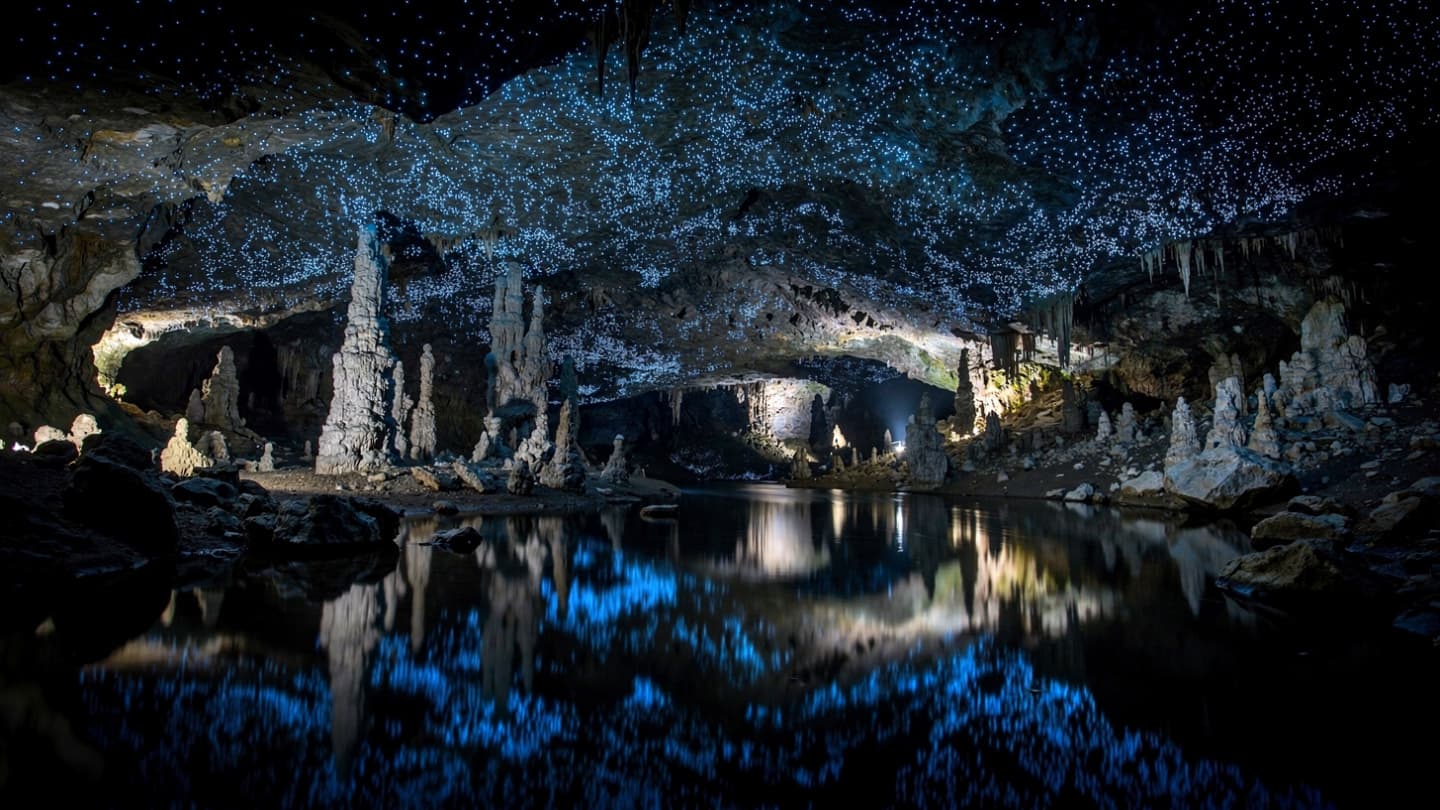
Key Highlights
- Location:The Waitomo Caves are situated in the Waikato region of New Zealand.
- Unique Ecosystem:Home to glowworms, which create a stunning luminescent display.
- Geological History:The limestone formations are remnants of ancient oceans.
The Waitomo Caves, nestled beneath the lush green pastures of Waikato, New Zealand, are a breathtaking natural wonder that captivates visitors with their unique ecosystem and geological history. This subterranean world, shaped over millions of years, is characterized by its intricate limestone formations and the enchanting glow of thousands of glowworms that illuminate the darkness. As sunlight fades into the cool dampness of the earth, the caves reveal a hidden realm where the familiar rules of the surface world are suspended.
The caves are a cathedral of limestone, carved by the slow persistence of water and stone. Underground rivers have sculpted the caverns, creating a profound silence that resonates within the walls. Visitors often describe the experience of drifting through the caves in small boats as surreal, as the boundary between the water's reflection and the living light above dissolves into a singular, glowing void. The glowworms, tiny bioluminescent creatures, hang from delicate threads, casting a soft azure light that mimics the stars of a midwinter night.
This bioluminescence serves a dual purpose: it is both a survival strategy for the glowworms, luring unsuspecting prey into their sticky traps, and a source of wonder for human observers. The light, which requires no oxygen and generates no heat, creates a meditative atmosphere that invites contemplation of nature's beauty, evolved in the absence of sunlight. Visitors are reminded that they are guests in a landscape that has never known the sun, witnessing a version of beauty that thrives in darkness.
The limestone formations themselves are a geological record of ancient oceans, containing fossils of shells and coral pressed into solid rock over eons. Each stalactite that hangs from the ceiling is a testament to the slow accumulation of mineral-rich water droplets, a process that has taken centuries to create the stunning architecture seen today. This slow-motion construction project serves as a reminder of the power of time and patience in shaping the natural world.
The air within the caves is heavy and still, imbued with the scent of wet rock and the cold breath of the mountains. This sensory experience strips away the distractions of the outside world, allowing visitors to focus on the distant sound of dripping water and the visual rhythm of the blue light. Time seems to stand still in the caves, where an hour can feel like a century, existing in a temporal pocket untouched by the frantic pace of life above.
Researchers studying these delicate ecosystems approach their work with reverence, understanding that even minor disturbances can disrupt the fragile balance that has developed over thousands of years. The health of the glowworms serves as an indicator of the ecological well-being of the land above, highlighting the interconnectedness of subterranean and surface ecosystems. Actions taken in the light ultimately affect the dark, reminding us of our responsibility to protect these natural wonders.
As visitors emerge from the cave's mouth, the transition back to the vibrant world above can be jarring. The brightness of the ferns, the songs of the birds, and the warmth of the air all seem overwhelming after the serene experience within the caves. For a moment, the memory of the blue stars lingers, a reminder of the quiet brilliance that exists just out of sight.
The Waitomo Caves remain a place of mystery, a labyrinth of stone that has only been partially explored and understood. They serve as a testament to the earth's dynamic nature, a hollowed and breathing entity with secrets tucked away in its deepest folds. The light of the caves continues to pulse in the darkness, illuminating the profound depth of the natural world and inviting further exploration and appreciation.
Published by Banx Network. This article is part of the Banx decentralized media programme, powered by the BXE token on the XRP Ledger.



