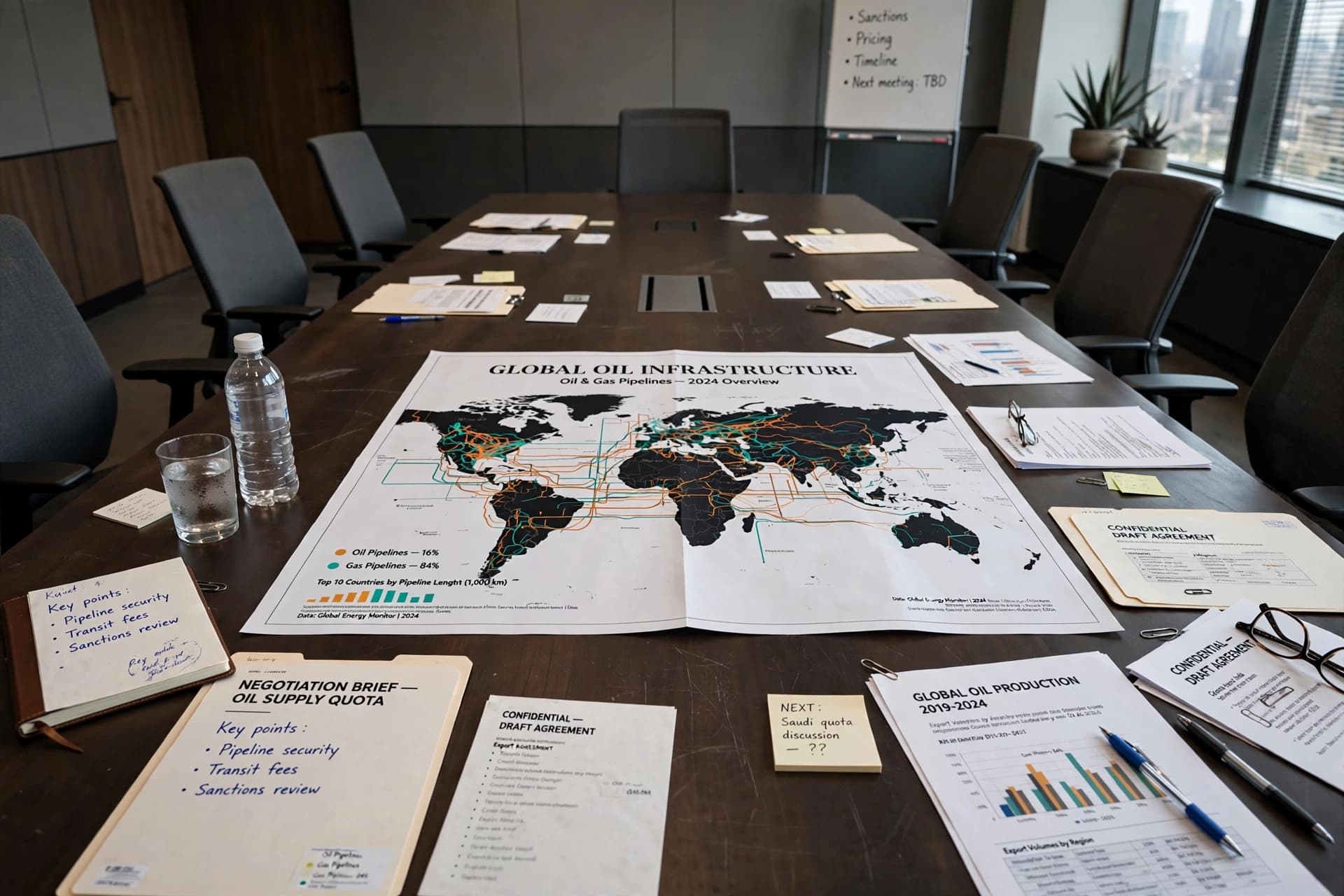
There is a particular complexity that attends the negotiation of war and peace—a complexity that sometimes extends beyond the battlefield to the boardroom, where the interests of nations and the interests of individuals can become difficult to disentangle. According to a report by The New York Times, the Trump administration's talks with Russia on ending the war in Ukraine have expanded to include a multibillion-dollar oil deal involving the foreign assets of Lukoil, Russia's second-largest oil producer. The deal, which would require approval from both the U.S. government and the Kremlin, has drawn attention not only for its scale but for the network of business figures connected to it—including individuals with ties to two of the American negotiators involved in the Ukraine talks, Steve Witkoff and Jared Kushner .
The assets in question are sprawling: oil fields, refineries, and gas stations around the world owned by Lukoil. U.S. sanctions have forced the Russian energy group to consider selling its international operations, making them an attractive investment target . According to the Times, the group pursuing the deal includes American investor and billionaire Todd Boehly, two Middle Eastern groups that have done business with Kushner or Witkoff's family, and an arm of the U.S. government, the U.S. International Development Finance Corporation . The involvement of a government agency in a commercial deal with a sanctioned Russian entity raises questions about the boundaries between diplomacy and private enterprise.
The deal was reportedly raised by Russian President Vladimir Putin during a September 5 meeting at the Kremlin with Witkoff and Kushner. According to sources familiar with the meeting, Putin proposed completing the deal as a way to demonstrate to Russians that they could do business with the United States . One of the people said Putin wanted the deal to serve as proof that Russia could engage economically with the West, even as the war in Ukraine continues. The Times reported that Kushner and Witkoff said they would take the matter under consideration, viewing the deal as a potential way to build trust with the Kremlin and, at the same time, lower global energy prices .
The report has drawn scrutiny because of the connections between the parties. One of the Middle Eastern groups involved includes Tahnoun bin Zayed Al Nahyan, a member of the Abu Dhabi royal family whose investment companies own a stake in World Liberty Financial, a crypto company founded by Witkoff—and in which President Trump's sons are also partners . Another involves Qatari billionaire brothers who are building a resort in Albania with Kushner and his wife, Ivanka Trump . The Times noted that there is no indication that Kushner or Witkoff would personally benefit financially from the deal, but that it raises questions about potential conflicts of interest .
The White House, the U.S. Treasury Department, and Lukoil did not respond to requests for comment outside regular business hours . The deal remains uncertain; several previous attempts to acquire Lukoil's international assets have stalled or collapsed . Final approval would require both the U.S. government and the Kremlin to sign off. For now, the talks continue, and the line between ending a war and reshaping an energy market remains as blurred as it has ever been.
AI Image Disclaimer: The visual elements in this article were created using AI generation tools and are intended for illustrative purposes only.
Sources: The New York Times (via HRT, Agerpres, TVP World, Yle), Reuters
Published by Banx Network. This article is part of the Banx decentralized media programme, powered by the BXE token on the XRP Ledger.

.jpg&w=3840&q=75 "Prison Chief in Christa Pike Case Oversaw Five “Botched” Executions, Lawyers Say")