
Key Highlights
- Discovery:Paleontologists uncover a trove of fossils in Moa Eggshell Cave.
- Age:The fossils date back one million years, revealing ancient wildlife.
- Significance:This find bridges a 15-million-year gap in New Zealand's fossil record.
In a remarkable paleontological discovery, researchers have unearthed a significant collection of fossils in the Moa Eggshell Cave, located in the karst landscape of New Zealand's North Island. This site, near the renowned glow-worm caves of Waitomo, has yielded what scientists are calling a "missing volume" of the region's natural history, with fossils dating back approximately one million years. This discovery not only highlights the rich biodiversity that once thrived in New Zealand but also provides critical insights into the evolutionary history of its unique wildlife.
The excavation, led by Associate Professor Trevor Worthy and published in the journal Alcheringa, has revealed a previously unknown species of parrot, named Strigops insulaborealis. This ancient relative of the modern kākāpō showcases a fascinating evolutionary narrative. Unlike its heavier, flightless descendant, this ancestor possessed wings capable of flight, indicating a different ecological niche and lifestyle. The findings emphasize that evolution is a complex process characterized by various adaptations rather than a linear progression.
Within the cave, the remains of twelve bird species and four frog species have been meticulously preserved in layers of tephra, remnants of ancient volcanic activity. These geological markers serve as a timeline, pinpointing a period approximately 1.55 million years ago when the Earth was experiencing significant glacial cycles. The research suggests that New Zealand's unique wildlife was shaped not only by its geographical isolation but also by a series of natural disasters, including super-volcanic eruptions and climate changes, which led to widespread extinctions long before humans arrived.
The collaborative efforts of researchers from Canterbury Museum and Flinders University have been instrumental in mapping the ash layers known as "Ngaroma" and "Kidnappers," which have effectively locked this ecosystem in time. This work is crucial in bridging a 15-million-year gap in the fossil record, connecting the ancient fauna of St Bathans with the world encountered by Māori ancestors. The excavation represents a profound reconstruction of New Zealand's ecological history, illustrating how the resilience of its avian species was forged through periods of environmental upheaval.
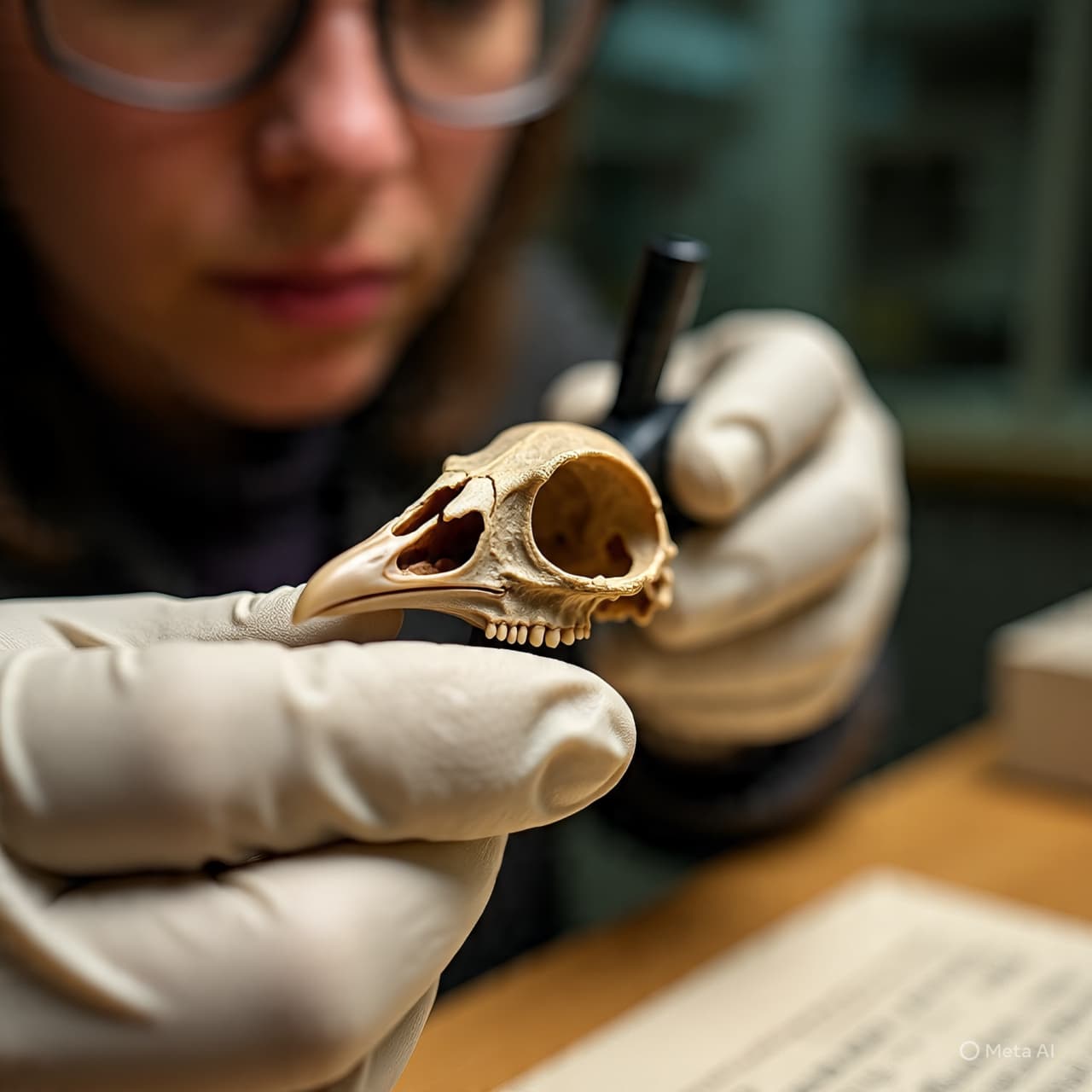
As the team carefully extracts the delicate remains of a prehistoric pigeon, closely related to the Australian bronzewing, the significance of this discovery becomes increasingly apparent. The Moa Eggshell Cave serves as a repository of the "Lost World," a time of rich biodiversity that was already undergoing significant changes. This cave acts as a natural library, its pages inscribed with the stories of survival and adaptation, offering a fresh perspective on how life responds to the planet's volatile nature.
Ultimately, the excavation at Moa Eggshell Cave marks one of the most significant fossil discoveries in New Zealand in decades. By documenting the first Early Pleistocene vertebrate fauna from a cave context, this project establishes a vital baseline for understanding avian evolution in the Southern Hemisphere. This scientific milestone not only enhances our knowledge of New Zealand's natural heritage but also underscores the importance of preserving its deep-time origins. In the quiet darkness of the cave, the legacy of the ancestral parrot continues to inspire and inform our understanding of the past.
Published by Banx Network. This article is part of the Banx decentralized media programme, powered by the BXE token on the XRP Ledger.



