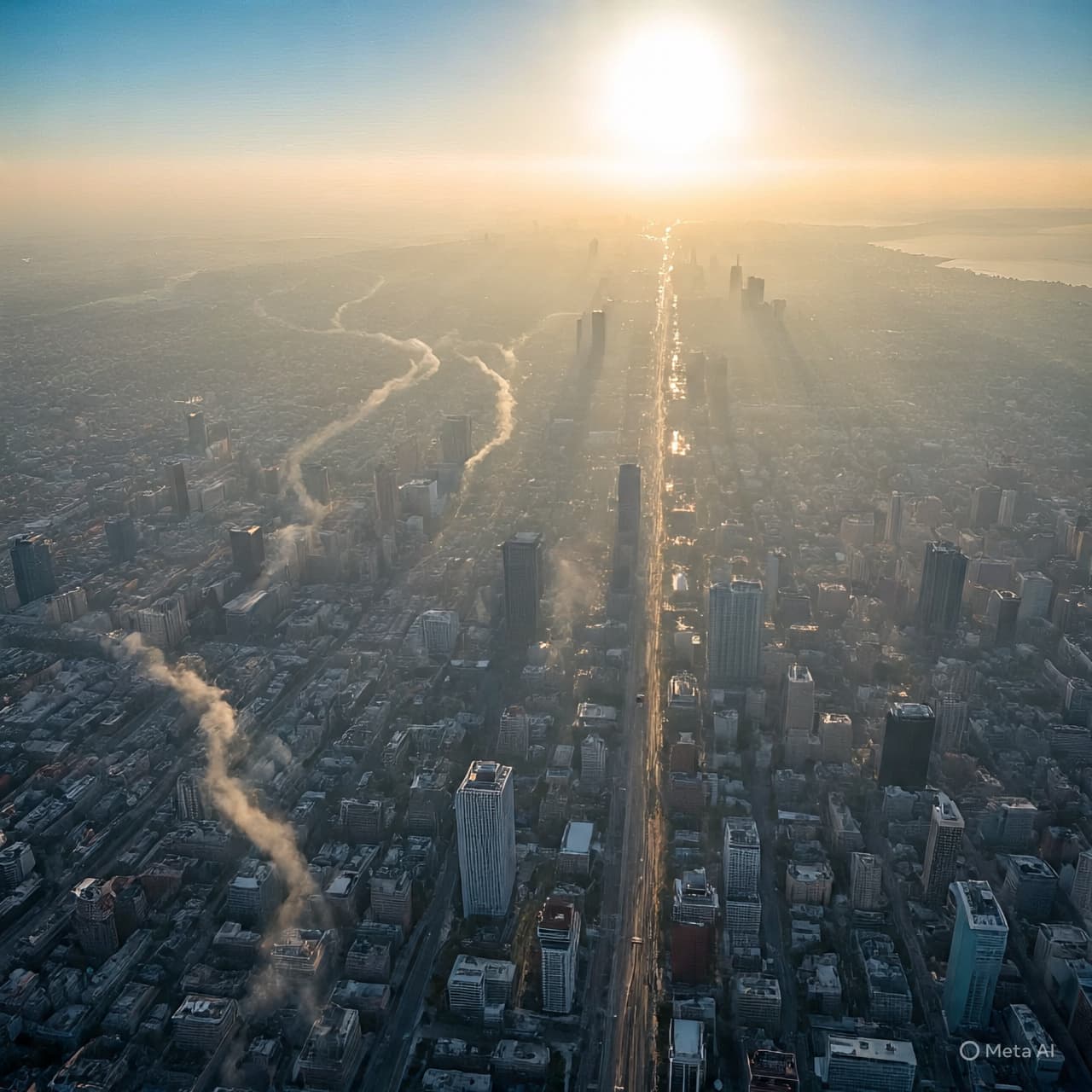
There are days when heat feels less like weather and more like a quiet presence—something that settles over cities and fields alike, stretching time, softening edges, and asking people to move just a little slower. This season, that presence seems to be widening its reach, not in sudden bursts but in a steady, insistent spread. Across the United States, what begins as a regional warmth is gradually becoming a shared experience, as if the country itself is being drawn into a single, sunlit breath.
Meteorologists have begun to describe the pattern in simple terms: widespread, persistent heat. Yet behind that simplicity lies a more complex rhythm. High-pressure systems linger longer than usual, holding warm air in place like a lid on a simmering pot. The result is not only rising temperatures but also nights that offer little relief, where the air remains heavy and sleep comes slowly. From urban centers to rural stretches, the sensation is less about isolated spikes and more about continuity—day after day of elevated warmth.
This kind of heat does not arrive with dramatic announcements. It builds quietly, almost politely, until it becomes unavoidable. In cities, concrete and asphalt absorb the sun’s energy, releasing it slowly into the evening, turning neighborhoods into reservoirs of warmth. In agricultural regions, the same heat presses against crops and soil, accelerating growth in some cases, but also increasing the strain on water resources. The balance is delicate, and each degree carries its own quiet consequence.
Public health officials often speak of heat in practical terms—hydration, shade, rest—but beneath those advisories lies a broader awareness. Extended heat affects more than comfort; it reshapes routines. Outdoor work shifts earlier into the morning or later into the evening. Energy demand rises as air conditioning becomes not a luxury but a necessity. For those without access to cooling, the experience can feel especially isolating, as if the very air has become something to endure rather than inhabit.
What makes this moment notable is not only the intensity but the scale. When forecasters suggest that “basically the entire US is going to be hot,” it reflects a convergence of conditions rather than a single extreme event. The heat is not confined; it travels, expands, and settles across regions that might otherwise experience variation. It is a reminder of how interconnected atmospheric patterns can be, how a shift in one area can ripple outward, reshaping expectations elsewhere.
Still, there is a certain resilience in how communities respond. Cooling centers open their doors. Neighbors check on one another. Small adjustments—closing blinds, sharing shade, slowing down—become acts of quiet adaptation. These responses may seem modest, but together they form a collective rhythm, a way of meeting the heat without confrontation.
As the days unfold, the forecast remains steady, and the warmth continues its gradual sweep. There is no sharp conclusion to such a pattern, only a slow easing when conditions eventually change. Until then, the heat lingers, not as a sudden force but as a sustained presence, asking for patience, awareness, and a careful attention to the small ways people navigate the long, warm days.
AI Image Disclaimer Visuals are created with AI tools and are not real photographs.
Source Check (Credible Media Outlets): Reuters Associated Press The New York Times The Washington Post CNN
Published by Banx Network. This article is part of the Banx decentralized media programme, powered by the BXE token on the XRP Ledger.