In the remote and icy reaches of the Canadian Arctic, there exists a delicate balance between fresh water and salt, between land and sea. For centuries, this balance was maintained by a rare geological feature known as an epishelf lake—a body of freshwater trapped behind a floating ice shelf. But in Milne Fiord, on the northern edge of Ellesmere Island, that balance has been irrevocably broken. A new study confirms what many feared: Canada’s last remaining epishelf lake is gone, drained into the ocean in a matter of months, never to return in its previous form.
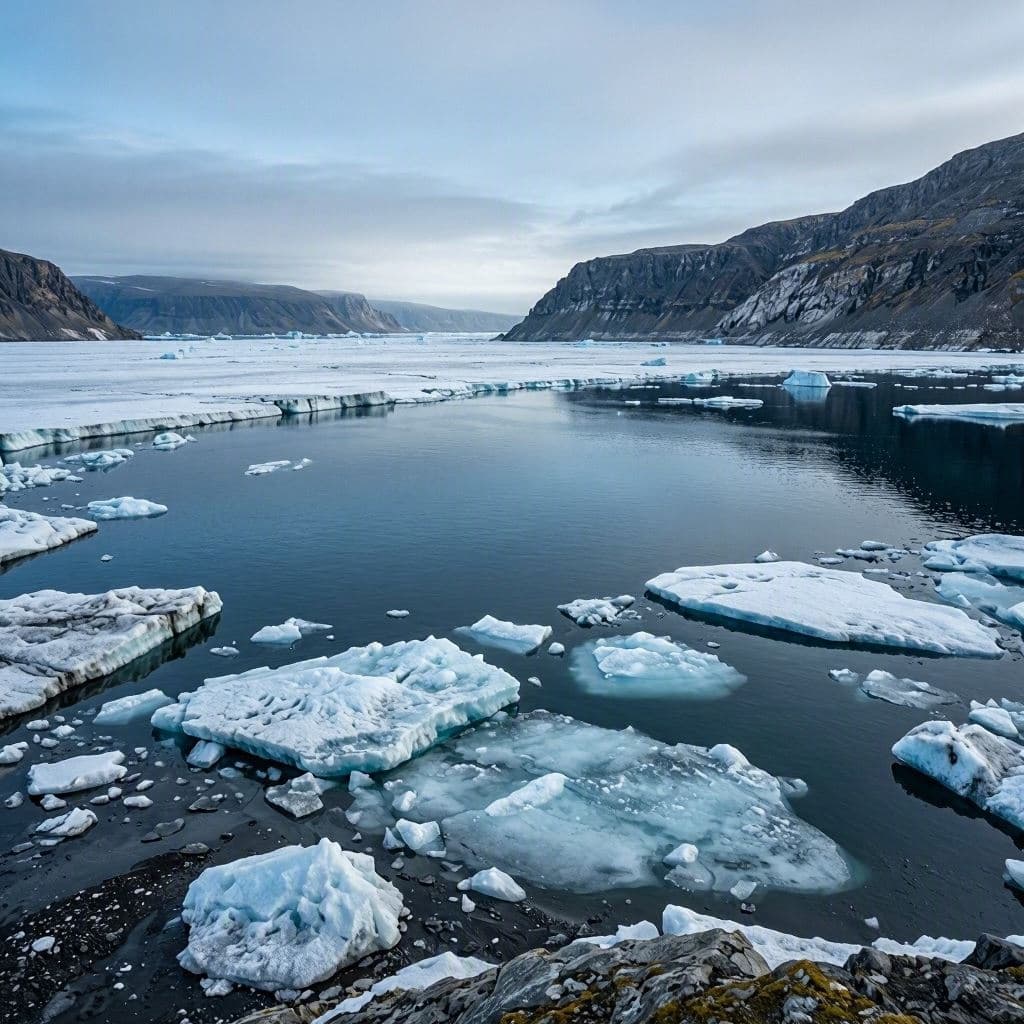
The collapse was not a slow fade but a sudden rupture. In July 2020, a significant calving event shattered nearly half of the Milne Ice Shelf, removing the barrier that had held the freshwater in place for decades. Without this icy dam, the lake’s contents flowed freely into the Arctic Ocean, mixing with the saline waters below. The transformation was swift, turning a unique ecosystem into a standard fjord, and with it, a piece of Arctic heritage vanished.
Researchers from the University of British Columbia and other institutions have analyzed data collected before and after the event, confirming that the conditions required for an epishelf lake to reform are no longer present. The climate has warmed too much, and the ice shelf has thinned too significantly to provide the necessary stability. This is not merely a local change; it is a symptom of a broader shift in the polar environment, where such features are becoming increasingly rare.
Epishelf lakes are more than just bodies of water; they are habitats for specialized organisms that thrive in the unique stratification of fresh and salt water. The loss of this lake means the loss of a biological niche that existed nowhere else in Canada. For scientists who studied these ecosystems, the disappearance is both a professional loss and a personal sorrow, marking the end of an era in Arctic hydrology.
The study highlights the vulnerability of high-latitude environments to climate change. While the Arctic has always experienced natural variability, the speed and scale of recent changes are unprecedented. The Milne Ice Shelf, once a stable fixture on maps, is now a fragment of its former self, unable to support the hydrological structures that depended on it. This fragility serves as a warning for other polar regions facing similar pressures.
For the Inuit communities and researchers who have long monitored the area, the confirmation brings a sense of closure mixed with concern. It underscores the need for continued vigilance and adaptation in the face of environmental change. The data collected from Milne Fiord will now serve as a baseline for understanding how other Arctic systems might respond to warming temperatures and shrinking ice covers.
As the Arctic continues to transform, the story of Milne Fiord stands as a testament to the rapid pace of change in our world. The loss of the epishelf lake is a permanent mark on the landscape, a reminder that some things, once gone, cannot be restored. Yet, in studying this loss, we gain valuable insights into the resilience and limits of our planet’s most remote environments.
The images accompanying this report are AI-generated visualizations created to illustrate the narrative context.
Sources: Phys.org, University of Alberta, Nature Scientific Reports, Royal Museums Greenwich, CBC News
Published by Banx Network. This article is part of the Banx decentralized media programme, powered by the BXE token on the XRP Ledger.