
Key Highlights
- 'Project Freedom': A new initiative proposed by Donald Trump regarding maritime security in the Strait of Hormuz.
- Vital Trade Route:The Strait of Hormuz is crucial for global oil supply, with significant geopolitical implications.
- Ongoing Tensions:The region has a history of conflict and cooperation, particularly involving Iran and Western nations.
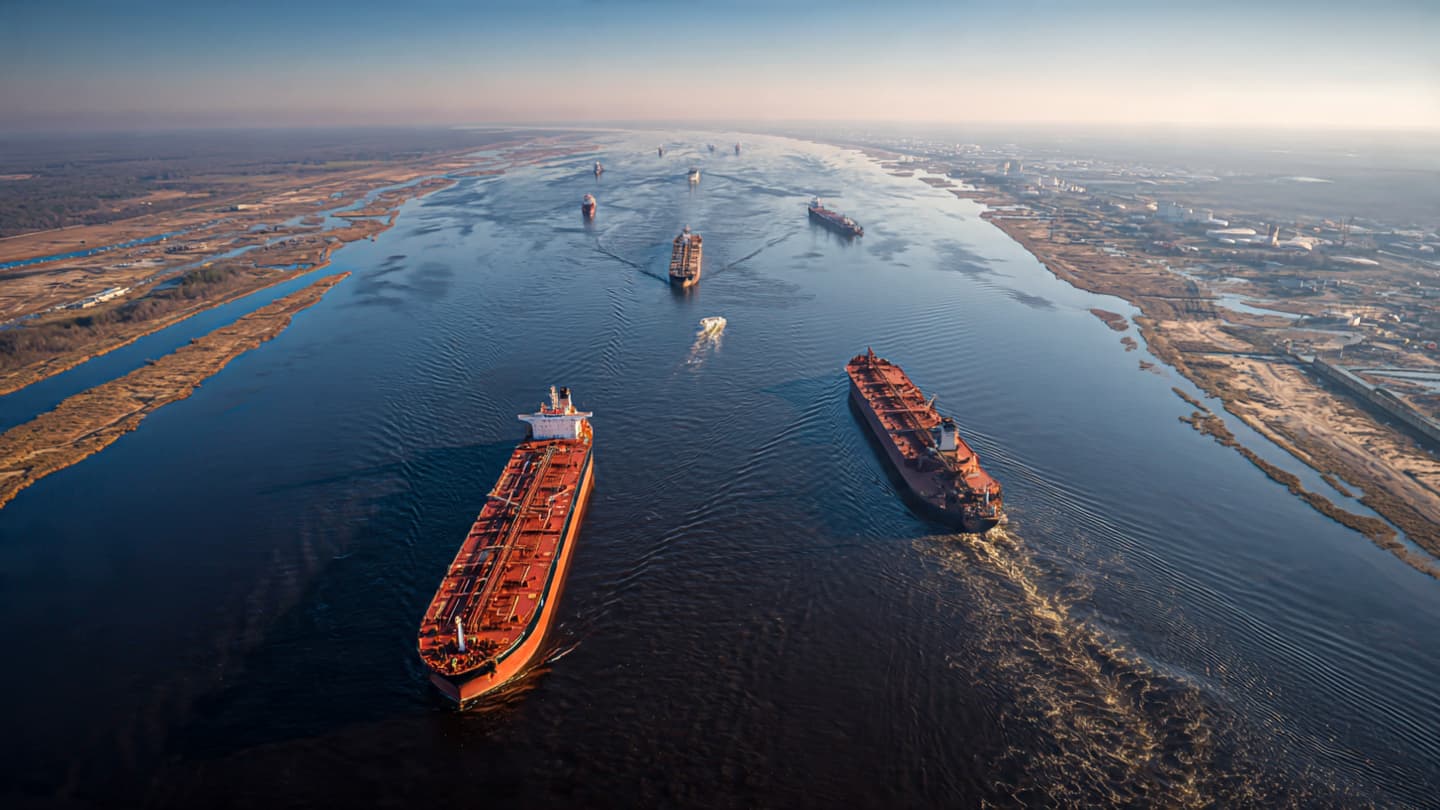
The waters of the Strait of Hormuz have long carried more than ships. They hold the slow passage of oil tankers, the quiet vigilance of naval vessels, and the weight of histories that move beneath the surface like unseen currents. At sunrise, the strait can appear almost still, its narrow expanse reflecting a calm that belies its significance—one of the world’s most closely watched corridors.
Recently, a new phrase has entered that space: “Project Freedom,” a term associated with proposals and commentary from Donald Trump regarding the security and navigation of these waters. While details remain limited and, in some cases, undefined, the concept appears to center on ensuring unimpeded maritime passage through the strait, a priority that has long shaped international engagement in the region.
The Strait of Hormuz is not merely a geographic feature; it is a vital artery of global trade. A significant portion of the world’s oil supply passes through this narrow channel, linking producers in the Gulf to markets far beyond. Its importance has made it a focal point for both cooperation and tension, where the presence of naval forces often serves as both safeguard and signal.
Trump’s references to “Project Freedom” seem to draw from this longstanding concern with maritime security. Though no formal policy blueprint has been publicly detailed, the language suggests an emphasis on deterrence and the maintenance of open sea lanes. In past years, similar initiatives—sometimes framed through multinational patrols or coalition efforts—have sought to monitor the region and respond to incidents affecting shipping.
At the center of these considerations lies Iran, whose proximity to the strait and involvement in regional dynamics make it an integral part of the conversation. Tensions between Iran and Western nations have periodically influenced the security environment in the waterway, with episodes of ship seizures, military exercises, and diplomatic exchanges shaping perceptions of risk.
The notion of “freedom” in this context carries layered meanings. For some, it reflects the principle of free navigation under international law—a concept that has guided maritime practice for decades. For others, it suggests a more active role for military presence, ensuring that passage remains uninterrupted even in times of heightened tension. The balance between these interpretations is not always fixed; it shifts with circumstance and perspective.
Observers note that the absence of detailed policy leaves “Project Freedom” open to interpretation. It may represent a continuation of existing approaches under a new name, or it could signal a potential recalibration of strategy. Without formal documentation, its contours remain partly conceptual, shaped as much by inference as by statement.
Meanwhile, the strait itself continues its steady rhythm. Tankers move through its narrow passage, escorted or unescorted, while naval vessels maintain watchful patterns that have become almost routine. The surface appears unchanged, even as the language surrounding it evolves.
In the immediate sense, what is known remains limited: Donald Trump has referenced a concept called “Project Freedom” in relation to the Strait of Hormuz, emphasizing the importance of secure and open navigation. Beyond that, specifics have yet to be fully articulated, leaving the initiative defined more by its intent than by its structure.
And so the waters remain—a place where clarity is often partial, where meaning unfolds gradually, and where even a single phrase can ripple outward, touching conversations far beyond the horizon.
Published by Banx Network. This article is part of the Banx decentralized media programme, powered by the BXE token on the XRP Ledger.



