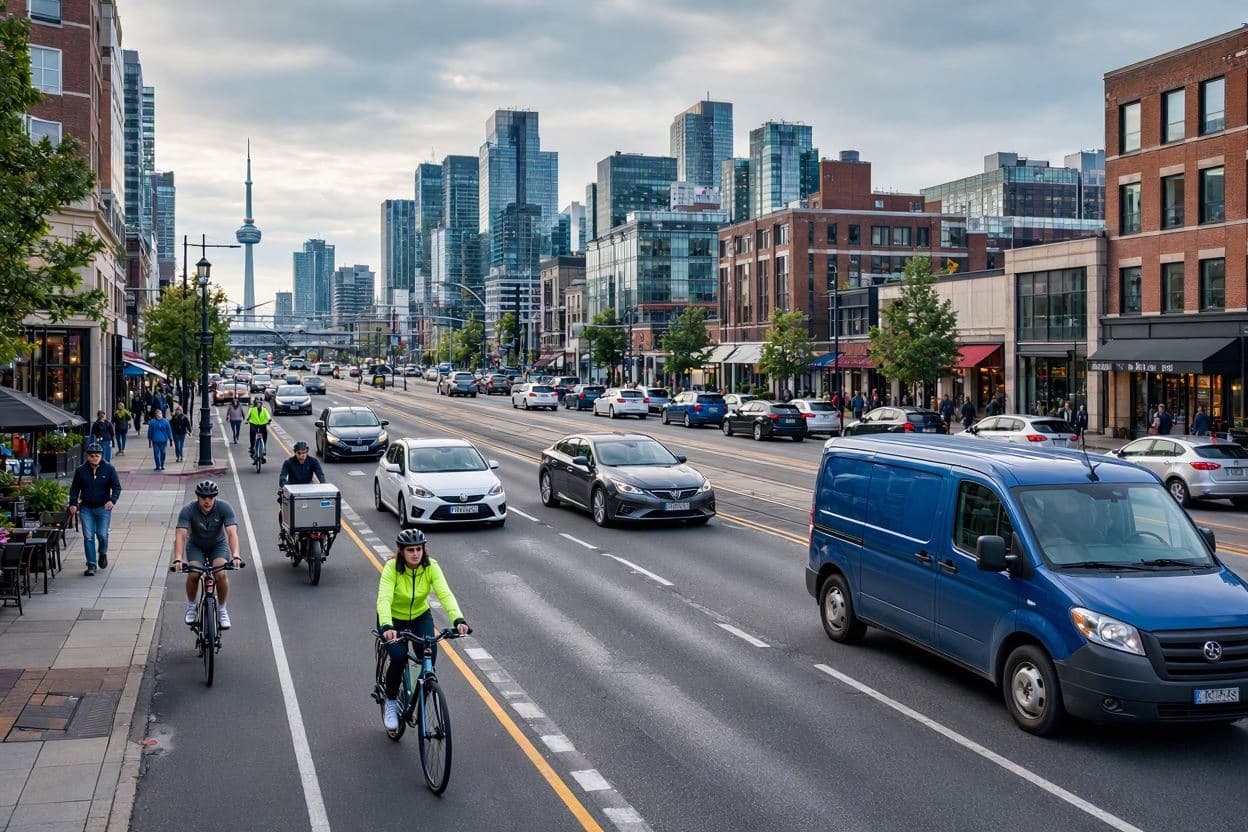
Urban spaces are constantly evolving, shaped by the competing needs of mobility, safety, and commerce. In Toronto, the debate over bike lanes has become a focal point of this tension, reflecting broader questions about how cities should prioritize different modes of transport. The Ford government’s announcement to resume the removal of certain bike lanes signals a shift in policy direction, reigniting discussions about urban planning, provincial authority, and the future of sustainable transportation in the city.
The decision stems from ongoing disagreements between the provincial government and the City of Toronto regarding traffic flow and road usage. Provincial officials argue that removing some bike lanes will alleviate congestion for drivers and improve emergency vehicle access. They view these changes as necessary steps to balance the needs of all road users, particularly in areas where traffic volumes have increased significantly post-pandemic.
However, the move has been met with resistance from cycling advocates and many city councillors. They argue that bike lanes are crucial for promoting active transportation, reducing carbon emissions, and improving road safety for cyclists. Removing them, they contend, could discourage people from choosing bikes over cars, potentially worsening traffic and air quality in the long run.
The political dynamic between Queen’s Park and City Hall adds complexity to the issue. The provincial government’s use of legislative powers to override municipal decisions highlights the hierarchical nature of governance in Ontario. This intervention raises questions about local autonomy and the extent to which cities should be able to determine their own transportation strategies based on local data and community input.
For residents, the changes bring uncertainty. Cyclists who have come to rely on protected lanes for safe commuting face the prospect of returning to mixed traffic, which many perceive as riskier. Drivers, on the other hand, may welcome the additional road space, hoping for smoother commutes. The divide reflects differing priorities and experiences within the urban population.
Urban planners note that successful transportation systems require a holistic approach, integrating public transit, walking, cycling, and driving. Removing infrastructure for one mode without enhancing alternatives can lead to unintended consequences. The challenge lies in finding a balance that accommodates growth while maintaining safety and sustainability goals.
Community engagement has been a key part of the discourse, with public consultations and protests marking the debate. Voices from various neighborhoods highlight the localized impact of these decisions, emphasizing that one-size-fits-all solutions may not work for diverse urban environments. Listening to these perspectives is essential for creating policies that serve the whole city.
As the removals proceed, monitoring and evaluation will be critical. Data on traffic patterns, accident rates, and mode share will help determine the effectiveness of the changes. Adjustments may be needed based on real-world outcomes, ensuring that the system remains responsive to the needs of all users.
The Ford government’s plan to restart bike lane removals in Toronto has reignited the debate over urban transportation priorities. While aimed at reducing congestion, the move faces opposition from cycling advocates concerned about safety and sustainability. The outcome will depend on ongoing assessment and community dialogue.
AI Image Disclaimer: The visual elements accompanying this article are AI-generated interpretations designed to symbolize urban planning and transportation debates, using neutral and descriptive imagery of city streets.
Sources: Toronto Star CBC Toronto Global News
Published by Banx Network. This article is part of the Banx decentralized media programme, powered by the BXE token on the XRP Ledger.