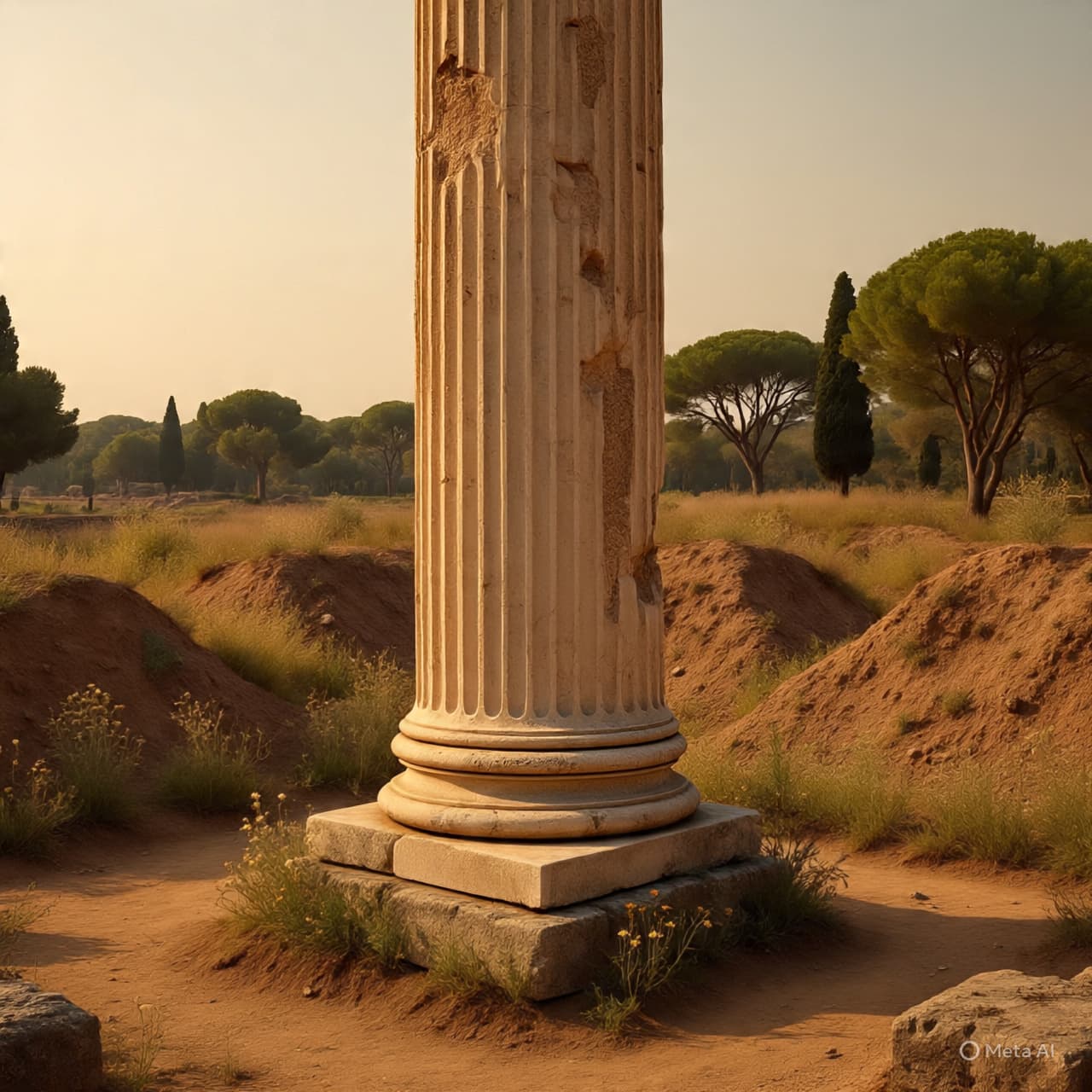
It began as a small neighborhood curiosity — a weathered slab of carved stone resting quietly in a New Orleans yard. But when experts finally examined it, the whispers of history grew louder: the object was a 2,000-year-old Roman grave marker, missing from an Italian museum since World War II.
The stone’s unlikely transatlantic journey was recently traced to Erin Scott O’Brien, who revealed that the artifact had belonged to her grandfather, a WWII soldier. He had brought it back from Europe decades ago, and for years, O’Brien had simply used it as a garden ornament, unaware of its significance.
“I always thought it was beautiful, but I never imagined it was Roman,” she said. When archaeologists identified the Latin inscriptions and marble composition, the puzzle began to take shape — a relic displaced by war, surviving quietly in the subtropical soil of Louisiana.
The marker has since been confirmed as a missing piece from a small Italian museum’s collection, likely removed during the chaos of the 1940s. Plans are now underway for its repatriation to Italy, where it will rejoin other funerary artifacts from the early Imperial period.
The story, at once improbable and poetic, ties together empires, wars, and gardens — a reminder of how history’s fragments often hide in plain sight. What began as a mystery in a New Orleans backyard now closes as a gesture of restitution, where a lost voice from ancient Rome finally finds its way home. AI-generated imagery concept; artistic editorial visualization only.
Sources: Associated Press, BBC, The Guardian, Reuters, Smithsonian Magazine
Published by Banx Network. This article is part of the Banx decentralized media programme, powered by the BXE token on the XRP Ledger.