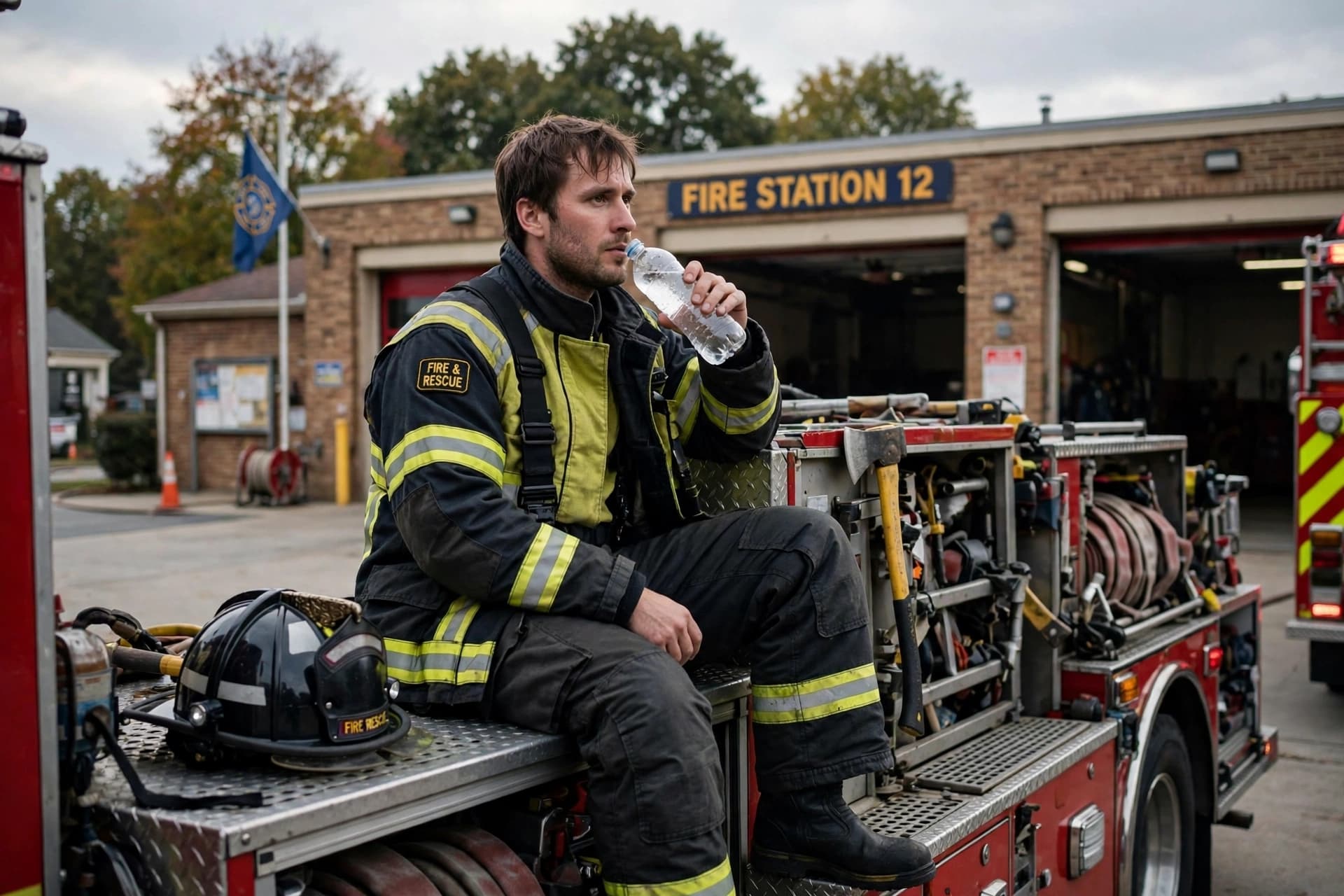
There is a particular irony in the death of a firefighter, a person who runs toward the flames and the smoke and the collapse, only to be felled by something quieter and more internal. The hazards of the job are visible and dramatic: the heat, the structural failure, the toxic smoke. But the data tells a different story, one that has been consistent for decades and that a new analysis confirms with sobering clarity. The leading cause of death for firefighters on duty is not the fire itself. It is the heart.
A study presented at the American College of Cardiology's 2026 conference and published in the Journal of the American College of Cardiology examined on-duty firefighter fatalities from 2014 to 2025 using U.S. Fire Administration data. Of 1,085 on-duty deaths identified, 640 were medical in nature. Of those medical deaths, 483—or seventy-five percent—were attributed to cardiovascular causes. That means cardiovascular disease accounted for forty-four percent of all on-duty firefighter fatalities across the twelve-year period. Coronary heart disease was responsible for 470 of those 483 cardiovascular deaths. And nearly half of all the deaths, forty-seven percent, were associated with physical exertion .
The numbers are not new, but they are stubborn. A 2007 editorial in the New England Journal of Medicine noted that nearly half of on-duty firefighter deaths were cardiovascular-related, and that the figure had remained relatively steady even as the number of structural fires declined . The U.S. Fire Administration, in a 2026 blog post, stated that sudden cardiac events remain the leading cause of line-of-duty deaths, accounting for nearly forty-five percent of fatalities in recent years . The consistency of the finding across decades and data sets is itself a kind of warning: this is not a problem that is resolving on its own.
The mechanism is not mysterious. Firefighting is a form of intermittent, high-intensity exertion performed under conditions that place extraordinary strain on the cardiovascular system. Firefighters wear heavy protective equipment, work in extreme heat, and are often exposed to smoke and particulate matter that can trigger inflammation and vascular dysfunction. Chronic operational stress, irregular shift work, and sleep disruption compound the risk over time . The heart is asked to perform at its limit precisely when the conditions are most hostile to performance.
There is a preventive dimension that the research underscores. The 2026 study concluded that the findings highlight a critical need for improved cardiovascular screening and preventive strategies for firefighters . The U.S. Fire Administration has prioritized cardiovascular disease research and reporting, recognizing that the high rates of cardiac deaths demand a response that goes beyond treating individual incidents as unavoidable . Screening, fitness programs, and attention to risk factors like hypertension and hyperlipidemia are not peripheral concerns. They are central to keeping firefighters alive.
For the families of the firefighters who died, the statistics are not abstractions. Each number represents a person who answered a call and did not return, whose death was classified as medical rather than traumatic, and whose loss may have been attributed to the ordinary failure of a body pushed too hard. The fire service has long understood that the job takes a toll. What the data makes clear is that the toll is not primarily taken by the flames.
There is no simple solution to a problem rooted in the physical demands of the work and the accumulated strain of a career spent responding to emergencies. But there is a direction. Better screening, better fitness, better understanding of the cardiovascular risks that firefighting imposes—these are the tools available. The heart that carries a firefighter up the stairs and into the smoke is the same heart that must be protected, not only for the duration of a career but for the life that follows.
AI Image Disclaimer: The visuals in this article are generated by artificial intelligence and are intended for illustrative purposes only.
Sources: Journal of the American College of Cardiology, U.S. Fire Administration, The New England Journal of Medicine
Published by Banx Network. This article is part of the Banx decentralized media programme, powered by the BXE token on the XRP Ledger.