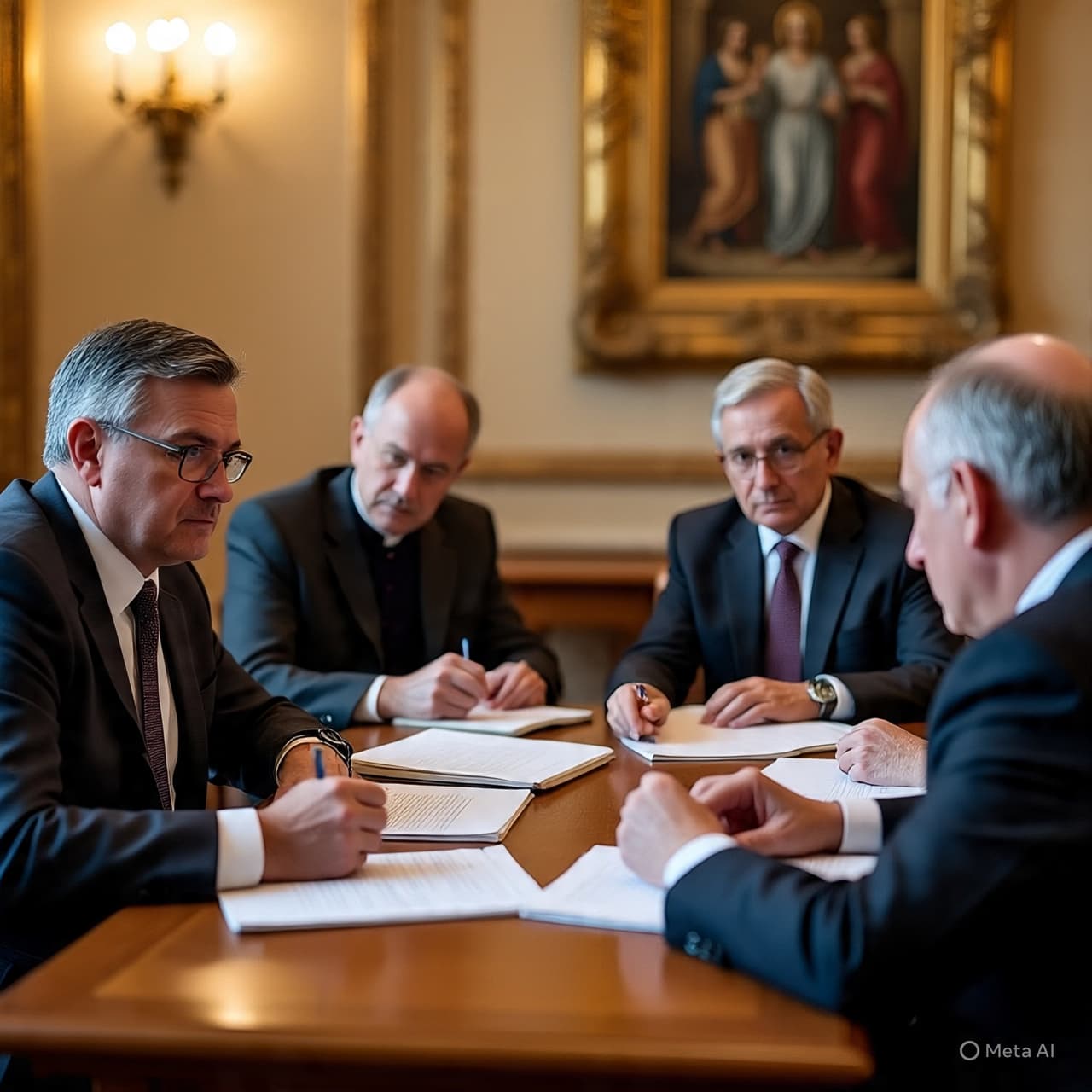
There is a rare kind of humility in correcting the rules, especially when those rules were never intended to silence progress. Pope Leo XIV has done exactly that — amending a 2023 Vatican law to remove the clause that required the head of Vatican City State administration to be a cardinal. What might sound like a narrow bureaucratic tweak turns out to be far more: a small but meaningful step toward reshaping institutional tradition.
The change came in response to a very modern moment. Earlier this year, Pope Francis appointed Sister Raffaella Petrini, a seasoned nun, as president of the Vatican City State’s administration — a role historically held only by cardinals. Her appointment was landmark, but the existing law offered no fully coherent path for a non-cardinal to occupy that office. Leo’s reform addresses the mismatch directly.
That mismatch was more than theoretical. For instance, Sister Petrini was excluded from delivering key economic briefings during closed-door gatherings of cardinals because those meetings are typically restricted to cardinals alone. The cardinal-centered language of the law made her ineligible in ways that weren’t initially foreseen, despite her competence and service.
In reaffirming her role, Leo underscored that governance in the Vatican is not just about titles but about shared service. He framed the amendment as an act of “service and responsibility” — a way to formalize arrangements that had become increasingly necessary given the complexity of modern Vatican administration.
Symbolically, the decision carries weight beyond the letter of the law. It signals that the Vatican can adapt its governance structures to include voices that were once structurally sidelined. For many observers, the removal of the cardinal requirement is not just about one position; it may be a sign that the Vatican is quietly evolving in ways that reconcile tradition with the demands of today.
At the same time, Leo’s correction is not a rupture with the Church’s doctrinal foundations. The priesthood remains reserved for men, and there is no change in sacramental policy. Instead, this is a governance reform — a practical, incremental shift that aligns leadership opportunities more closely with experience and capability than with clerical rank.
In a world where institutions often resist change, Leo’s decision stands out because it corrects without discarding, includes without undermining. The message is subtle but clear: the Vatican’s governance can be both reverent and responsive, rooted in tradition yet not trapped by it.
Published by Banx Network. This article is part of the Banx decentralized media programme, powered by the BXE token on the XRP Ledger.